The planet's critical environmental issues have been ignored, trivialized and misunderstood in past decades. So say the coordinators of the University's proposed Institute for Environmental Studies, who say public opinion has acknowledged that business as usual in environmental affairs is no longer acceptable. Institute co-director Robert Giegengack said a resurgence of public interest in the environment, both within and outside the University, has placed environmental issues near the top of the national priority list. The Institute, which will promote and facilitate environmental research programs at the University, opened its doors unofficially in September and now awaits final approval from the University this spring. According to institute co-director Irving Shapiro, the University houses a "considerable amount" of faculty from all 12 schools who currently conduct research on environmentally related areas. Many faculty members have achieved international recognition for their work. Giegengack, a geology professor, said while there is no shortage of environmentally-related research at the University, no central facility has existed to enhance collaboration between professors researching in similar areas. Shapiro, a biochemistry professor, said that many times a professor may be completely unaware that someone else is conducting related research in another University department or school. One of the institute's primary functions will be both to help professors and graduate students apply for research grants from national foundations and to increase their chances of receiving them, Giegengack said. "Some federal grants you can't apply for without the backing of a centralized institute," Giegengack said. Giegengack said the institute is already working with faculty members to acquire 12 grants for environmentally-based research. According to Giegengack, two earlier proposals for an environmental institute at the University -- one in the early 1970s and one in the 1980s -- were shot down by past administrations. But this time, Shapiro said, the enthusiasm for the institute will not die down so easily. He said that unlike the two previous attempts, the nudge to establish the institute came from the administration itself because there has recently been an "increased awareness" of the importance of environmental issues. "If [the institute brings] research proposals to the University which wouldn't be submitted without it . . . and if [the Institute] enhances the quality of undergraduate programs by informing [the faculty] of research opportunities," then the project can be considered a success, Giegengack said. Vice Provost for Research Barry Cooperman said the University will greatly benefit from a more organized research facility. Cooperman has been active in first promoting and then funding the institute in its initial stages. Though not yet officially recognized, the institute is already sponsoring a series of focus groups on various environmental topics. Faculty from numerous departments have been invited to meet with each other as the first step in closing the communication gap. Giegengack said he will soon publish a brochure listing the various programs and majors offered at the University in environmentally-related fields. "For me to explain the 22 or 23 different opportunities at the University of Pennsylvania for environmental programs, I'd be spending an hour and a half with each person," Giegengack said. He said the brochure "will make it easier to show the faculty resources to others on campus, [resources] which many don't know exist." The institute operates out of an office in Hayden Hall and employs one full-time administrative assistant.
The Daily Pennsylvanian is an independent, student-run newspaper. Please consider making a donation to support the coverage that shapes the University. Your generosity ensures a future of strong journalism at Penn.
DonateMore Like This

A history of the Penn presidency
By
Aidan Shaughnessy
·
12 hours ago

No — AI will not wipe out humanity by 2030, Penn experts say
By
Addison Saji
·
12 hours ago

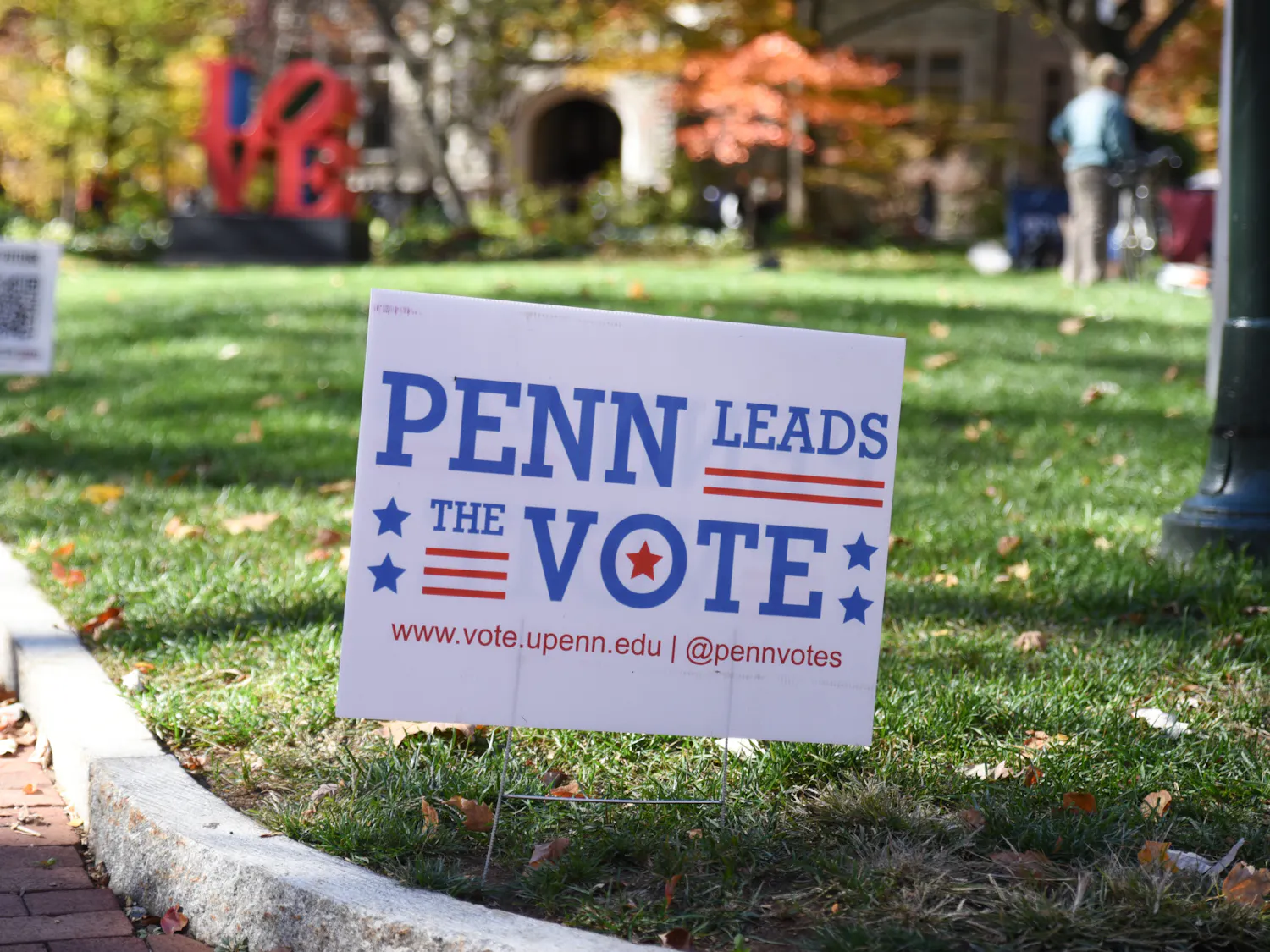
Penn student groups promote voter registration on Locust Walk
By
Mara Flores
·
12 hours ago