Hero Brahms, a prominent German economic advisor, discussed the privatization of East German companies and investment opportunites in the European Sector yesterday on campus. Brahms, executive vice president of a structural management company Treuhandanstalt, described his company's essential role in the current economic restructuring of East Germany's previously state-controlled holdings as part of his tour to promote support for East German investments. Over 100 people attended the 45-minute speech, which was sponsored by the Wharton Emerging Economies Program and the Eastern European Club, and was followed by a question-and-answer session. "We want to reduce the entreprenurial action of the state through privatization as quickly and as comprehensively as possible," Brahms said. "We then want to restore a competitive environment and make land and property available for business development." To do this, Treuhand has set up 14 Branches across Europe, one branch in Tokyo, and another in New York. A total of 4,000 advisors staff the branches. Brahms emphasized the drastic exchange of one legal-social system for another. As of July, 1990, according to Brahms, no one had the experience of transferring an autocratic system into a market system. "Selling the companies is the principal means of establishing a social economy," he said. "Other countries can now learn something from our success, as well as from our mistakes." The monetary unification has taken its toll on the former East German republic, Brahms said. He said the productive output decreased by two-thirds, and the export market collapsed. In addition, the active workforce dropped from 10 million to less than six million people. Treuhand helped the nation to counter the negative effects of the change, Brahms said. "Without our help, more than 90 percent of our companies would have collapsed immediately, completely unable to compete," Brahms said. "We pumped money into the companies without knowing anything about them. It was as if we were writing checks to 'to whom it may concern.' " At this time, 8,781 companies have been sold, and roughly 3500 remain in the hands of Treuhand. At an estimated 20 companies being bought a day, the company's job will be completed by the end of 1993. Brahms came to the United States to boost foreign investment in Eastern Germany. Currently 437 companies have been acquired by foreign investors, but he would like to see this number raised. "Treuhand, as well as the federal state, offers numerous incentive programs to limit up front investments and speed up paybacks," Brahms said. "Within a very short time, investors will see a 50 percent return." "Eastern Germany offers a market with exceptional growth. Investors will have access to all aspects of the foreign European community," he added. The audience, which consisted mostly of graduate students and other members of the University community, had mixed reactions about the speech. Some said they thought the lecture was thorough. Inga Davis, assistant director of the Wharton emerging economics program said the speech was very informative. "It was very interesting," she said. "He really was able to bring out the magnitude of the problems they face. Treuhand is a real example [for the world]." But others who attended said they were not so impressed. "He came here to paint a rosy picture and that's what he did," said graduate student Til Schuermann. Brahms is now headed to New York to meet with prospective investors. He was the Wharton Emerging Economies Program's first speaker. According to Davis, more speakers on similar topics are planned in the coming months.
The Daily Pennsylvanian is an independent, student-run newspaper. Please consider making a donation to support the coverage that shapes the University. Your generosity ensures a future of strong journalism at Penn.
DonateMore Like This

A history of the Penn presidency
By
Aidan Shaughnessy
·
10 hours ago

No — AI will not wipe out humanity by 2030, Penn experts say
By
Addison Saji
·
10 hours ago

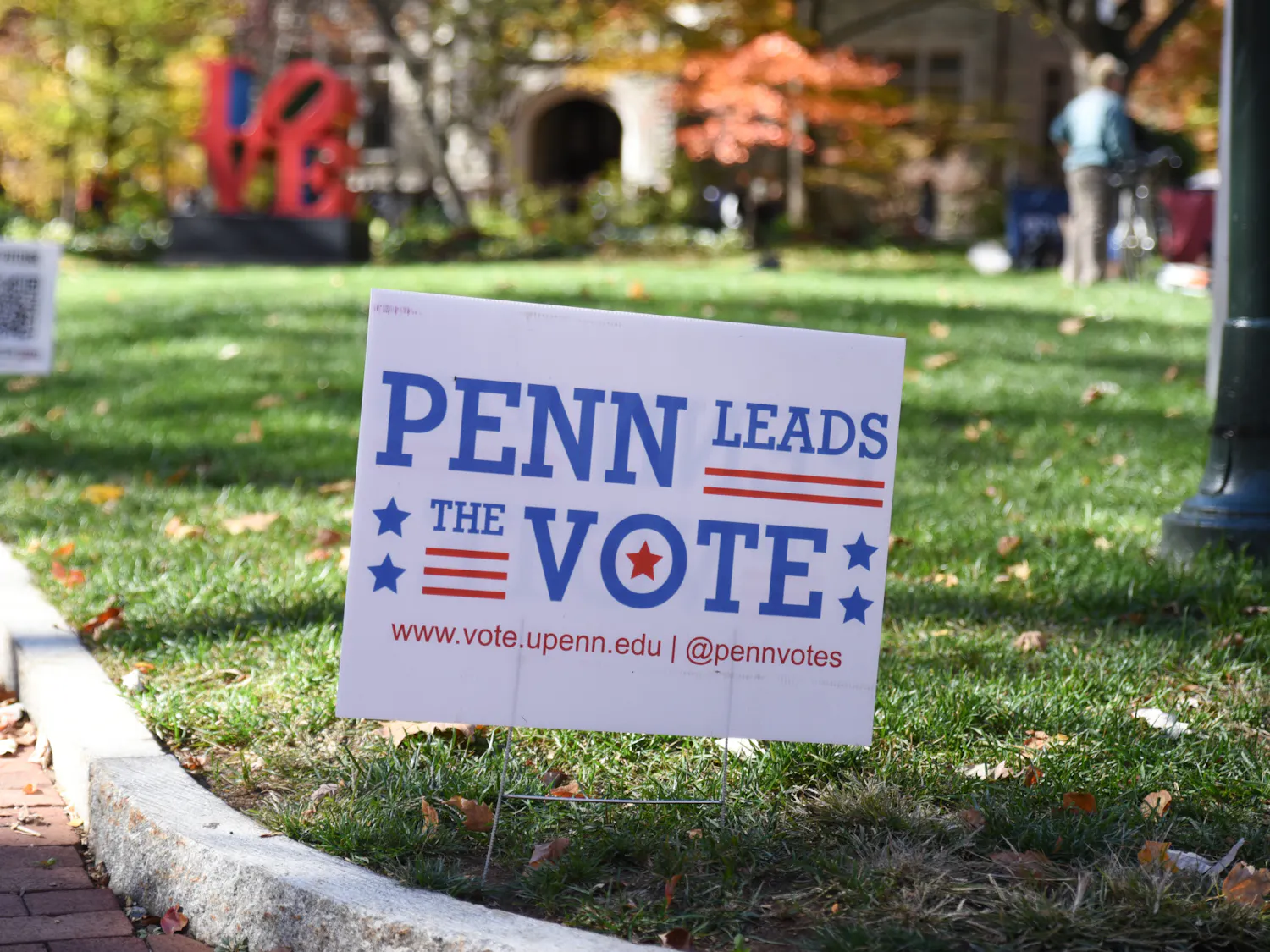
Penn student groups promote voter registration on Locust Walk
By
Mara Flores
·
10 hours ago