Waiting for a prescription to be filled, I overheard a radio program in which a particularly obnoxious hostess was badgering someone, who I assumed was a call-in listener, on her stance on the abortion issue. The hostess charged that abortion would not become a means of birth control if legalized because abortion is too expensive. Apparently this was a response to the listener. Her tone was so derisive that the listener was prompted to say, "I thought you were open to all opinions!" to which the hostess retorted that she usually was, but this woman's ideas were too absurd for credibility. Both women asserted angrily that the other should check her facts. When asked to take a position on the issue -- though one is seldom asked their feelings on the issue, but only if one is pro-choice or pro-life -- I am reluctant to align myself with either side. The debate has become so polarized that rhetoric has condensed two issues into one: For pro-choice supporters, abortion is a women's issue, for pro-life supporters, it is a different issue that transcends gender. It is a human need to categorize, but in doing so we often rigidly divide the population into Us and Them. People who believe that abortion should be legal are immediately aligned (by standards of popular thinking) with the pro-choice camp. "Pro-choice," however, also assumes other positions, including support of women, and protection of privacy -- and is not just pro-abortion. If Bob believes that abortion should remain legal to prevent children from being born with birth defects, is he considered pro-choice? If the answer is no, this implies that there is more to pro-choice than the belief that abortion should be legal -- that there are also the issues of the woman's right to privacy and control of her body and her baby's potential for life. Yet pro-life advocates believe that legalization of abortion is the sole issue, and that no one, male or female, has the right to decide whether another will be deprived of his or her life-potential. If both sides can't even agree on the issue, how can we hope for a solution? However, if Bob is considered pro-choice, then it will probably be assumed that he is a supporter of women's rights. But that may not be the case; someone who would not want a baby with birth defects might also have other qualifications for the baby -- that the baby should be male, for example. (This is not as great a leap in associations as it may sound. In both cases one is judging whether or not the child should live.) This person is a sexist, yet categorized as a pro-choice advocate, it is probably assumed that he is a supporter of women's rights. Without the umbrella of "pro-choice", one would never connect the desire to have a certain kind of baby with the support of women's rights, but because this issue is so fervently polarized, "pro-choice" (as well as "pro-life") is a badge for a whole cluster of beliefs. In this example, one who favors the legalization of abortion is wrongly assumed to support women's rights. The reverse is the more typical scenario: the association of legalizing abortion and supporting women is so strong that many men and women believe that not considering themselves "pro-choice" labels them as not supportive of women. This is particularly true among the politically correct as well as those who belong to the rising tide of men and women who are genuinely concerned with reforming the inequalities done to women. Pro-choice feminists have taken this particular issue to protest the unfair treatment and manipulation of women that persists. Their message is on target, unfortunately this is the wrong issue to protest the infringement on their rights when they may be infringing on the rights of another person.
The Daily Pennsylvanian is an independent, student-run newspaper. Please consider making a donation to support the coverage that shapes the University. Your generosity ensures a future of strong journalism at Penn.
DonateMore Like This

A history of the Penn presidency
By
Aidan Shaughnessy
·
3 hours ago

No — AI will not wipe out humanity by 2030, Penn experts say
By
Addison Saji
·
3 hours ago

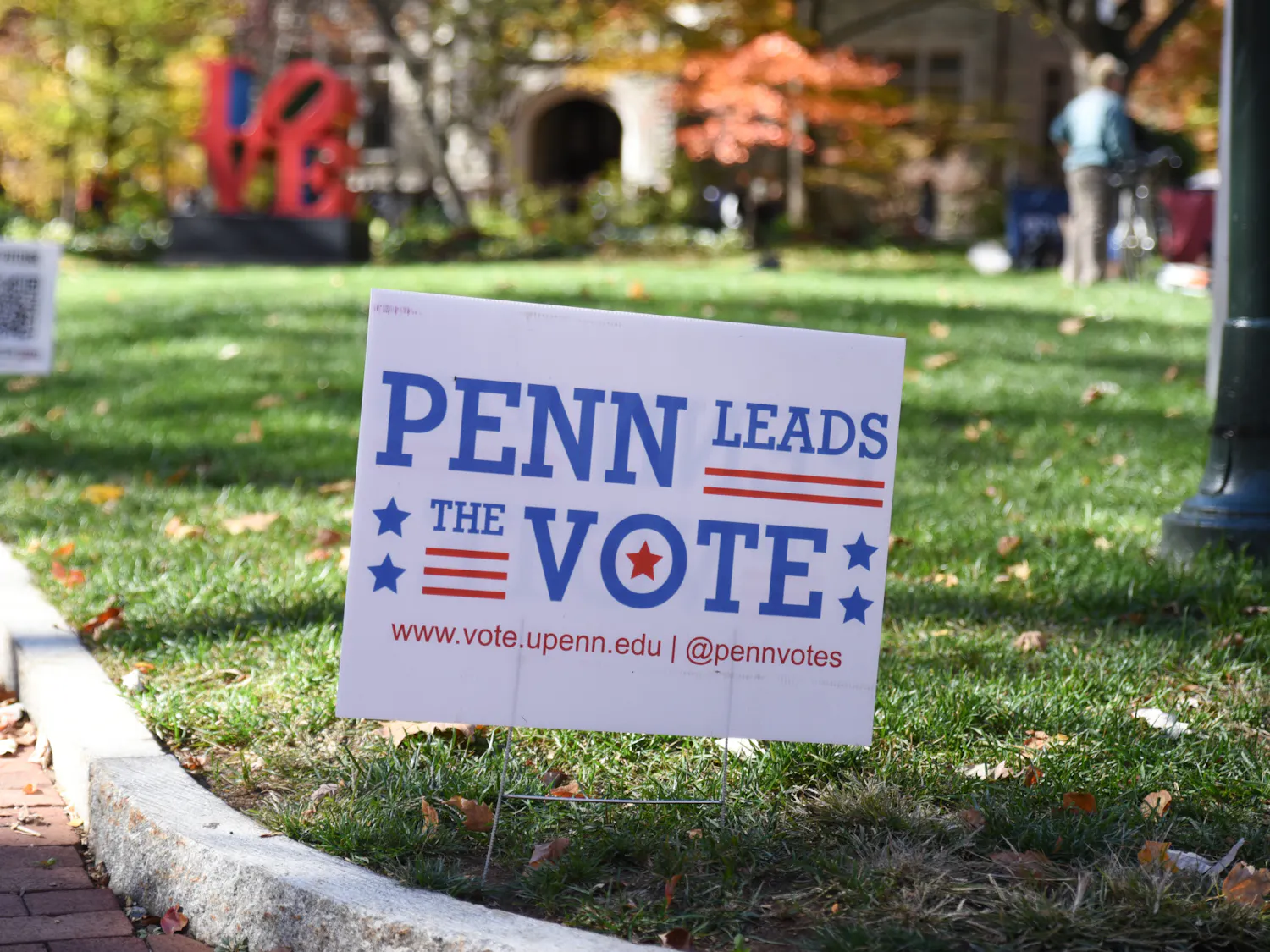
Penn student groups promote voter registration on Locust Walk
By
Mara Flores
·
3 hours ago