Parenting has gone out of style. In this society success is still measured by income, and since the sexual revolution, women have asserted their right to achieve this definition of success. Pop psychologists would have us believe that the need to contribute financially to support one's family is inherently male, but since that demand is now placed on women, they too are compelled to fulfill this obligation -- especially if they feel that the best way to care for their children is to provide them with things, as opposed to time. So where does that leave this generation of children? For the rich, in daycare; for the poor, alone. The role of nurturer is devalued, not because that role has traditionally been female, but because the role itself is not valued. The emphasis now and in the future will be to avoid having children. Children are postponed, artificially controlled, or aborted. This may appear to be a positive trend in light of the repercussions of children spending more time engaged with technology than with human companionship and when considering the high number of unwanted pregnancies. "Unwanted" is often construed as "too many." Society uses the two interchangeably because Society often foots the bill. So every baby that is not wanted by her parent(s) is one too many for Society to provide for. The lower classes do not seem to avoid having children, but for now they have little reason to. Psychologists and businesspeople know that when you consider yourself to be in a losing position, you will take more risks. One could therefore argue that they would be better off not having as many children, but they probably don't think it could get any worse, anyway. So there's little incentive not to have children when sex is the only pleasure they can afford, and Society will continue to support them. Like most other things, however, the trend will trickle down, and even the poor will be having fewer children. Who then is to blame for this move toward reserving child-rearing to a few "nurturing specialists"? We look instantly to the sexual revolution and the women who left their children and changed the value structure of America to one that is materially based. If women had stayed home, they would have been there to instill better values in their offsping, and the two-income based economy that forces all women to work -- even those who would have preferred to stay home and raise their children -- may never have become the norm. To argue that, however, narrows our focus to the present and ignores the past and the future. In this century we are experiencing a change in the way we have viewed women which has dominated Western civilization. If we look at the Big Picture we can see our society is in a state of flux: it takes more than a decade to correct over 2000 years of women's oppression. The sexual revolution may very well be to blame for the moral impoverishment of today. But the era that led to its inevitableness was at least as detrimental to society; allowing only half of the population to contribute its talents to society is like using only half of your brain. Further, that stunting lasted over 2000 years; this overcompensation has lasted just three decades. Now that we can exploit both sides of our communal brain, the possibilities of what we can accomplish are limitless. Women will find that they can be respected in their own right after having proved themselves in a man's world, and will not feel the need to abandon their feminine qualities to maintain their position in the new, androgynous world. What will it be like when women are better represented in politics? (By that time it will be acceptable to admit that some qualities are more feminine than others because they will not imply inferiority.) Political leaders who are women will be able to mix intellectual prowess with the compassion that they were formerly forced to confine to raising children. The resolution of the current conflicts has unprecedented potential for the creation of a productive society which provides equal opportunity to everyone. When everyone is truly encouraged and supported to reach his and her full potential, we will be able to achieve the more abstract ideals of the community that are now subordinate to more urgent needs.
The Daily Pennsylvanian is an independent, student-run newspaper. Please consider making a donation to support the coverage that shapes the University. Your generosity ensures a future of strong journalism at Penn.
DonateMore Like This

A history of the Penn presidency
By
Aidan Shaughnessy
·
10 hours ago

No — AI will not wipe out humanity by 2030, Penn experts say
By
Addison Saji
·
10 hours ago

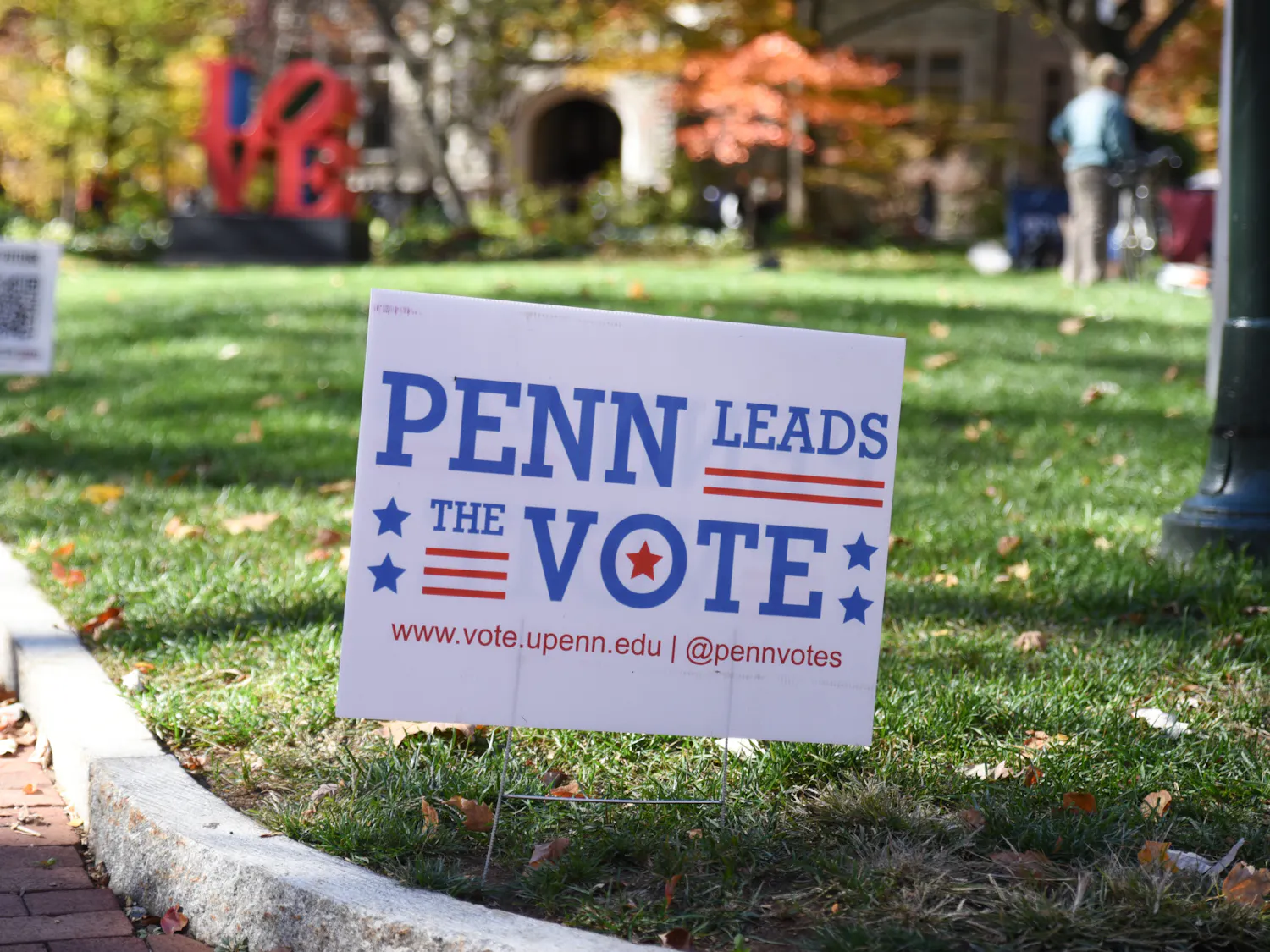
Penn student groups promote voter registration on Locust Walk
By
Mara Flores
·
10 hours ago