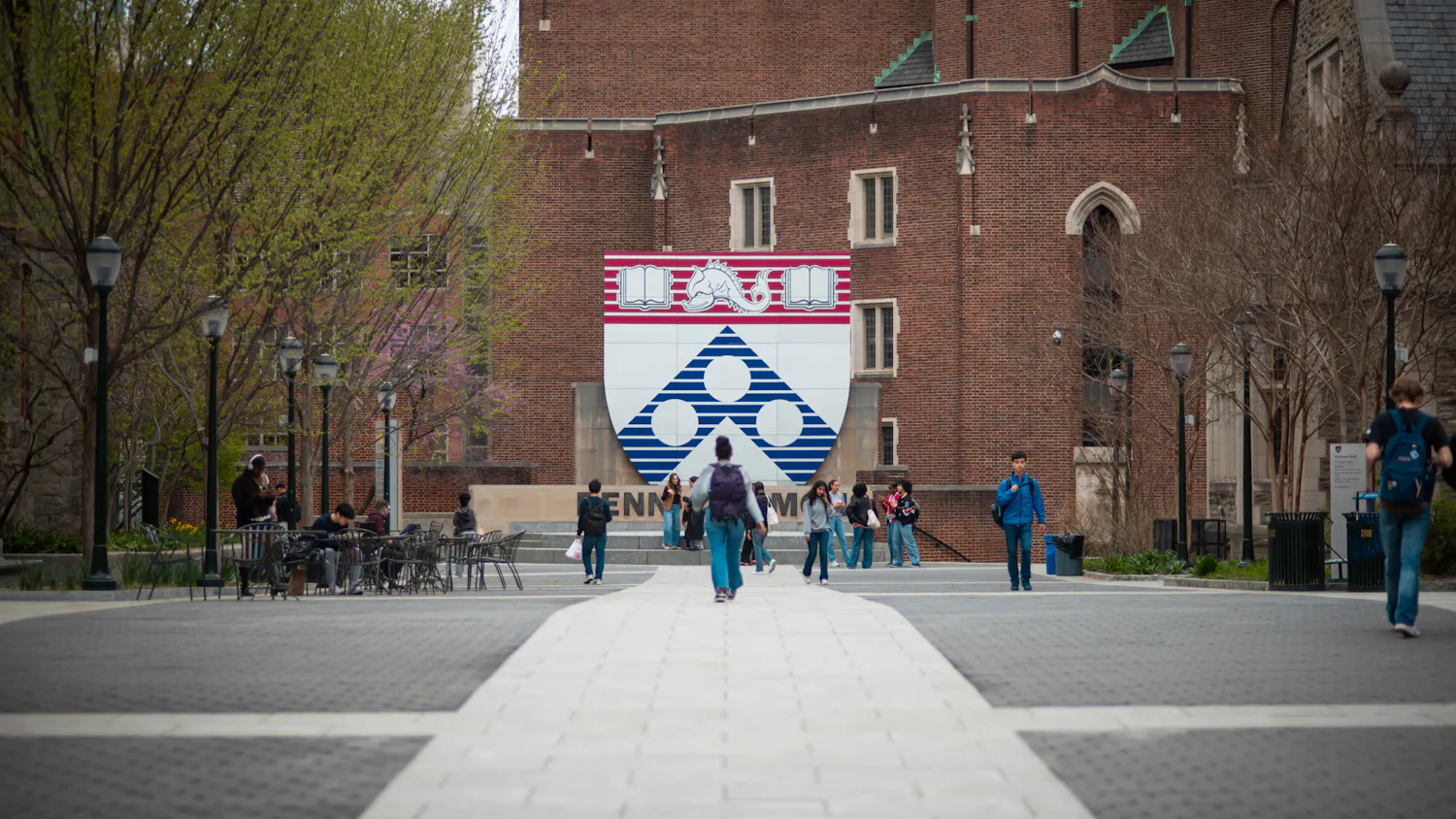
A total of 2,126 ballots were cast at Penn’s four on-campus polling locations on Election Day — nearly half the number of votes cast during last year’s presidential election.
Federal impacts on Penn
How three Penn professors adapted their spring 2026 courses to the second Trump administration
The three faculty members set to teach the classes described the process of adapting their curriculum to an “unprecedented” political landscape in interviews with The Daily Pennsylvanian.
Penn Medicine continues to provide virtual health care amid ongoing federal government shutdown
Temporary waivers for telehealth services — first instituted during the COVID-19 pandemic — recently expired following congressional gridlock over a budget deal and the subsequent government shutdown.
A Daily Pennsylvanian analysis found that in the first two fiscal quarters of 2025, Rowan contributed millions to primarily Republican-aligned groups and candidates.
How three Penn professors adapted their spring 2026 courses to the second Trump administration
The three faculty members set to teach the classes described the process of adapting their curriculum to an “unprecedented” political landscape in interviews with The Daily Pennsylvanian.
Penn Medicine continues to provide virtual health care amid ongoing federal government shutdown
Temporary waivers for telehealth services — first instituted during the COVID-19 pandemic — recently expired following congressional gridlock over a budget deal and the subsequent government shutdown.
Jameson releases Penn’s letter declining White House compact in ‘spirit of transparency’
Until Friday, Penn was the only university that had declined to sign the compact but did not publicly disclose its response to the government.
Penn’s compact rejection reflects changed approach to administrative transparency, DP analysis finds
The messages marked a higher level of transparency with the University's stakeholders in comparison to Penn's prior dealings with the government — including its July resolution with the Department of Education.
Penn hosts Israeli, Palestinian leaders to discuss ‘pathways to peace’ following ceasefire plan
The discussion focused on the creation and possible outcomes of a peaceful two-state solution between Palestine and Israel.
Federal endowment tax could impact ‘critical’ student services, Penn administrators say
Passed in July 2025, the legislation establishes a three-tiered endowment tax system for the nation’s wealthiest private universities. Penn will fall in the middle bracket at 4%.
Universities join Penn in rejecting White House compact as consequences for refusal remain unclear
Two days after the Oct. 20 deadline to provide feedback, seven of the nine universities initially asked to sign the “Compact for Academic Excellence in Higher Education” have rejected the proposal.
The initial cuts in February drew widespread criticism from Penn students and faculty, who expressed concern for the University’s research projects and academic mission.
The Philadelphia protest was part of a series of over 2,700 demonstrations that took place across the country.
According to an Oct. 16 email from Penn President Larry Jameson, the University rejected the compact after considering input from Penn faculty, alumni, trustees, students, and staff.
With the decision, Penn became the third university to decline the offer.
‘Penn will not get a penny’: Local lawmakers threaten state funding if Penn signs White House compact
At the Oct. 15 conference, lawmakers criticized Penn for not immediately rejecting the White House agreement, and asserted that it threatens campus diversity and academic freedom.
With less than a week remaining before the Oct. 20 deadline for universities to provide feedback on the draft document, The Daily Pennsylvanian examined the potential University-wide implications of signing it.
UA urges Penn administrators to reject White House compact
The document was drafted in partnership with student representatives from six of the eight other universities initially approached with the federal government’s proposed higher education compact.
Penn community reflects on Michael Mann’s resignation, implications for institutional neutrality
Mann attributed the departure from his vice provost role to tension between his science policy advocacy work and Penn’s institutional neutrality policy. He remains a professor at Penn, and is the director of the Penn Center for Science, Sustainability, and the Media.
Penn hosts former NPR editor-in-chief for talk on nonpartisan journalism
Topics focused on Chapin’s personal experiences as a journalist and her thoughts on the recent funding cuts made to public broadcasting by the second Trump administration.