

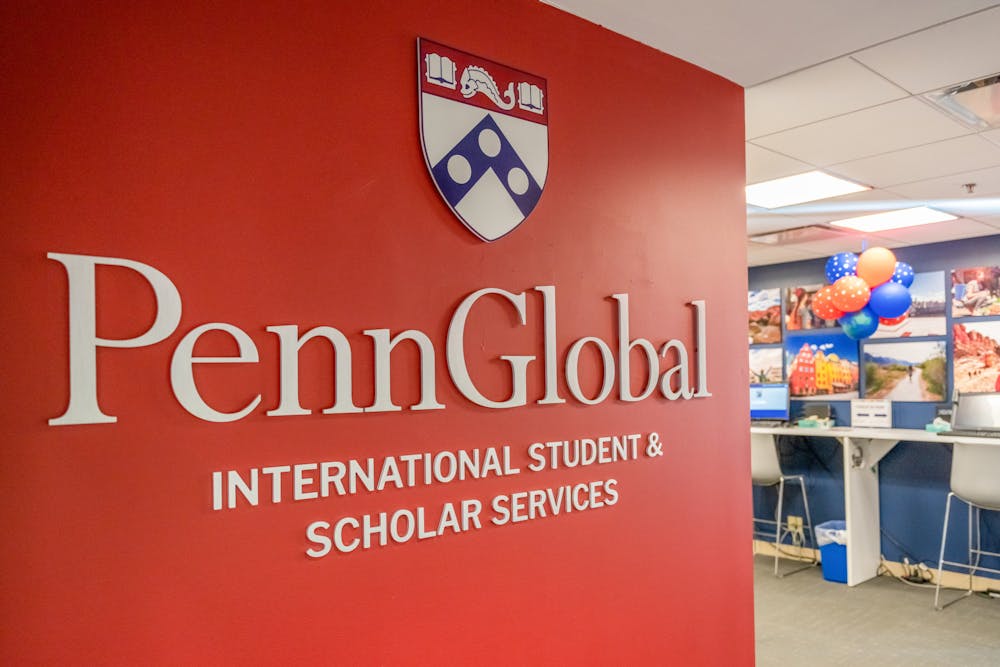
Penn International Student and Scholar Services issued guidance to students affected by the federal government's expanded restrictions on entry into the United States in a Wednesday announcement.
The Dec. 17 guidance urged potentially impacted students to avoid non-essential international travel and to consult advisors before leaving the country. The advice follows a Dec. 16 White House proclamation that widened full entry travel restrictions to include nationals from Burkina Faso, Laos, Mali, Niger, Sierra Leone, South Sudan, and Syria.
These countries join a list of others already subject to full restrictions, including Afghanistan, Burma, Chad, Republic of the Congo, Equatorial Guinea, Eritrea, Haiti, Iran, Libya, Somalia, Sudan, and Yemen. ISSS added that "individuals traveling on Palestinian Authority–issued or endorsed travel documents are subject to full entry restrictions."
According to the guidance, the restrictions will primarily affect individuals who are outside the United States and do not have a valid visa as of Jan. 1, 2026.
"Individuals already inside the U.S. are not subject to entry restrictions while remaining in the country," the advice read. ISSS clarified that lawful permanent residents, individuals, and dual nationals traveling on a passport from a non-restricted country will generally not be affected by the new full restrictions.
Penn's guidance additionally identified the following countries that will face partial entry limits as a result of the new measures or earlier restrictions: Angola, Antigua and Barbuda, Benin, Burundi, Cuba, Côte d’Ivoire, Dominica, Gabon, The Gambia, Malawi, Mauritania, Nigeria, Senegal, Tanzania, Togo, Tonga, Venezuela, Zambia, and Zimbabwe.
ISSS noted that restrictions on Turkmenistan were modified under the proclamation to permit nonimmigrant entry.
The proclamation — which Customs and Border Protection will begin to enforce starting Jan. 1, 2026 — attributed the policy changes to national security and vetting concerns. The White House cited “widespread corruption,” unreliable criminal records, “poor” civil documentation practices, and high non-immigrant visa overstay rates as factors making it “extremely difficult” for U.S. authorities to assess admissibility.
RELATED:
Year in Review: How federal efforts to reform higher education affected Penn in 2025
Penn sees slight rise in international student enrollment despite national downturn
Visas will not automatically be revoked under the proclamation, according to an ISSS FAQ page, which added that further screening may occur at ports of entry and that "final admission decisions are made by U.S. Customs and Border Protection."
The FAQs also advised departments to discourage non-essential international travel, anticipate potential delays in arrivals or reentries, and remain flexible with academic and employment start dates. The page instructed departments to refer all immigration-related questions directly to ISSS.
The White House order reinstated and expanded upon restrictions first introduced during 1968 Wharton graduate and President Donald Trump’s first administration. It modified certain categorical exceptions, including family-based immigrant visas, and limited the scope of national-interest exemptions.
In June, the United States instituted a travel ban on several countries also impacted by the new restrictions. At the time, Penn ISSS urged students located in countries affected by the ban to return to the United States as soon as possible.
Earlier this year, the White House imposed a $100,000 fee on new and renewal H-1B visa petitions.
“We understand that these developments may create stress and disruption,” ISSS Executive Director Rudie Altamirano wrote in a Dec. 17 email addressed to the Penn community. “Please know that we are closely monitoring the situation and will continue to share updates as they become available.”
RELATED:
Year in Review: How federal efforts to reform higher education affected Penn in 2025
Penn sees slight rise in international student enrollment despite national downturn
Senior reporter Ananya Karthik covers central administration and can be reached at karthik@thedp.com. At Penn, she studies communication and economics. Follow her on X @ananyaakarthik.





