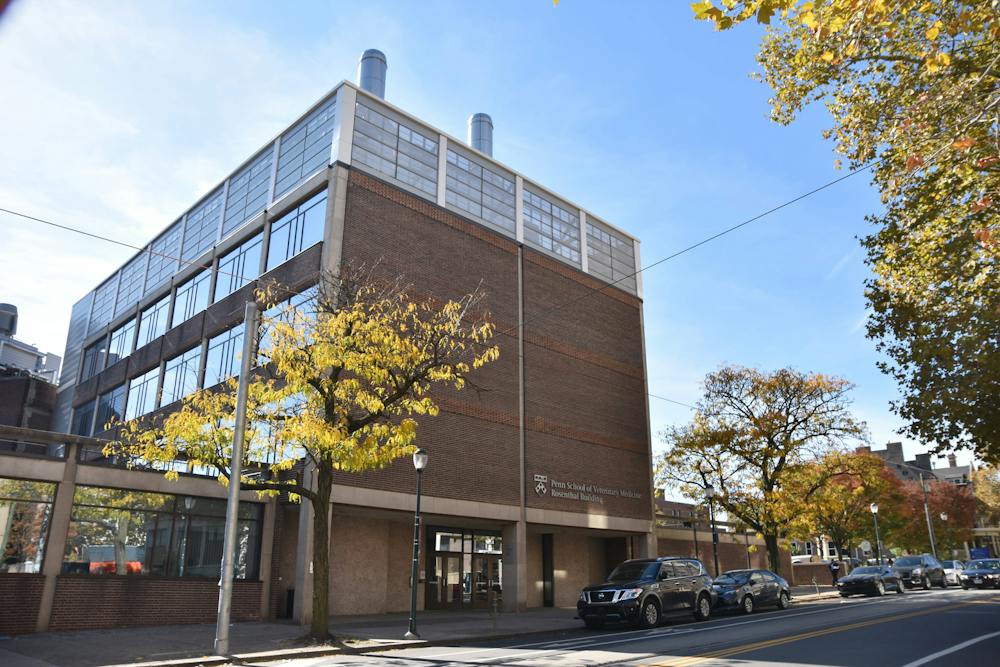
The School of Veterinary Medicine recently launched an interdisciplinary graduate certificate program to tackle global health issues.
The One Campus, One Health certificate program invites students from all 12 of Penn’s graduate schools to learn and address the problems impacting human, animal, and environmental health. The customizable curriculum encourages students to collaborate across disciplines and develop problem-solving tools that will allow them to influence global health policy.
According to Penn Vet’s Associate Dean for One Health Jennifer Punt, the program is both “a recognition that human, animal, plant, and environmental health are intimately connected” and an operationalizable framework” designed to address “wicked problems” such as climate change, inequality, and food insecurity.
“We have been planning for a long time how to develop a certificate program to train students in this idea of interconnectivity between health, with the need for collaboration and the need for working across disciplines,” One Health Program Manager Brianna Parsons said.
The program recognizes that “disciplinary expertise is important, and beyond that we need to think outside of our disciplines — we need to think about how to collaborate with other disciplines if we're going to solve some of the world's biggest wicked challenges out there,” she added.
Both Punt and Parsons said that students of all disciplines are welcome to participate in the program. Instead of being interdisciplinary, One Campus, One Health aims to be transdisciplinary by working directly with the communities that are most affected by the health issues it focuses on.
The program seeks students with “a certain kind of boldness, a certain curiosity, a caring about problems that are difficult to solve,” as well as an “adventuresome intellectual spirit,” Punt explained.
“We’re also looking for students that are action-oriented, that are trying to go beyond just having an interest in the area, but want to do something about it,” Parsons added. “We’re very agnostic to discipline and what school you come from.”
One Campus, One Health features multiple components — including a foundational course, three electives, a practical experience project, and a final presentation at Penn’s annual One Health Symposium.
The foundational course aims to provide a background into what health is and develop approaches to forming creative solutions — through techniques like program evaluation, stakeholder inclusion, and systems thinking. Students will then present a co-designed solution during their presentations at the symposium.
“We’re aiming to train students to see that things are connected,” Parsons said, expressing hope that they will learn to think beyond a specific issue in isolation and instead “see how it intersects with bigger systems.”
Staff reporter Ashley Wang covers science and health and can be reached at wang@thedp.com. At Penn, she studies economics.