Penn stands alone in the Ivy League when it comes to on-campus graduate student housing, as the only university that does not provide it. While other schools offer specific living communities for graduate students, Penn leaves its own graduate students to either search for expensive off-campus housing or work as a resident assistant in an undergraduate college house. But our graduate students deserve on-campus housing that is quality, affordable, and community-oriented.
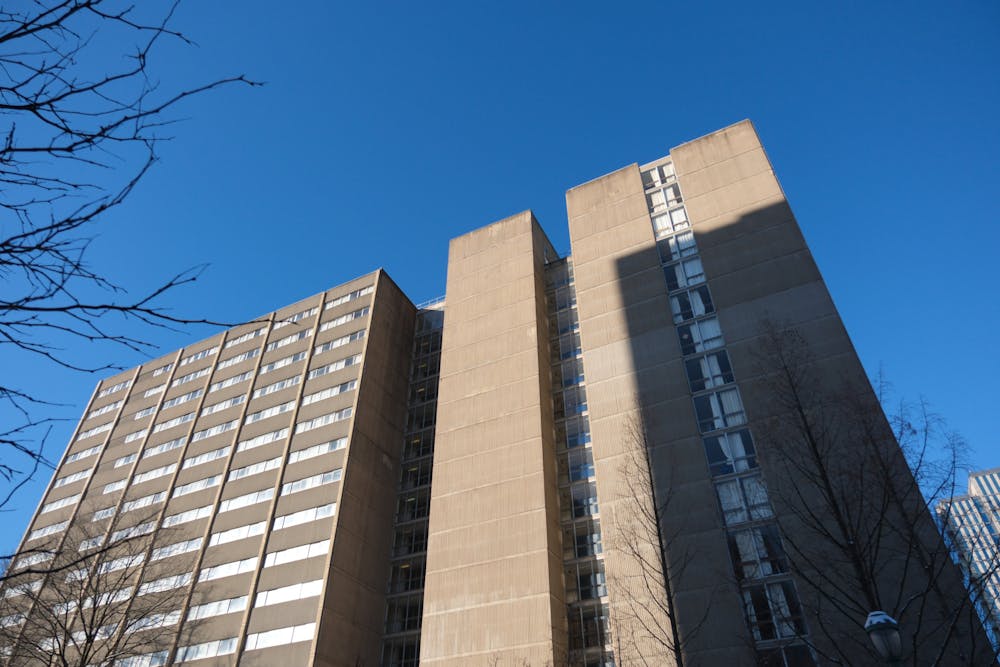
Penn has a history of shuttering on-campus graduate student housing and converting it to privately managed student apartments. In 2022, the University closed Sansom Place East, a graduate housing option, and redeveloped the property with a private developer, Greystar. The building is now known as the Accolade, with Greystar owning and operating it. Then, this past summer, the University unveiled a new plan to renovate Sansom Place West, another former graduate student dorm, into off-campus graduate housing through yet another partnership with Greystar.
The Accolade markets itself as an apartment “built-in luxury” with its monthly price tag of nearly 1,900 dollars for a 309 square foot studio. In comparison, the average rent and square footage studio in Philadelphia is around 1,450 dollars and 450 square feet. A quick Google search shows that common complaints of the Accolade are the small rooms, problems with maintenance and facilities of the building, which are some of the same issues residents complained about Sansom Place East. I also spoke with Rita Wu, a graduate student at the Stuart Weitzman School of Design who is a current resident of the Accolade. Wu said that the rooms are small and the rent is “pricey,” but is still lower than other apartments like The Chestnut or 3737. She also mentioned that the building was a convenient choice given its proximity to campus and popularity on Chinese social media apps like RedNote and WeChat. Still, Wu shared that if she knew the area better before coming to Penn, she would have considered other apartment buildings.
Currently, the only pathway for a graduate student to live on-campus is as a graduate resident advisor. While the benefits like free housing and meals are enticing, being an RA can often be too demanding for those dealing with a graduate level course load. RA responsibilities include holding floor meetings, managing roommate conflicts, and organizing various floor events throughout the academic year. These duties can take away time from pursuing research assistantships, internships, or just time to rest and relax. Graduate students also deserve the chance to live on campus without having to be an employee of Residential Services.
Being an RA also removes one of the most beneficial aspects of living on campus: community. As a graduate student, I feel disconnected from my peers in the 11 other graduate colleges at Penn. This is disappointing, as I made lifelong connections during my time living in a dorm in undergrad, meeting people from all different majors. Offering on-campus options for graduate students would provide a centralized place for us to meet each other and build community.
In comparison to Penn, schools like Princeton and Yale have robust on-campus graduate housing. Princeton, for example, provides a wide array of housing options including traditional dorms, apartments, or townhomes. Yale graduate students have noted the low cost and convenience of living on campus. Harvard also offers on campus graduate student housing, but more importantly creates events through its Graduate Commons Program that curates events for graduate students, faculty, and their families who live on campus. Harvard’s Graduate Commons Program helps build connections for graduate students across different disciplines and backgrounds.
Obviously Penn’s old graduate on-campus strategy was flawed; that was evident with the high vacancy rate they had. Nonetheless, instead of simply handing off the management of valuable property to private developers like Greystar who charge high rents, and have been sued in the past for inflating prices, the University should look into unique ways to provide on-campus housing for the graduate student population. That may look like acquiring townhomes and mid-rise apartments that already cater toward Penn students and converting them into on-campus housing, or going back to the dorm model with updated facilities and community programming for graduate students.
Being the only Ivy League without graduate student housing and with the recent conflicts between the University and its graduate student union, it sends a message to potential grad students that the University doesn’t provide for them. I hope for a future where Penn provides on-campus graduate student housing to help students unfamiliar with renting in Philadelphia stop paying for overpriced apartments, avoid predatory landlords, and, most importantly, provide a strong diverse community for graduate students.
SEE MORE FROM KAMAU LOUIS:
KAMAU LOUIS is a second-year Stuart Weitzman School of Design student studying city and regional planning from Orlando, Fla. His email is louis3@upenn.edu.

Kamau Louis a first-year Stuart Weitzman School of Design student studying city and regional planning from Orlando, Fla. His column focuses on student culture and activism. He can be reached at louis3@upenn.edu.