The Wharton School hosted a Tuesday panel about how sporting events influence local economic growth.
As Philadelphia gears up to host major athletic events in 2026 — including the FIFA World Cup — the April 28 discussion focused on how cities translate global attention into long-term economic impact. The event, moderated by Wharton professor Kevin Kaiser, featured experts in Philadelphia’s sports and tourism as panelists.
In a statement to The Daily Pennsylvanian, Kaiser wrote that “Philadelphia has been highly effective in building the capability” to host large sporting competitions, unlike in other cities where “the benefit” of such events “failed to be realized.”
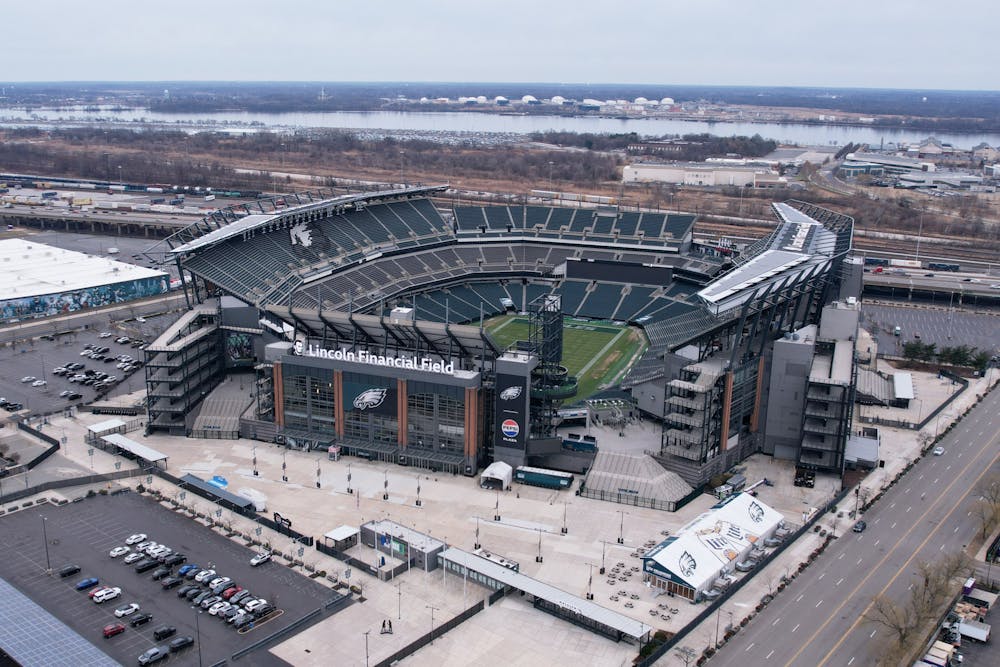
Philadelphia will host six matches of the World Cup at Lincoln Financial Field from June 14 to July 4. Last month, the city hosted the first and second rounds of the 2026 NCAA tournament — commonly known as “March Madness.”
“I am fascinated with value creation and value destruction,” Kaiser wrote. “The success Philadelphia has had in building its reputation, culture and infrastructure for being a world-class sports-culture city is one of value creation, and I wanted to meet some of the people who have played key roles in this success.”
The event was held as part of the Wharton’s “Economics of Hosting the World” series. Panelists discussed how cities evaluate both the opportunities and tradeoffs associated with hosting large-scale sporting events.
Angela Val, the president and CEO of Visit Philadelphia — a tourism marketing agency — explained that the city expects an increase in visitors throughout 2026 as it hosts multiple major events.
During the event, she explained that the greater Philadelphia region receives about 42 million visitors annually and could see an additional 2.8 to 3.2 million visitors during the event year.
RELATED:
College junior awarded 2026 Truman scholarship to pursue public service career
Penn organizations host federal experts to discuss U.S. healthcare amid changing environment
Val emphasized the importance of security, which Kaiser echoed “is an absolute ‘must have’ for these events — for the spectators, athletes, press, and all visitors.”
Economic return is only one necessary factor to evaluate when deciding whether to host large-scale events, according to Val. Cities must also consider how large events affect public perception and investment.
“If we were only going to do this for the return, you wouldn’t do it,” she added. “You have to start with where you as a city want to be, not where you are today.”
Tim McDermott, the president of Philadelphia Union — a professional soccer club — said that the 2026 FIFA World Cup presents an opportunity to expand interest in the sport locally.
“We need a groundswell of new fans, new eyeballs, experiencing the sport of soccer,” McDermott said. “The idea of people coming to the World Cup, watching these games is going to be amazing for the city of Philadelphia.”
PHL Sports Executive Director Larry Needle told the audience that Philadelphia’s ability to host major events reflects the city’s investments in infrastructure and coordination across organizations.
It has been “amazing to see how the city has evolved and how our sports offerings and our hospitality offerings have evolved immensely,” Needle added.
To turn major sporting events into long-term economic gain, there must be “excellent execution” of logistics and security and private-sector involvement to realize “the fullest extent of potential economic benefit,” according to Kaiser.
“A key area for improvement to lock in the long-term gain would be to upgrade the quality, safety and reliability of SEPTA,” he added.
Val and Needle both emphasized that planning efforts also consider local residents’ experiences.
“To be able to deliver this for Philadelphians, for them to be able to go to these events, and to feel the energy in the streets and see the fans from around the world — that’s not a measurement that you can make, but that’s part of success,” Needle said.