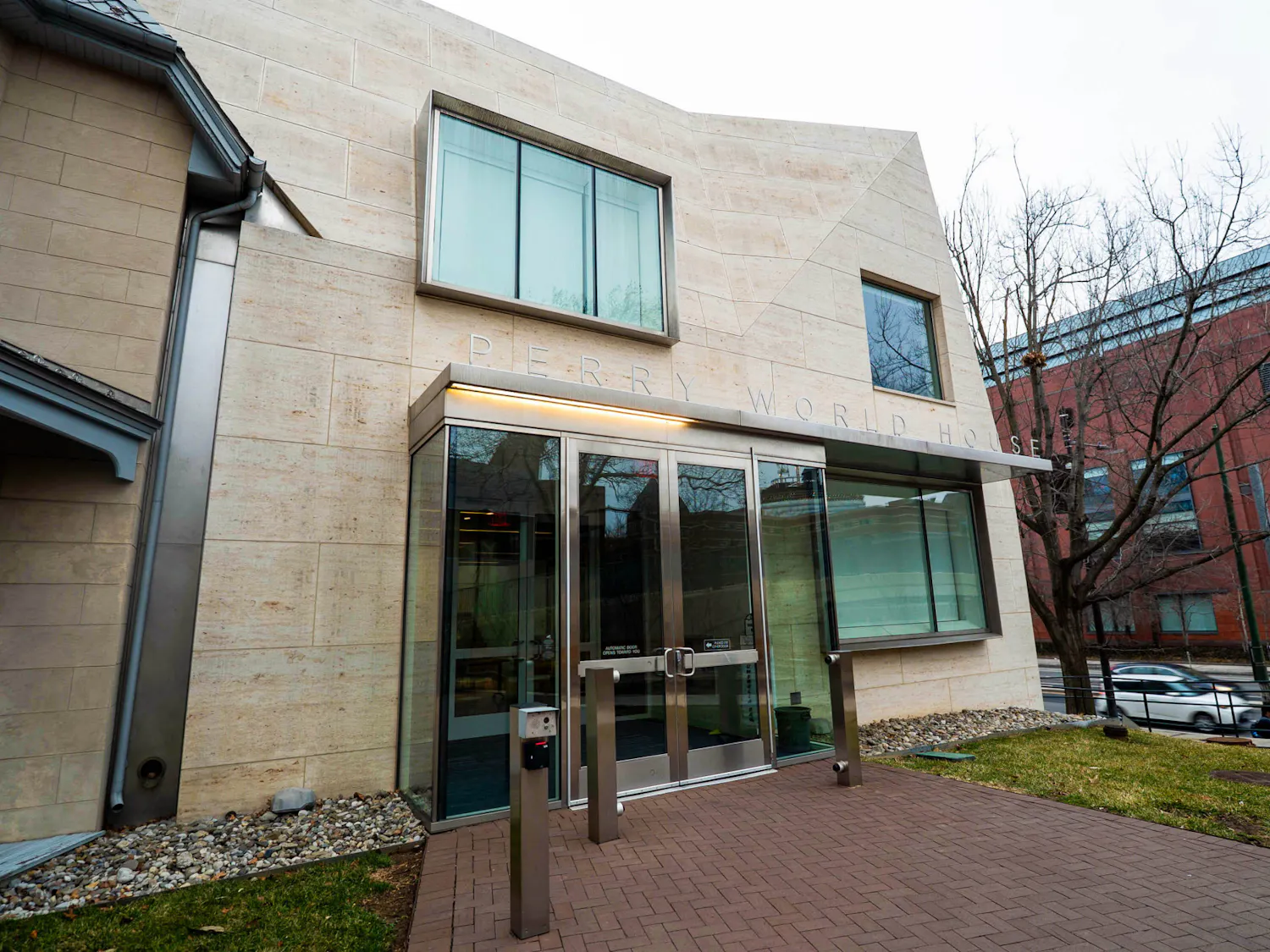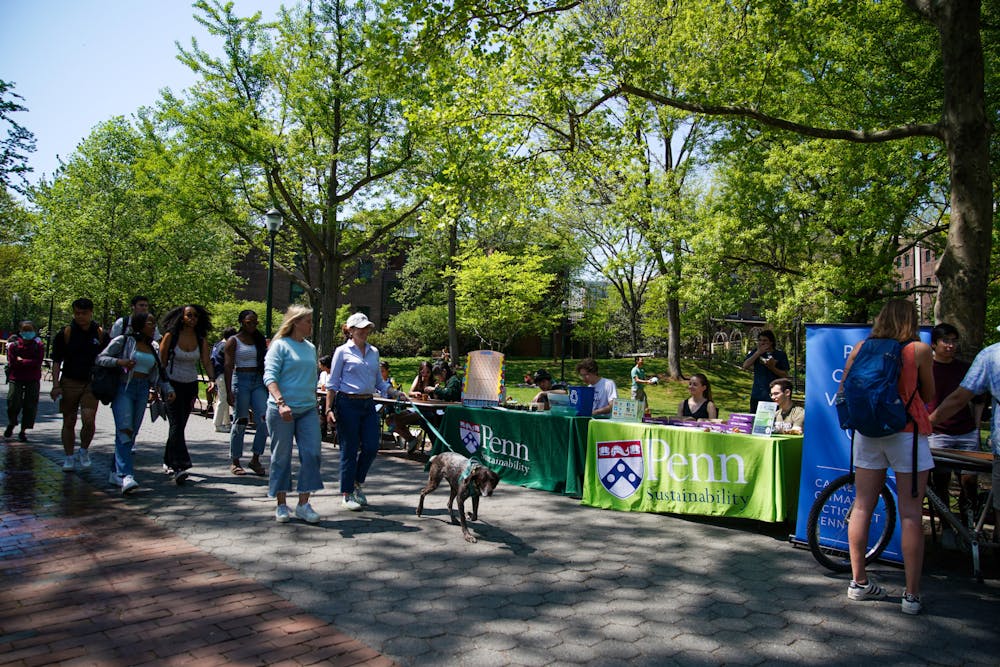
Established to ensure an environmentally conscious campus, Penn Sustainability works with students, faculty, and other services to address the University’s role and long-term impact on the climate.
Through partnerships with nearly 30 groups and centers across the University, the office coordinates efforts to address emerging challenges and efficiently carry out projects. With Penn’s latest Climate & Sustainability Action Plan now underway, The Daily Pennsylvanian explored the history of the University’s environmental initiatives and how they have changed over time.
An evolving approach to sustainability
While Penn has shown a commitment to sustainability dating back to the 1970s, the first University-sponsored sustainability initiative was created in 2007. That year, the Penn Green Campus Partnership was established as a student-led umbrella organization to promote sustainable planning and policy development.
At the time, College junior Mike Poll — the then-director of the Penn Green Campus Partnership and the associate director of the Penn Environmental Group — told the DP that the University “finally has an idea of where we are and what we do well.”
In 2009, PGCP launched the Student Eco-Rep program, an environmental leadership opportunity for Penn undergraduates.
Eight years later, PGCP rebranded to Penn Sustainability.
“They laid such an essential foundation that we are still working off of today,” Penn Sustainability Director Nina Morris told the DP.
PGCP spearheaded the still-existing Environmental Sustainability Advisory Committee, a collaborative consortium of various faculty, student groups, and offices across Penn working to help the CSAP “come to fruition.”
RELATED:
Events at Penn’s sixth annual Energy Week highlight data center growth, sustainable AI
Wharton Impact hosts panel on sustainable computing, AI resource usage
As Penn Sustainability’s strategic program, the CSAP is released every five years to evaluate progress and set priorities. Penn is currently operating under CSAP 4.0, which it released last year.
The plan identifies multiple initiative areas for Penn Sustainability: academics, utilities and operation, physical environment, procurement, strategic waste, transportation, and civic engagement and outreach.
According to Morris, each initiative ensures “we have a campus that stewards our corner of our ecosystem as best as we can.”
“One of the wonderful things about working in the climate and sustainability space is that we are constantly iterating and constantly adopting new ideas, and yet we’re always working towards the larger goal of creating a sustainable future,” she added.
The foundation for each CSAP is Penn’s commitment to carbon neutrality by 2042. Since 2009, there has been a 47% decrease in campus carbon emissions.
Initiatives on campus
By working with Penn Facilities and Real Estate Services, Penn Sustainability ensures that campus buildings meet standards set by the United States Green Building Council’s Leadership in Energy and Environmental Design rating system.
A map on the Penn Sustainability website shows the certification levels of current and pending projects. Currently, more than 30 recent projects have a gold rating, and two buildings — the Morris Arboretum Horticulture Center and the Vagelos Laboratory for Energy Science and Technology — have earned the highest certification level of platinum.
“We’ve always invested heavily in making our buildings as energy efficient as possible,” Morris said, explaining her collaborations with multiple departments at FRES, including the Office of the University Architect, Operations and Maintenance, and Design and Construction.
In the procurement focus area, Penn Sustainability oversees University purchases and Penn’s membership in the Sustainable Purchasing Leadership Council, a nonprofit organization “committed to driving positive impact through the power of procurement.”
Penn Sustainability also works with Penn Dining to secure locally sourced, plant-based ingredients and implement waste reduction practices. Currently, 67% of Penn Dining’s spending is direct toward plant-based products.
Another focus of Penn Sustainability is on-campus natural spaces and landscapes. Through the Ecological Landscape Stewardship Plan, the University has worked to improve the ecological design and management of open spaces across campus. Penn’s campus is a level-two-certified arboretum, with 34 green roofs and 6,800 trees.
Morris described the ELSP as an internal document used “to identify how to support biodiversity and steward our campus in a holistic way.” For example, the ELSP helps to support a “bird-friendly Penn.”
Penn Sustainability also assists faculty through its Green Labs program, working with lab staff to determine how to maintain equipment efficiently, manage freezer storage, monitor chemical inventory, and reduce waste.
Efforts across Philadelphia
Penn Sustainability also works to “connect with our broader community” to make sure projects align with “what our neighbors want to see,” Morris said.
The office runs an Off-Campus Move Out program and donation drive to provide free curbside pickup for gently used items for students moving out in May. These items — including clothes, furniture, and appliances — are redistributed among local families in Philadelphia.
The initiative was created to reduce the amount of litter and trash left in West Philadelphia during the off-campus move out process and to provide students with an opportunity to donate extra belongings.
“That was one of the biggest things that we heard from our neighbors,” Morris said. “We’ve been working on trying to meet the community’s needs.”
RELATED:
Events at Penn’s sixth annual Energy Week highlight data center growth, sustainable AI
Wharton Impact hosts panel on sustainable computing, AI resource usage
Staff reporter Samantha Dasika contributes to data and enterprise reporting and can be reached at dasika@thedp.com. At Penn, she studies neuroscience.