

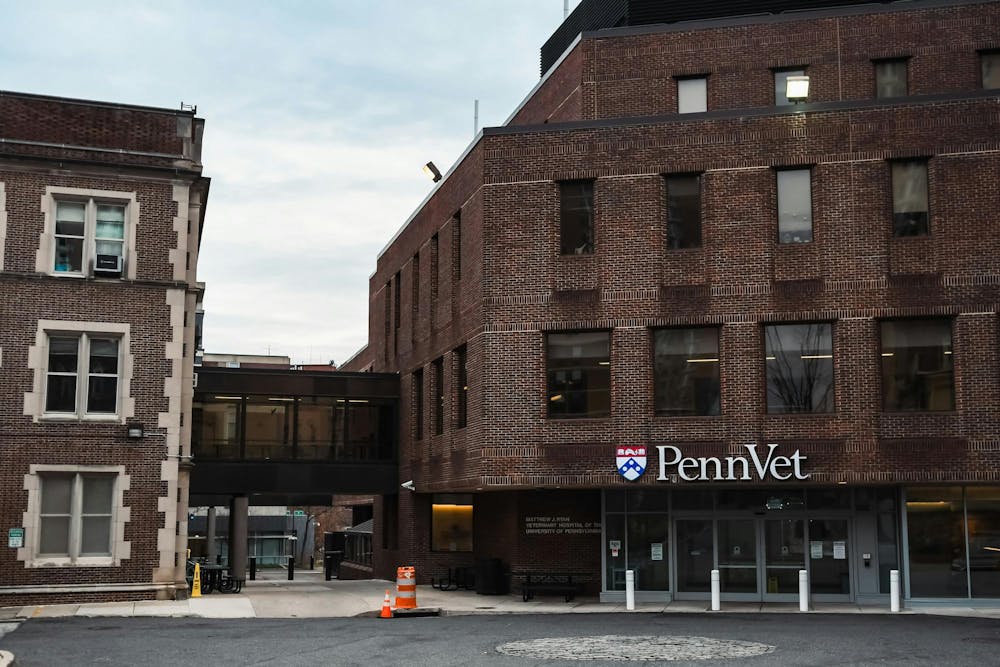
Penn is developing a $94 million laboratory building for the School of Veterinary Medicine's New Bolton Center campus in Chester County.
Construction on the laboratory is set to begin this fall, after the design plans receive necessary regulatory approval. The two-story building, coined the Penn Veterinary Diagnostic Laboratory, is expected to span 63,000 square feet.
Mark Kocent, an architect for Penn, told the Philadelphia Business Journal that most of the laboratory's costs will be covered by the state. The building will consolidate the Pennsylvania Equine Toxicology Research Laboratory and the Pennsylvania Animal Diagnostic Laboratory System, both of which are state-funded programs.
“The building will allow everything to be centralized and modernized in an all-purpose facility built for this kind of research,” Kocent added.
The design includes various laboratory, office, and examination spaces for animal studies. The necropsy suite will be used for post-mortem examinations that determine health issues, cause of death, and disease processes. The biosafety lab will be a high-containment diagnostic space for studying potential hazardous disease agents.
The New Bolton Center campus in Kennett Square spans about 700 acres and currently hosts Penn Vet’s Hospital for Large Animals, which opened in 1964 and includes veterinary services for several animals. The new laboratory will be located at 382 W. Street Road in Kennett Square.
The DP previously reported that the $17 million Gail P. Riepe Center for Advanced Veterinary Education is also expected to open this spring. The 11,800-square-foot building will be the first dedicated classroom space on the Kennett Square campus and offer new technology to assist in veterinary education.
The Riepe Center will include simulation labs, breakout rooms, and a lecture hall where students will be able to practice veterinary procedures and engage in large- and small-group exercises.
The building will also feature a fabrication lab — a dedicated space for faculty and students to design and produce custom training models and tools to further veterinary education. The lab will house advanced equipment — such as 3D printers and other fabrication tools — which will allow students to create replicas of materials that can be used to practice their clinical skills.
Staff reporter Ryan Rucker covers administration and can be reached at rucker@thedp.com. At Penn, he studies political science.


