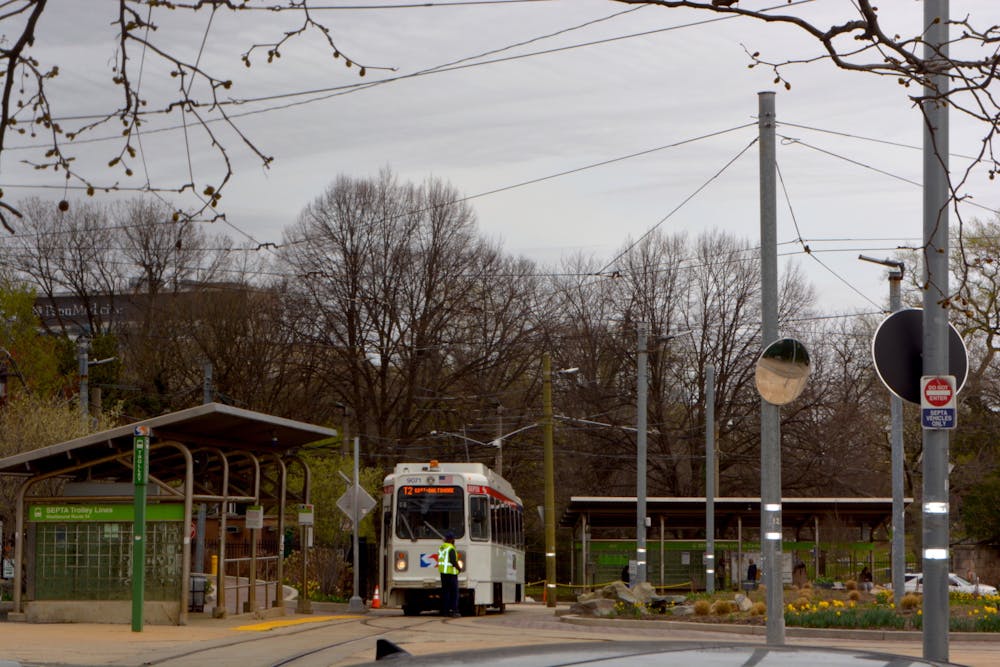
After SEPTA reopened its trolley tunnel between Center City and University City on Jan. 13, The Daily Pennsylvanian spoke with students about how the disruption and return to service affected their daily lives.
The closure, prompted by difficulties acquiring new wire equipment, began in early November and was extended until January because of unexpected delays. According to multiple Penn students, the closure increased travel times, forced commuters to seek alternative transportation methods, and added noise as trolleys diverted above ground.
College sophomore Greyson Forster, who is also a member of the SEPTA Youth Advisory Council, highlighted the inconvenience of the closure, noting in an interview with the DP that “losing 37th, 36th, and 33rd Street stations is hard for many people.”
He added that the closure personally impacted his routines, primarily when traveling to areas around 22nd and 19th streets.
“While there are many alternatives — like the L at 34th and 40th and the buses — they don’t completely match the speed and coverage of the trolley tunnel on campus.”
College senior Aaliyah Campbell discussed the trolley’s safety compared to other options, mentioning in an interview with the DP that it “feels a little bit smaller, so it’s like you’re less likely to run into something odd happening.”
She also emphasized the inconvenience of other transportation methods, including buses — which she said “are never actually there when they’re supposed to be.”
Instead of seeking other alternatives, Campbell said she “ended up walking a lot more than I used to.”
RELATED:
PennDOT approves use of capital funds for SEPTA, paving way for service restorations
From internships to exploration, impacts of SEPTA cuts felt across Penn community
College sophomore David Tran had a similar experience, recalling in an interview with the DP that he chose “not to use public transit to go into Center City” following the closure.
Tran said that while many students felt the impacts of the closure, “a lot of Penn students don’t even leave the campus or leave the Penn bubble in the first place.”
During the tunnel’s closure, trolleys that previously ran underground used above-ground tracks on 38th, Spruce, and 40th streets. Multiple students said this increased commotion and noise in the surrounding area.
“It just feels so much more disturbing,” Campbell, who lives near the 40th Street tunnel portal, said. “My window isn’t really sealed properly, so there's no blocking out their noise.”
She added that the trolleys also contributed to traffic and were slowed down by other above-ground vehicles.
“It’s also been disruptive to the drivers, because people are used to being able to just pull off to the side of the street,” she said. “If you’re in the trolley’s way, they’re just laying on the horn for minutes at a time.”
According to Forster, the SEPTA Youth Advisory Council has pushed for greater accessibility and safety measures as part of a trolley modernization initiative.
He explained that the council is “fighting for getting trolley modernization done and getting away from these 40-year-old cars.” The project would replace current trolley poles, which were partially responsible for the closure.
“If SEPTA had stable capital funding for the past many years and the trolley modernization project was able to get done, this won't even have happened,” Forster said.
Campbell similarly noted the need for the trolley system’s renovation.
“We’d be sitting outside in the cold for a while waiting for a trolley to come that just never did. I’d love it if they ran the trolleys closer to on time,” she told the DP.
The reopening comes amid SEPTA’s struggle for state funding. In August 2025, the agency faced a $213 million budget shortfall that threatened to cut service by half. To restore service, SEPTA was given permission to divert capital funding to cover the shortfall.