

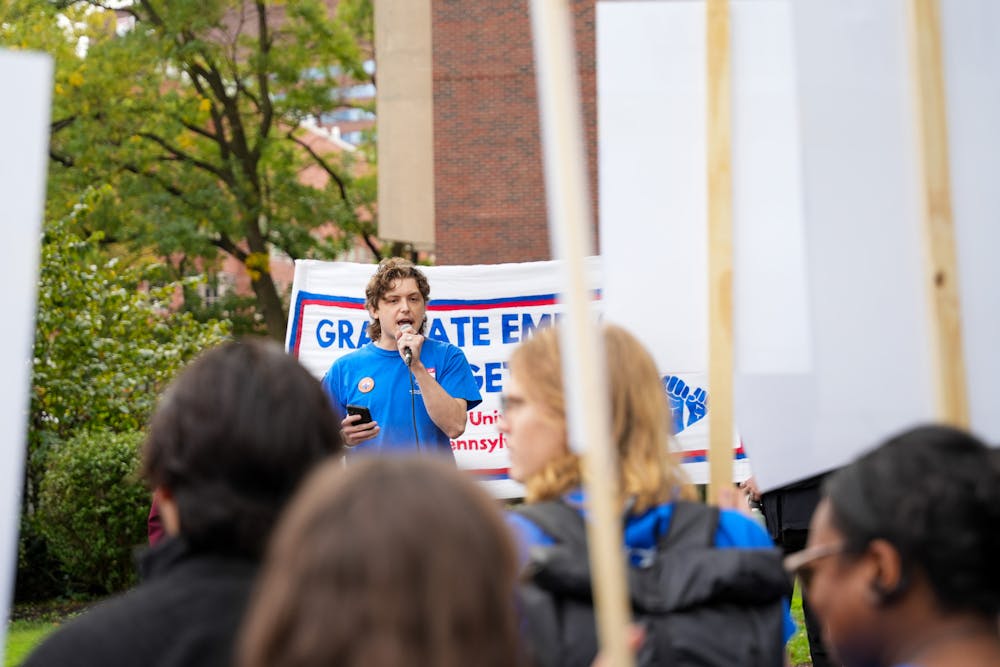
One year since contract negotiations began with University administrators, Graduate Employees Together — University of Pennsylvania reached a tentative agreement on an article protecting students from harassment and discrimination.
The article — titled “Prohibition Against Unlawful Discrimination and Harassment” — was accepted by Penn at GET-UP’s Tuesday bargaining session. The union’s victory came just days before its one-year anniversary of negotiations, which began on Oct. 17, 2024.
The provision was initially drafted on Oct. 30, 2024. According to GET-UP’s bargaining portal, versions of the article have been exchanged between GET-UP and Penn 20 times since its first iteration, making it the union’s most revised article to date.
GET-UP celebrated the agreement in a Oct. 15 statement posted to the union’s Instagram account.
“After much resistance from the University on the issues of protected classes and bathroom equity, we are celebrating a tentative agreement that will protect the rights of workers in the midst of the Trump administration’s attack on such protections in higher education,” the statement read.
In March 2025, Penn struck out multiple provisions against discrimination and harassment during GET-UP negotiations, which one organizer called an “attack on DEI.”
The statement stated that it was "no coincidence that we won this major article just after our largest public action yet: our picket last week, in which over 500 workers gathered to demand a fair contract.”
The Oct. 8 picket attracted over 500 workers in support of the union’s ongoing organizing efforts. GET-UP also announced that its members have begun pledging to authorize a strike in the event Penn continues to reject the union’s proposed contract.
RELATED:
https://www.thedp.com/article/2025/10/penn-rapup-union-meeting-initial-bargaining-demands
https://www.thedp.com/article/2025/10/penn-get-up-union-picket-strike-pledge
In an interview with The Daily Pennsylvanian, fourth-year bioengineering Ph.D. candidate Violet Ullman said that “grad workers are focused on gathering strike pledges … after the picket, which was really exciting and successful.”
Sam Layding, a Ph.D. candidate on GET-UP’s bargaining committee, also highlighted the history and recent progress of the union.
“We introduced [this article] a long time ago,” Layding told the DP. “We had a lot of back and forth with the University about it. After many, many months of deliberation on it, we did reach a tentative agreement.”
University of Pennsylvania Carey Law School student George Porter, who is a member of the bargaining committee, similarly described the protection as “one of our most significant [tentative agreements] to date.”
Porter added that the agreement promises to offer “important protections for all workers against unlawful discrimination.”
The article outlines measures that would provide stronger support to graduate employees in the event of harassment at work. It also enshrines “interim and supportive measures” designed to “ensure that the Graduate Worker can continue working in a safe and supportive environment” while their grievance is being filed or investigated.
GET-UP secured protections from retaliation against graduate workers who report or participate in an investigation into harassment and discrimination.
In April 2025, GET-UP launched a petition — which was signed by over 2,000 graduate employees — urging the University to make progress toward a tentative agreement on antidiscrimination.
Layding characterized the petition as a way for graduates to express that they “care deeply about having a robust discrimination policy.”
Ullman also emphasized the need for collaboration and “input” among graduate workers.
Porter added that working groups can offer “input from their own perspectives,” pointing to the international student working group currently assisting the bargaining committee.
While tentative agreements have been reached for many non-economic articles, Penn has yet to respond to any of GET-UP’s proposals pertaining to compensation and benefits — which were first sent to administrators in June.


