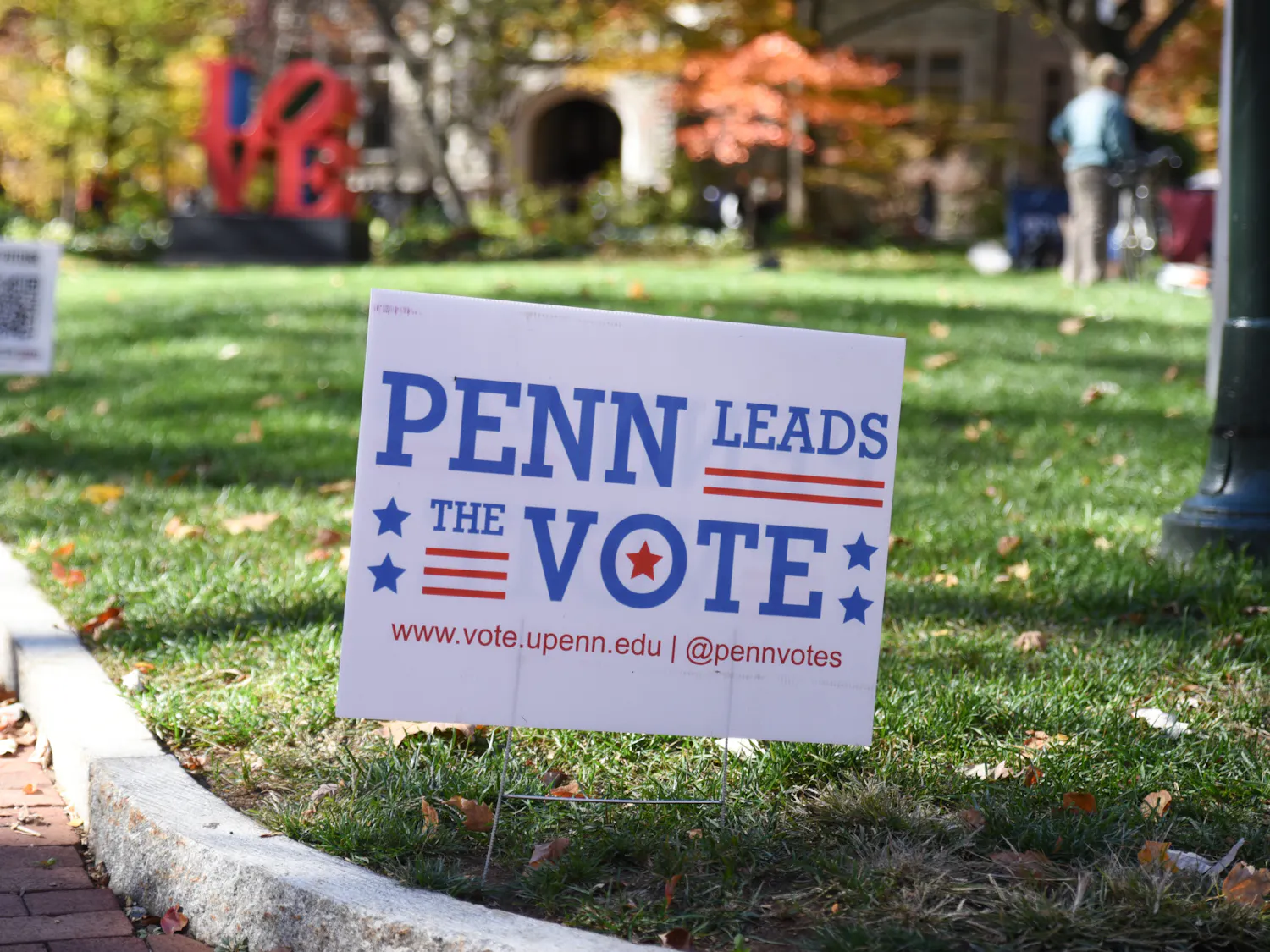
The grassy areas of campus have long been valued for their aesthetic, as places to lie down in the warm sun and relax and as gathering grounds to throw a football around. But by the start of the Fall 2015 semester, the grass as students know it at Penn will be no more. Facilities and Real Estate Services unveiled plans to replace all of the grassy patches on campus with state-of-the-art AstroTurf.
The decision to remove all of the natural grass on campus and replace it with an artificial variety came to light as FRES released its annual Landscaping & Campus Environment report on Tuesday. The report highlights several environmental and financial advantages for the switch to AstroTurf.
“First and foremost, artificial grasses such as AstroTurf need not be cut during the warm months,” Environmental Sustainability Associate Deborah Rimbaud said. “With that in mind, we have also eliminated the need to run CO2-emitting lawnmowers constantly, thus marginally reducing costs and the emission of greenhouse gases.”
AstroTurf boasts advantages over natural grass no matter the weather conditions. “Everyone at Penn has seen the drainage issues of Locust Walk during a moderate-to-severe rain shower,” Landscaping Manager Quentin Caulfield said, “and the switch to AstroTurf can help resolve those issues.” The L&CE report specifies that AstroTurf is upwards of 65 percent more absorbent than natural grass. “Literally, AstroTurf will act like a giant Sham-Wow across campus and reduce water runoff drastically,” Caulfield added.
The upkeep cost of AstroTurf is very little. “Unlike the regular grass that everyone knows that must be replanted every so often to keep it pretty, AstroTurf is a one-and-done deal — we put the AstroTurf in once and then we are done for 20 years,” Rimbaud said.
Not everyone at Penn is happy about this grassy switch. President of the Penn Good, Green and Natural Club Jean-Paul Althusser wrote a candid letter to FRES following the release of the L&CE report.
“Penn is already a phony enough place — the last thing we need is for the very grass we walk on to be fake as well,” Alhusser said in his letter. “Think of the wildlife on campus that may be potentially harmed by the introduction of AstroTurf.”
FRES claims that AstroTurf is of no detriment to Penn’s populations of squirrels and various wild birds. “It’s not as though Penn’s wildlife eats the grass anyway,” Rimbaud said.