

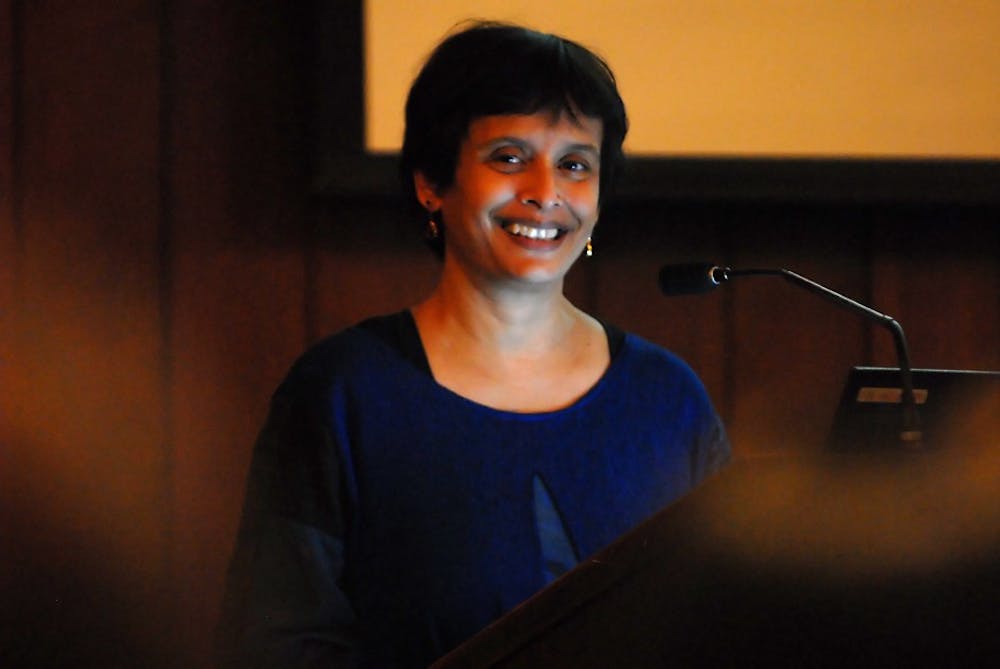
As if the tragedy of the death of unwanted baby girls in Asian countries was not distressing enough, Monica Das Gupta, a senior social scientist at the World Bank, believes that there is also reason to fear for the future of Asian men.
On Thursday afternoon, graduate students, Penn faculty and a number of other spectators gathered in Irvine Auditorium to hear Gupta speak on both the causes and the implications of son preference in Asia. Her presentation was part of the annual Evelyn Jacobs Ortner Center Lecture Series.
Gupta was educated in anthropology and demography at the London School of Economics. In her fieldwork in northwest India, she witnessed “the pressure that son preference puts on people.”
In comparing data from her fieldwork to the 1982 census in China, she discovered the resulting sociological patterns were almost identical and dove into a broader study of the causes behind this phenomenon as well as the “implications for the men left standing,” which she elaborated on in Thursday’s presentation.
When asked why this topic is important and why Penn students should be made aware of it, Gupta replied that “hundreds of millions of lives [newborn girls and single men] are involved, as is vast amounts of misery.”
Asia boasts the highest worldwide sex ratio — male to female — which Gupta claims is a product of the dominant family and political systems on that continent. The societies with the highest male-favoring sex ratios are organized through a patrilineal system in which it is assumed that an adult son can better support his parents — hence the son preference.
Gupta speculates that the consequences of son preference for men in Asia will continue to be dire because men who cannot find spouses tend to “cluster in poorer rural areas” and remain “vulnerable to working-age shocks,” among other perils.
Susan Sorenson, director of the Ortner Center and an organizer of the talk, hoped that this event would appeal to a variety of Penn students and raise awareness so that someday the traditional norms are abandoned and Asian “parents begin to believe that girls can help them out too.”
Spectators broke out in debate toward the end of the lecture. Among them, demography graduate student Abhijit Visaria was optimistic about Gupta’s research. From a Ph.D student’s perspective, it is exciting that “there are successful ways to do research on what the consequences [of such social issues] will be for large populations,” he said.

