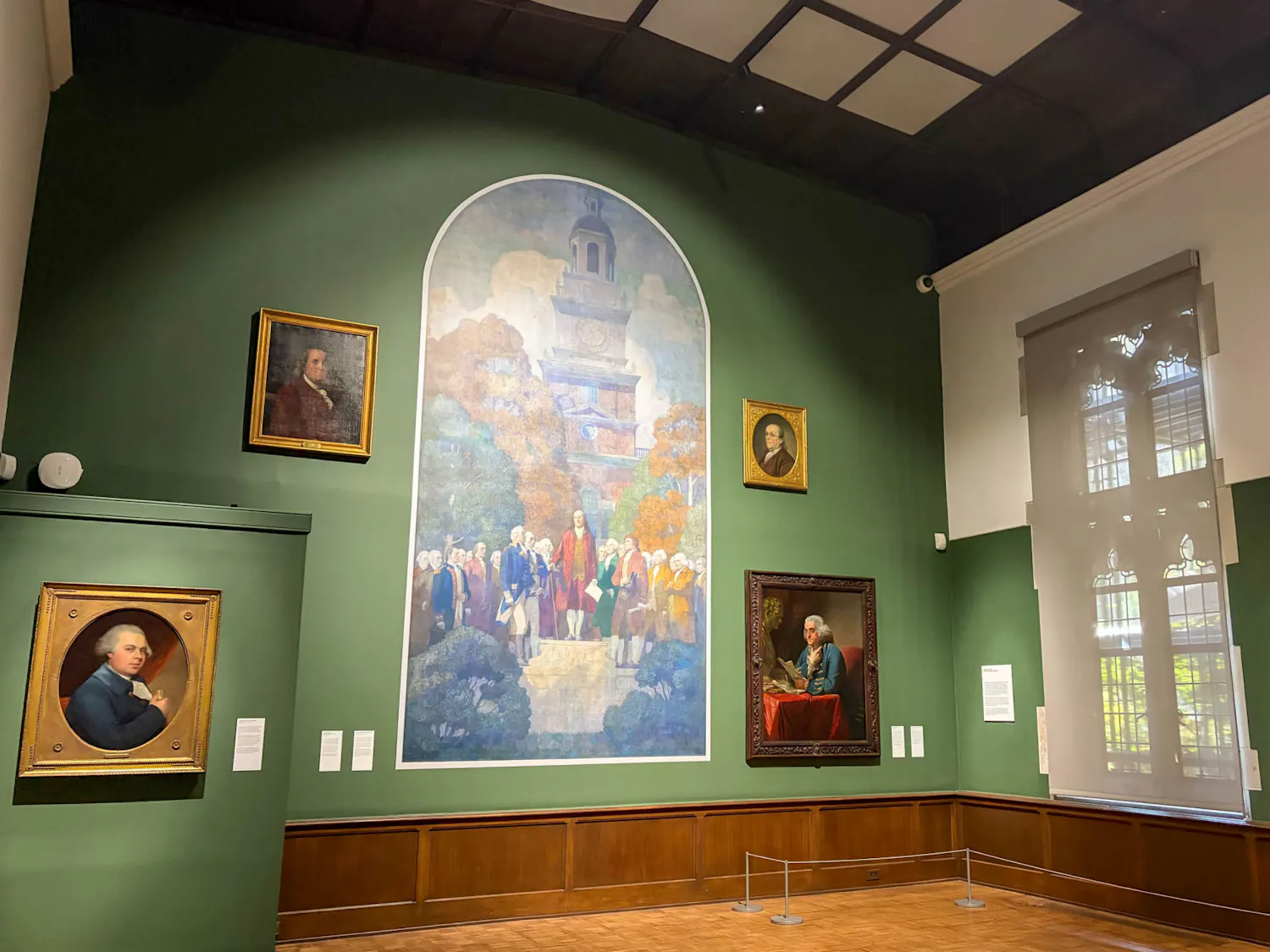
The Vice President of the United Nations General Assembly, the President of CARICOM and the U.N. Ambassador to Grenada spoke in the W.E.B. DuBois College House Wednesday night. These three positions, however, are all held by one person -- Eugene M. Poursow -- who spoke about current social and political issues in the Caribbean and how they relate to global politics. "The global record of unspeakable human misery cannot escape our lamentation as we witness humanity's retreat on several fronts in the midst of global prosperity," he said, adding that this was despite "miraculous" advances in technology. "[Social and economic problems are a] lengthening agenda of human deprivation," said Poursow, whose group CARICOM is an umbrella group that hosts the Caribbean nations' delegation to the U.N. "Before this time tomorrow, 40,000 children will die from lack of food and basic medicine." Other world problems that the ambassador cited were overpopulation, drug problems and excesses of military spending and arms production. He related these issues to the current conditions in Haiti. "The biggest issue in Haiti today is that of security," the ambassador said. "[We need] a new concept of security as well as a new paradigm of development that places the human being at the center of development," if the world is to solve these problems, he said. "Security can no longer be seen only as threats to a nation's border," he said. "In today's world, insecurity arises from worries about everyday life, from worries about fear of war, job security, income security, health security and environmental security." The Ambassador said that since 1804, Haiti has been the most politically unstable country in the Western hemisphere. He said Haiti's overemphasis on the military is a direct result of past foreign intervention. He said it is difficult for Jean-Bertrand Aristide, once elected president, to remain in power because the population of the country was mostly poor and illiterate. The population resisted Aristide's efforts to reduce the size of the army. The ambassador, discussing Cuba, said most Caribbean nations will support the U.N. resolution to lift the U.S. embargo in order to open up Cuba's growing free market and its rich biomedical resources to more parts of the world. "The U.S. embargo against Cuba is unfair," he said. "There are those that believe that the singular interest in the Caribbean is the demise of the Cuban revolution, and couldn't care too much about the other democratic countries." Poursow said most Caribbean nations lack the financial resources to exploit their own scarce natural resources and develop sophisticated infrastructures.
The Daily Pennsylvanian is an independent, student-run newspaper. Please consider making a donation to support the coverage that shapes the University. Your generosity ensures a future of strong journalism at Penn.
Donate