Nobel Prize winner Elie Wiesel has emerged as one of this half-century's foremost novelists and human rights advocates. A survivor of the Holocaust, his experiences and memories of what many call "The Tragedy" have been the force behind over 30 novels. Wiesel was born in 1928 in Sighet Rumania, and was deported by the Nazis to the Auschwitz concentration camp when he was 15. His mother and younger sister perished in Auschwitz, while his two older sisters survived. Wiesel and his father were later transported to Buchenwald, another camp. When Wiesel, the sole survivor of his family, moved to Paris after the war, he remained silent about the horrors he had witnessed in the Holocaust until 1958, when he wrote La Nuit, which was translated into English in 1960 as Night. Wiesel has continued writing until the present. His most recent books published in the United States are Sages and Dreamers and The Forgotten. Wiesel's writings have become a symbol for refuting the claims of revisionists who deny the Holocaust ever existed. David Stern, the undergraduate chair of Asian and Middle Eastern Studies, said his "early memoirs are rather stark testimony to the fact that it did happen." More recently, Wiesel has focused on defending human rights, often speaking out to political leaders on human rights violations throughout the world. Stern called Wiesel one of the world's moral leaders, saying Wiesel "speaks with compelling authority [to] the most powerful people in the world." Wiesel is a devoted supporter of Israel, and has defended the cause of Soviet Jews, Nicaragua's Miskito Indians, South African apartheid victims and the Kurds. His derision of human rights violations earned him the Nobel Peace Prize in 1986. Three months after receiving the prize, Wiesel founded the Elie Wiesel Foundation for Humanity, which seeks to create a forum for the discussion of urgent moral issues confronting different peoples. Most recently, Wiesel spoke out against the United State's failure to respond to the ethnic massacres in Bosnia. Speaking at last April's dedication of the Holocaust Museum in Washington, Wiesel turned to President Clinton and urged him to take action against the slaughter in Bosnia. Stern called Wiesel a "very brave and courageous spokesperson for human rights and for Jews in particular. He definitely has taken positions which are?brave and bold." Wiesel has also worked as a professor in various colleges on the East Coast. Currently, he serves as a professor of religion and philosophy at Boston University. Stern added that in the past 15 years, Wiesel has "moved far beyond being a novelist [and has become] a spokesman."
The Daily Pennsylvanian is an independent, student-run newspaper. Please consider making a donation to support the coverage that shapes the University. Your generosity ensures a future of strong journalism at Penn.
DonateMore Like This

A history of the Penn presidency
By
Aidan Shaughnessy
·
8 hours ago

No — AI will not wipe out humanity by 2030, Penn experts say
By
Addison Saji
·
8 hours ago

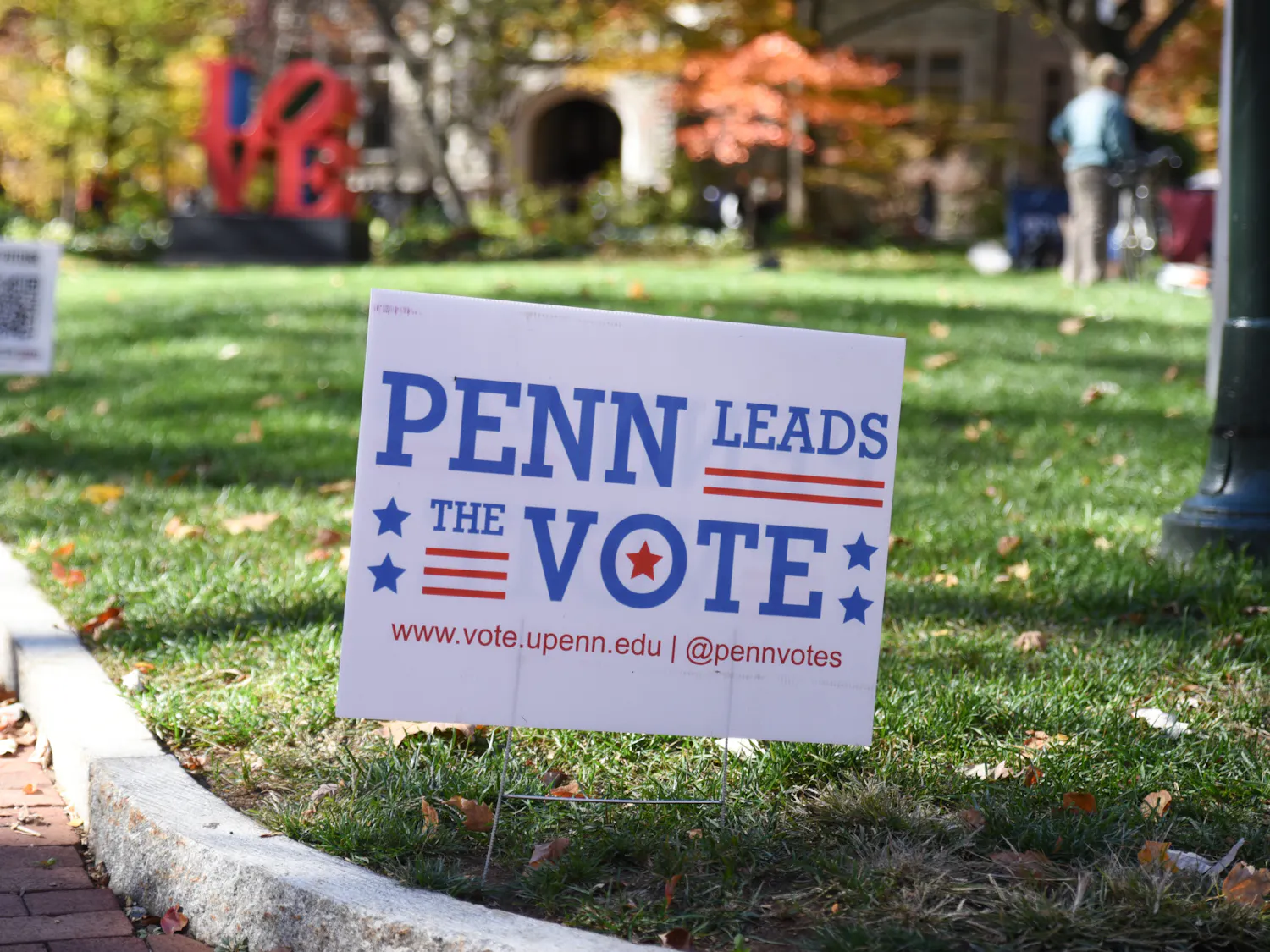
Penn student groups promote voter registration on Locust Walk
By
Mara Flores
·
8 hours ago