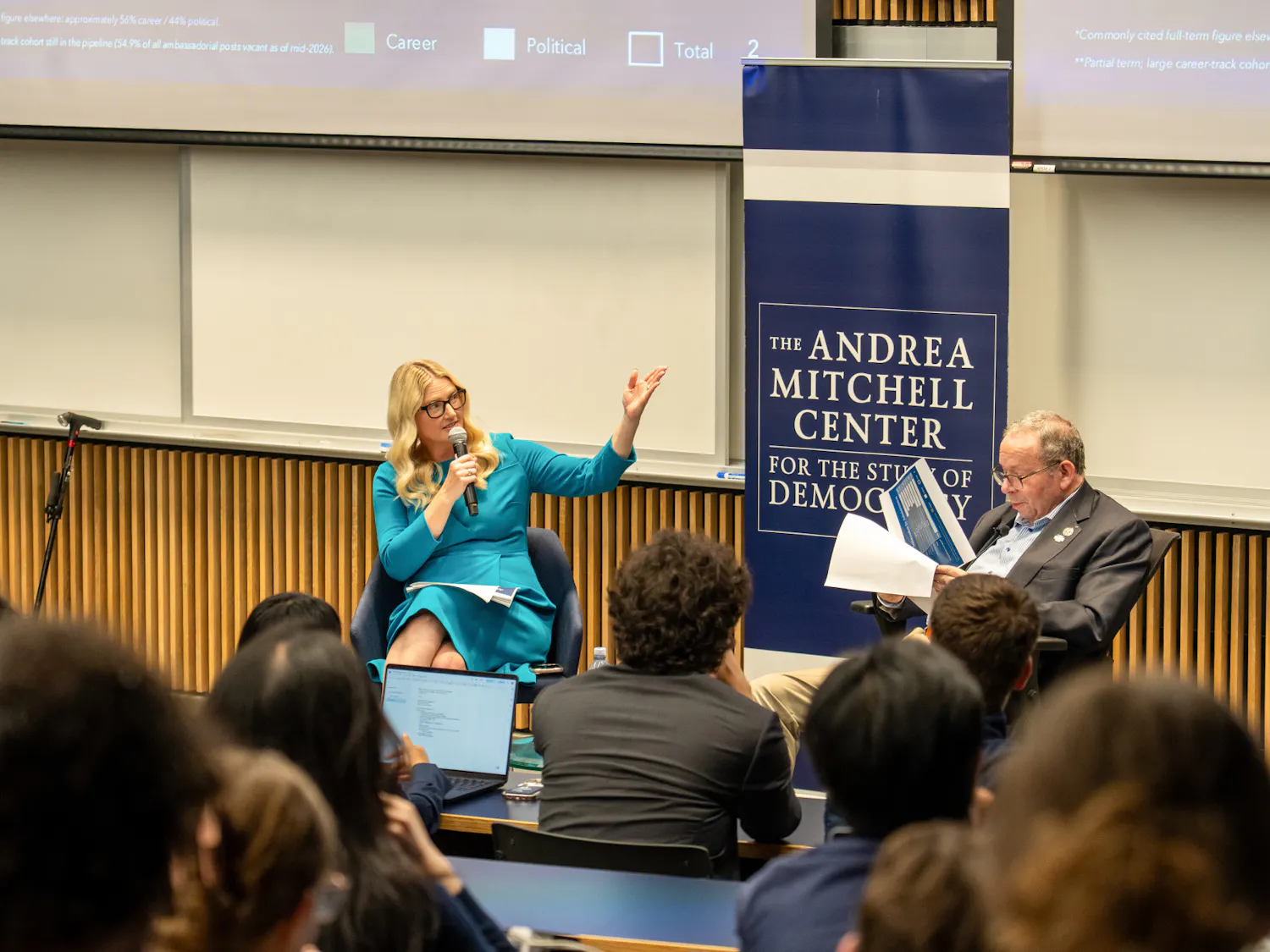
Almost 35 students gathered last night at the second meeting of the Edmund Burke Society to hear Paul Gottfried, author of The Conservative Movement, speak on the condition of conservatism in the U.S. Gottfried, a humanities professor at Elizabethtown College and a Guggenheim fellow, said his conservatism originated from his studies of European conservatism, which led him to question the existence of a conservative movement in the U.S. According to Gottfried, the U.S. conservative movement is far from dead. Rather, it is the site of lively disagreement between neoconservatives and paleoconservatives. He described the movement as having disintegrated into a "dogfight between the two sides." Paleoconservatives oppose the North American Free Trade Agreement and support immigration restrictions, Gottfried said. He added that the views of the paleoconservatives may be more palatable to the average American. He said that neoconservatives dominate the conservative field because they have better access to funding. In addition, Gottfried said neoconservatives gain their credibility from the acceptance of liberal journalists. "Neoconservatives ... have become indistinguishable from centrist liberals," Gottfried said. He attributes this similarity to a desire by neoconservatives to retain their political patronage under the new administration. Gottfried said he believed that paleoconservatives need to find "someone to do for them what Reagan did for the conservatives." Gottfried ended his speech by warning the audience not to categorize paleoconservatives as being merely the leftover remnants of the conservative movement. Audience members were enthusiastic about the speech. "I read the magazines he writes for and I consider myself a member of the paleoright, ... so naturally, I was curious to see what he had to say about the conflict between the two factions," said Temple University Law student Lincoln Herbert. "Even though he was critical of neoconservatism, he really showed that the conservative movement right now is very diverse," said Wharton sophomore Marc Teillon, a founder of the Edmund Burke Society.
The Daily Pennsylvanian is an independent, student-run newspaper. Please consider making a donation to support the coverage that shapes the University. Your generosity ensures a future of strong journalism at Penn.
DonateMore Like This

A history of the Penn presidency
By
Aidan Shaughnessy
·
10 hours ago

No — AI will not wipe out humanity by 2030, Penn experts say
By
Addison Saji
·
10 hours ago

Penn student groups promote voter registration on Locust Walk
By
Mara Flores
·
10 hours ago