Planning, writing, executing and processing the most comprehensive survey ever done about Ivy League students could take a very long time. And it did, according to the 12 University students who actually did all that. But it was all worth it. The project, which was part of an independent study with Adjunct Assistant American Civilization Professor Frank Luntz, started last year with a discussion session for interested students. "The project really developed along with our discussions on what we'd be interested in doing," College senior Jeff Lichtman aid. "Dr. Luntz's experience as a pollster combined with all of our interests in politics really helped lead us in the direction of doing this kind of survey." "The basic gist was to find out what Ivy League students actually believed in and what their practices were," College senior Lisa Nass added. The students started by picking their own areas of interest to study, each submitting to Luntz a three-page thesis complete with possible questions and hypotheses. "We started with 600 to 700 questions," Nass said. "We debated hour after hour discussing questions [to make sure they were] understandable, grammatically correct, [and] broad-based." After condensing the survey into just under 200 questions, the group split up and headed to the eight Ivy League universities to find people who had enough time on their hands to fill out such a massive survey. Surprisingly, a large number of students were willing to fill out a survey that took 15 to 30 minutes to complete. "It was very surprising to see how willing students were to help other students," Nass said. "They were very interested [because] it directly involves themselves." After returning from their treks around the Ivy League -- which for some meant missing several days of school -- the students spent a "mindboggling" amount of time crunching numbers and entering results from 3,119 surveys into rented computers. The result -- a 2,400-page "summary" with 450,000 cross-references -- took up eight volumes. The students presented their findings to U.S. News and World Report, which will print an analysis of the survey in the issue that hits stands today. Proud of the survey's success and their own accomplishments, the students now wonder why the University refused to fund their project. According to Lichtman, the costs incurred included traveling expenses, copying costs, computer rentals and the time of Luntz and his associates. "We were hoping that such an interesting project would gain the eyes and dollars of the University of Pennsylvania," Lichtman said. "We were rejected because of our methodology which [was deemed] faulty." Lichtman added that the students covered all expenses themselves. Nass said she is very pleased with the outcome of the survey, and hopes to be a participant in a similar undertaking in the future. "I never really realized the time it would take, but I've learned a lot . . . of things than can be applicable to real life," she said. "We would love to someday do a survey such as this on a national scale." The other students who participated in the survey include College seniors Allison Blankstein, Rick Greenberg, Josh Joseph, Benji Kupersmit, Ed Miller and Amy Schiffman, College juniors Kirsten Bartok and Scott Gallen, Wharton senior Ron Dermer and Wharton sophomore George Callas.
The Daily Pennsylvanian is an independent, student-run newspaper. Please consider making a donation to support the coverage that shapes the University. Your generosity ensures a future of strong journalism at Penn.
DonateMore Like This

A history of the Penn presidency
By
Aidan Shaughnessy
·
21 hours ago

No — AI will not wipe out humanity by 2030, Penn experts say
By
Addison Saji
·
22 hours ago

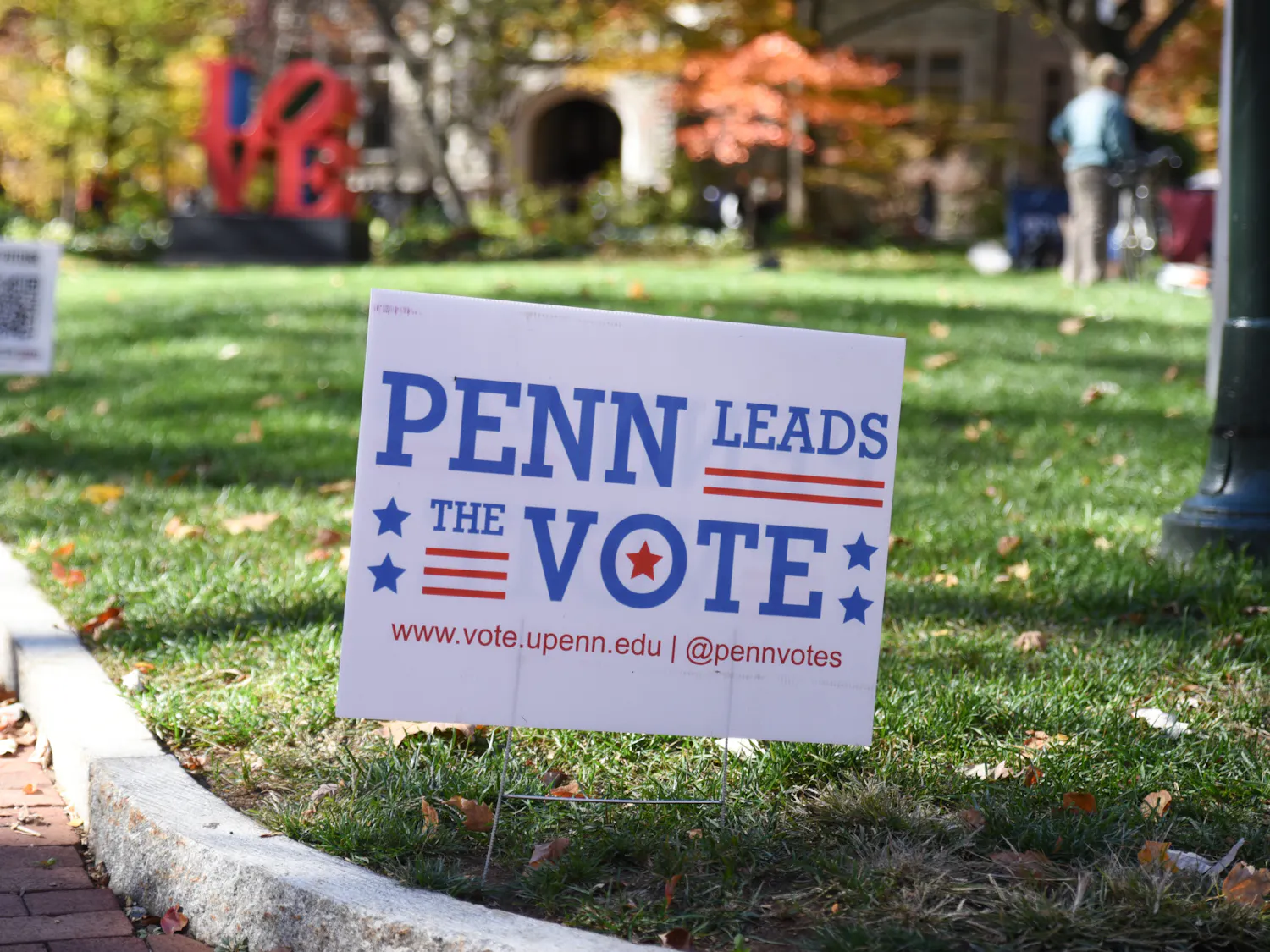
Penn student groups promote voter registration on Locust Walk
By
Mara Flores
·
22 hours ago