Calling child abuse a "treatable condition," an expert in dissociative disorders at the Hospital of the University of Pennsylvania spoke Wednesday afternoon about the effects of sexual abuse on the family system. "Survivors of childhood physical or sexual abuse tend to remain in a state of hiddenness, and a way to counter these feelings are to express and explore them in therapy," said David Fink, associate director of HUP's Dissociative Disorders Unit. Fink, who spoke to a full conference room at 4025 Chestnut Street, discussed the psychological syndrome that follows longstanding childhood sexual abuse. "This syndrome can be defined by a number of symptom areas," he explained. "Almost all of the people who have come for treatment have been suffering from some form of depression." Fink said other symptoms include an increase of anxiety, an increased number of perceptual disturbances, a deficiency in thinking clearly and solving problems, a confusion of identity and "a fragmentation of the ego." Fink used a case study of a former patient to illustrate the multiple ways in which this syndrome affects relationships later in life. Veronica, a 36-year-old single secretary and one of Fink's former patients, fled from any sort of intimacy and threw herself into extreme isolation, he said. "As a result, Veronica experienced difficulty forming or sustaining relationships," Fink said. Fink said Mary, another former patient, "never experienced any feeling of control in her relationships" and eventually turned to prostitution. "Mary had expressed great pleasure in performing these acts and mentioned that she felt both powerful and satisfied," he added. False memories of sexual abuse can be created by patients, Fink said, adding that psychologists must be "extremely cautious in assessing these things." "We have to, as best we can, try not to influence the patient," Fink said. Fink closed his hour presentation by saying that "keeping people in treatment and contact with you is the greatest therapeutic challenge of them all."
The Daily Pennsylvanian is an independent, student-run newspaper. Please consider making a donation to support the coverage that shapes the University. Your generosity ensures a future of strong journalism at Penn.
DonateMore Like This

A history of the Penn presidency
By
Aidan Shaughnessy
·
16 hours ago

No — AI will not wipe out humanity by 2030, Penn experts say
By
Addison Saji
·
16 hours ago

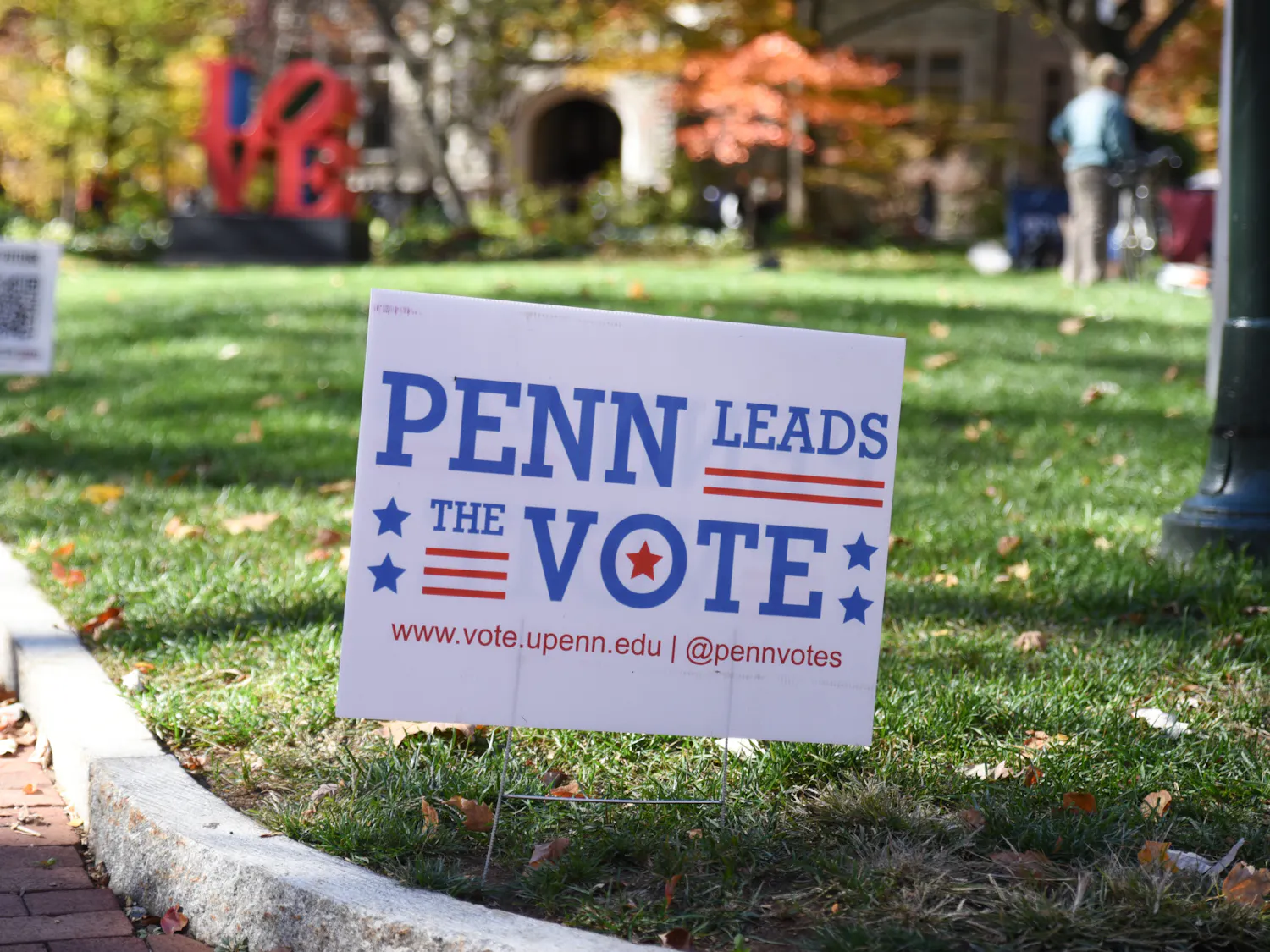
Penn student groups promote voter registration on Locust Walk
By
Mara Flores
·
16 hours ago