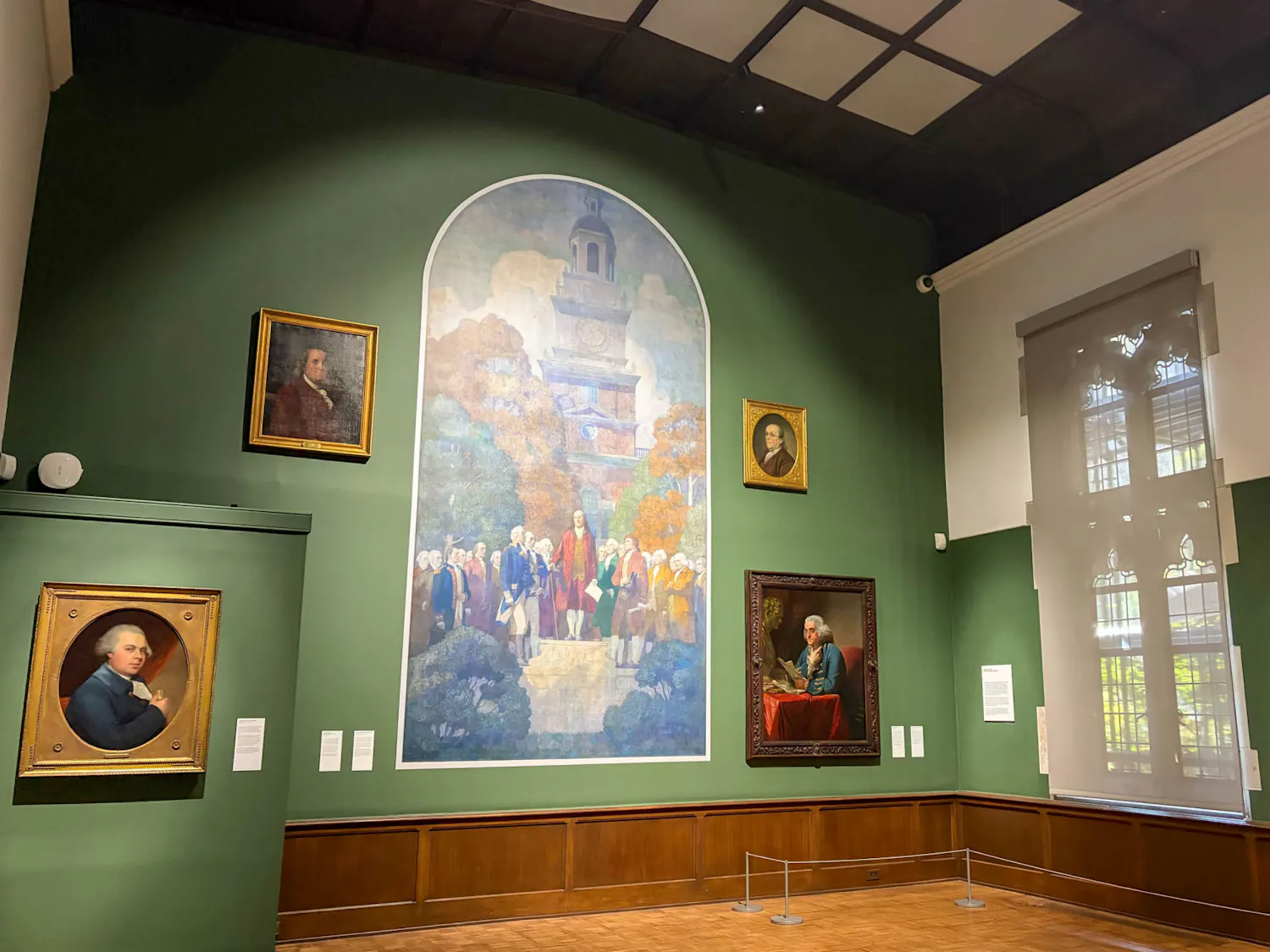
Over 150 pre-med students packed the Ben Franklin room Monday night to meet five people who might decide their fates if and when they apply to medical school. The five speakers, all officials at medical schools, emphasized that medical school applicants need more than a science-based course of study to be competitive candidates. "I think you want to make yourselves total human beings -- do other things besides just pure science," said Andrew Frantz, chairman of the committee on admissions for Columbia University's medical school. Gerald Foster, Harvard Medical School's director of admissions, discussed the non-academic preparation necessary for medical school and the medical profession, urging students to "get involved in the community." The panelists also discussed the changing role of medical school education, given current economic trends. Albert Kuperman, associate dean for educational affairs for the Albert Einstein College of Medicine, said that in general students now learn at hospitals -- where a minority of America's health care actually occurs. "We've learned to teach the traditional subjects well, but regarding subjects like prevention, we don't do that very well at all, and we certainly don't do well in population-based subjects either," he said. Citing a lack of instruction available for care outside of hospitals, Kuperman said he feels students need to gain "more experiences in ambulatory care settings" and medical schools must "somehow teach clinical prevention so that [students] will take it to heart and use it." Gaye Sheffler, director of admissions for the University's Medical School, stressed the importance of the personal side of the medical profession. "You don't want to sacrifice yourself for all of the courses and grades and material in the world," Sheffler said. "We know that your life as a physician and a student will be happier if it's balanced." The program, co-sponsored by Career Planning and Placement Service and the John Morgan Pre-Health Society, brought speakers from outside the Philadelphia area for the first time. After hearing from admissions directors at Harvard, Columbia, Johns Hopkins and the University, College freshman Carolyn Choi said seeing and interacting with the actual admissions officers helped students feel at ease with the application process. "A lot of pre-med students are intimidated -- they need to remember [the officers] are human," Choi said. Choi said the program "made me realize how dedicated I need to be, to go above and beyond the call of duty."
The Daily Pennsylvanian is an independent, student-run newspaper. Please consider making a donation to support the coverage that shapes the University. Your generosity ensures a future of strong journalism at Penn.
Donate