Efforts to empower the black community in the 1960s continued to thrive in the embodiment of University students who celebrated Black Solidarity Day on Monday. Approximately 40 students rallied in the rain at Superblock Monday night to demonstrate the spirit, capping off the day-long celebration with speeches by student leaders, handholding and the singing of the Black National Anthem. Black Student League President Martin Dias said that students wore black to "symbolize the connection" between the University's black community. "Whenever you have symbolic expressions they are geared toward fostering a sense of unity within the group that is expressing themselves," Dias said. Founded in 1969 by Carlos Russell, the national Black Solidarity Day is traditionally observed on the Monday preceding the presidential election to exhibit "black political empowerment," Wharton senior Dias said. Students showed concern about the societal changes that today's presidential election reinforces while understanding the past. "Black Solidarity Day is a frame of mind that should carry through, not just today, but all our lives," said College junior Nicole Brittingham. The day, which was sponsored by various black student groups, included a rally, discussion groups and a film. "Many mechanisms serve to unify African-Americans as a whole," Bill Roberts said. "This day has worked to unify the [black] campus groups on a common purpose." After the rally, the Alpha Phi Alpha fraternity presented a Black Panther newsreel. After the video, the BSL sponsored a discussion with former Panther's leader Bobby Seals. Seals' speech followed a plea by Baba Yatahma, who asked the students to rally for the release of "black political prisoner" Mumia Abu Jamal. Jamal is on death row for killing a Philadelphia police officer. Seals spent the hour relating his experiences with the Black Panther Party for Self Defense. The revolutionary political party peaked in 1969 with a membership of 5,000 people. "A lot of people do not know that a lot of racist politicians did everything they could to distort what the Black Panthers were about," Seals said. Seals tied his efforts of the past to what he envisions as a future. He said he envisions a future with "some cooperation of humanism." The former revolutionary called on students of the University's black community to unite and to keep in mind their "interconnection" with historical struggle. "Know the interconnection, but continue to get an education," he said. Students said they were confident that the day worked to reinforce their goals as a community. "The Black Panthers had educational, cultural, strategizing programs," Dias said. "They dealt with the spectrum of issues that blacks had to deal with."
The Daily Pennsylvanian is an independent, student-run newspaper. Please consider making a donation to support the coverage that shapes the University. Your generosity ensures a future of strong journalism at Penn.
DonateMore Like This

A history of the Penn presidency
By
Aidan Shaughnessy
·
9 hours ago

No — AI will not wipe out humanity by 2030, Penn experts say
By
Addison Saji
·
9 hours ago

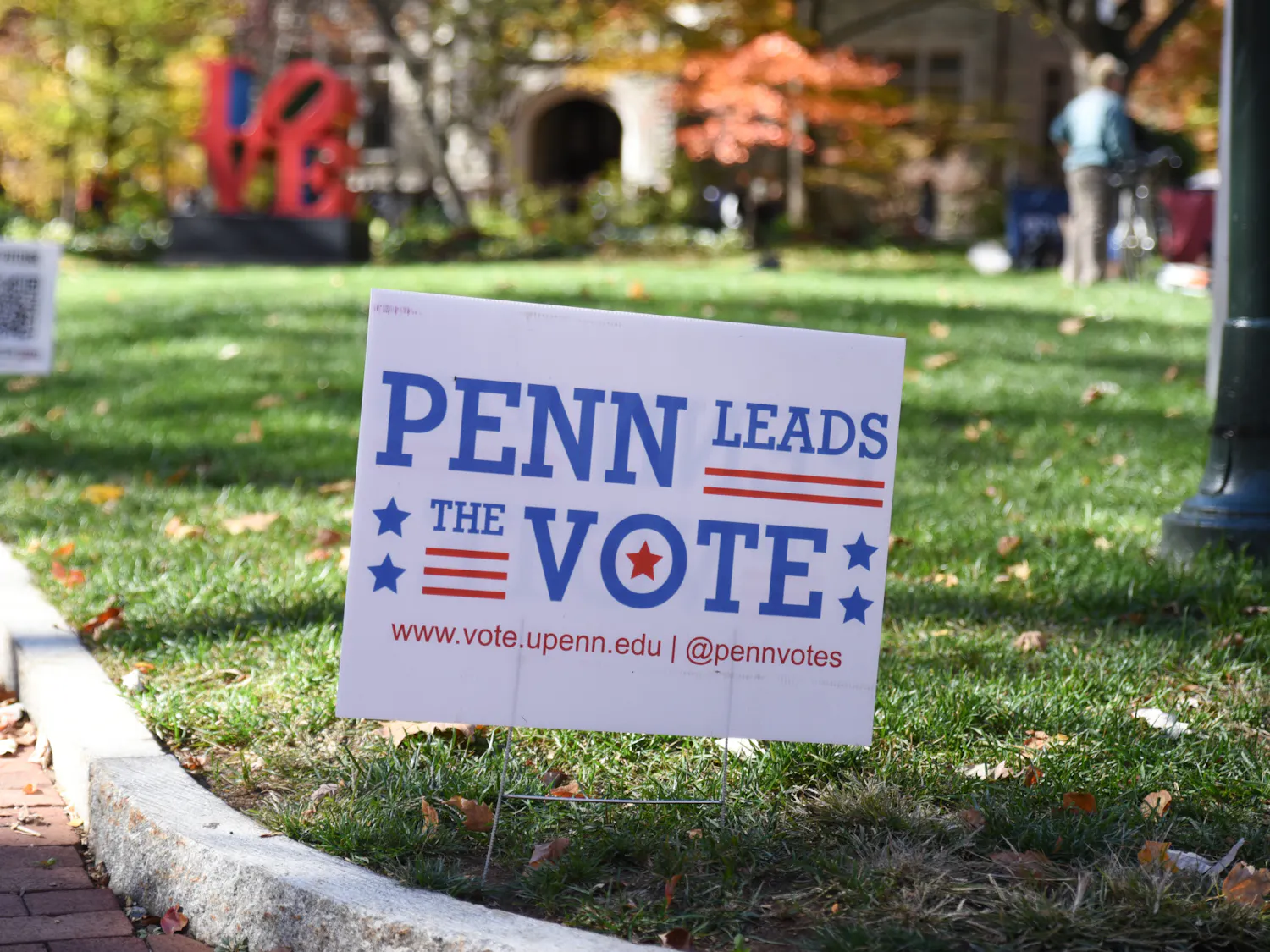
Penn student groups promote voter registration on Locust Walk
By
Mara Flores
·
9 hours ago