

Over the past nine summers, the Penn Center for Public Health has trained Philadelphia high schoolers to tackle health problems affecting their own communities.
The six-week-long summer program teaches high school students across the city to design, conduct, and present an original public health project. Next year, Public Health Pipeline Plus will celebrate its 10th anniversary.
The program maintains a “large focus on exposing students to the field of public health as a potential career path” through field trips and interactive workshops with “diverse” speakers, Penn Center for Public Health Program Manager Frankie Cameron said in an interview.
It aims to invite community health leaders who “reflect” students’ “lived experiences,” according to Cameron.
“We try to bring in a lot of young people who are from Philadelphia, of different races and cultural backgrounds, who have made change in the city,” he said.
For example, she said one speaker from the Sunrise Movement, a youth-led environmental advocacy organization, discussed “advocacy around environmental health issues in Philly, including the movement to reduce heat in schools by getting A/C units in schools.”
The program, launched in 2017, was born out of a 2017 Master of Public Health graduate Tolulope Oyetunde’s capstone project.
According to Cameron, Oyetunde was passionate about training and encouraging young Philadelphians to go into the field of public health and establishing a workforce of public health professionals who are from the “communities most impacted by health inequities.”
RELATED:
Penn receives national distinction award for University-wide community engagement efforts
Penn Center for Public Health announces new team to build skills for public health practitioners
In 2020, three years after receiving her degree, Oyetunde was diagnosed with breast cancer. In 2024, she died. For Cameron, “continuing this program and building on it in her legacy” is vital.
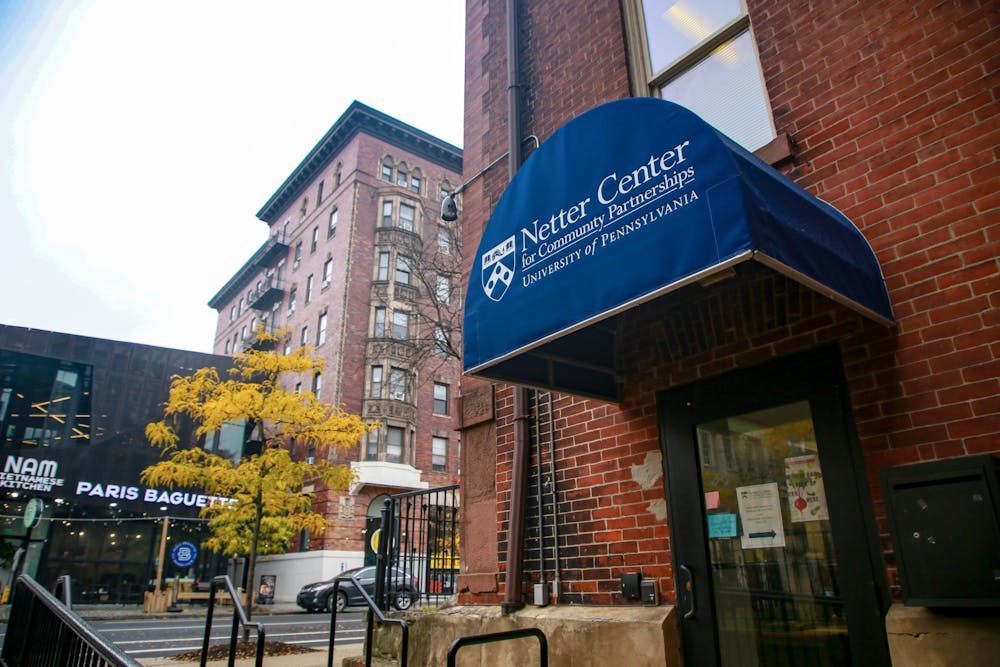
Cameron joined the program’s organizing team in 2023 alongside Zachary Steele, who now serves as the director of Moelis Access Science at the Netter Center for Community Partnerships.
Steele described in an interview how he and Cameron “revamped” the program’s curriculum to center on youth participatory action research. Steele added that this framework, which encourages project-based learning among young students, is powerful because it “centers kids’ lived experiences” and sets students up to conduct “original research.”
The program also hires five to seven graduate and undergraduate student workers who act as facilitators.
Semanti Pathak, a 2026 Master of Public Health graduate and former graduate assistant at the Center for Public Health, said in an interview that students are the primary researchers in the work they produce.
Pathak, who coordinated the summer program this summer, explained that the first two weeks provide foundational knowledge for public health work, including how health disparities prevail in Philadelphia.
Over the subsequent four weeks, students develop an original research question, craft and optimize survey tools, and conduct fieldwork using interviews and focus groups. At the end of the program, they deliver a presentation to program administrators, alumni, professors, and researchers.
It’s “empowering” for the students to have an audience “listening to them report on something that they themselves are the experts on,” Pathak said.
Public Health Pipeline Plus is one of many summer youth programs partially funded by the City of Philadelphia, which allows students to fill out a citywide application and receive stipends from the local government to participate. Most program participants come from the Netter Center’s University-Assisted Community Schools in West Philadelphia.
Cameron said that one of the beautiful “strengths” of the program is the “community bonds built within.”
“There are students who, just since I’ve been there, have come back to the program four summers in a row,” she said.
In the past, former students of the program have returned as facilitators after completing their undergraduate degrees.
Steele reiterated that Public Health Pipeline Plus is “a specific piece” within the Netter Center’s Educational Pipeline program.
“The program sits within this larger frame of kids developing an understanding of the wider aspects of healthcare and health sciences, and careers and pathways” in these fields, he added. For student facilitators, Steele added that working with local high school students provides an opportunity to “reflect” on one’s own schooling and “consider questions of education equity.”
“This is a really difficult time in history to be a young person,” Cameron acknowledged, adding that it is “striking” for students to find “adults who believe in them and their ability to make change.”
“It’s about showing how that expertise can be used to create change in their communities,” she concluded. “Showing them that, individually, it can be difficult to fight systems, but together we can.”
RELATED:
Penn receives national distinction award for University-wide community engagement efforts
Penn Center for Public Health announces new team to build skills for public health practitioners
Staff reporter Can Doga Bolukbasi covers science and health and can be reached at bolukbasi@thedp.com. At Penn, he studies biochemistry. Follow him on X @cdbolukbasi.


