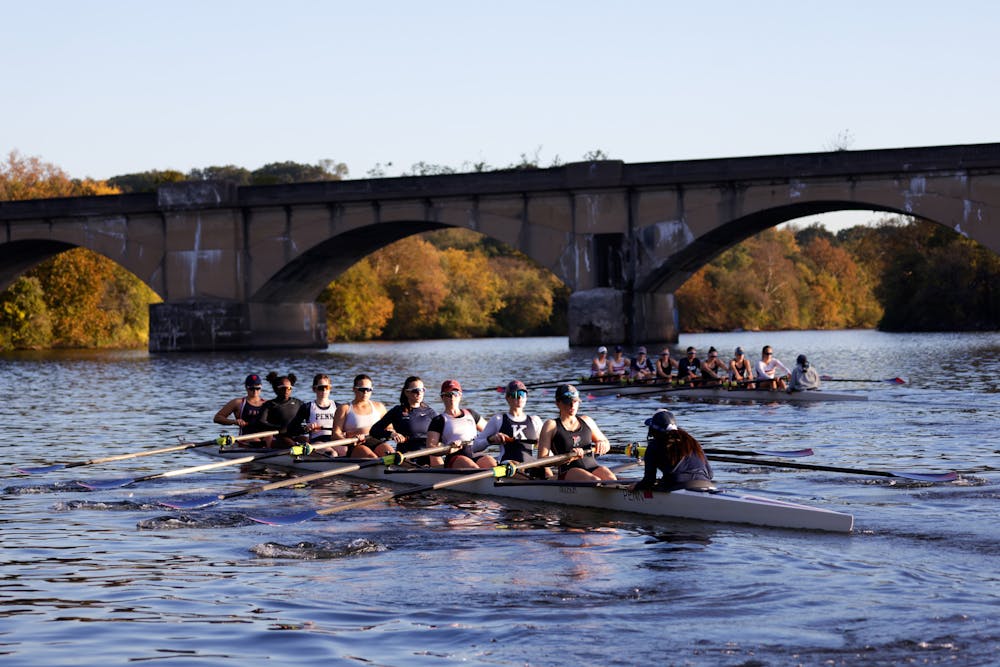
2016 Olympic oarsman Tyler Nase will take the helm of Penn women’s rowing at the end of July.
Nase previously served as the men’s lightweight rowing coach at Cornell and the team finished sixth at the International Rowing Association Championships last spring. His hiring follows former head coach Bill Manning’s sudden resignation due to illness in late May.
A Philadelphia native, Nase competed for La Salle College High School before being recruited by Princeton men’s lightweight rowing. He rowed on the first varsity boat all four years of college, securing a bronze medal finish at the 2010 Eastern Sprints and an IRA Championship title that same year.
Unlike most Ivy League athletes, Nase decided to pursue athletics professionally after graduating. He quickly earned a spot on the US Men’s National Team, capturing a silver medal at the 2013 World Cup.
By 2016, Nase had collected another World Cup medal and set his sights on the Olympics. After a hard-fought battle in the men’s lightweight fours semifinals, Nase’s Olympic career was cut short by a few seconds.
When the International Olympic Committee decided to remove the men’s lightweight fours from the 2020 Olympic slate, Nase made the most logical transition he could think of: transitioning from rower to coach.
Nase began his coaching career as an assistant men’s lightweight rowing coach at Penn in 2017, where he played a pivotal role in helping the Quakers secure their first Eastern Sprints title in 50 years in 2019.
“Twenty years ago, my rowing career began on the Schuylkill, and my coaching career began right here at Penn, so stepping into this role feels like coming home,” Nase said in a press release by Penn Athletics.
Last season, Penn women’s rowing floundered in conference competition, earning only one podium finish at the Ivy League Championships in May. For the first time in five years, the Quakers failed to qualify for the NCAA Championships via an automatic qualifying spot or an at-large selection.
Nase looks to take the program back to the national stage in his first season with Penn women’s rowing, hoping “to build a program where every athlete feels heard, supported, and pushed to become the best version of herself on and off the water.”