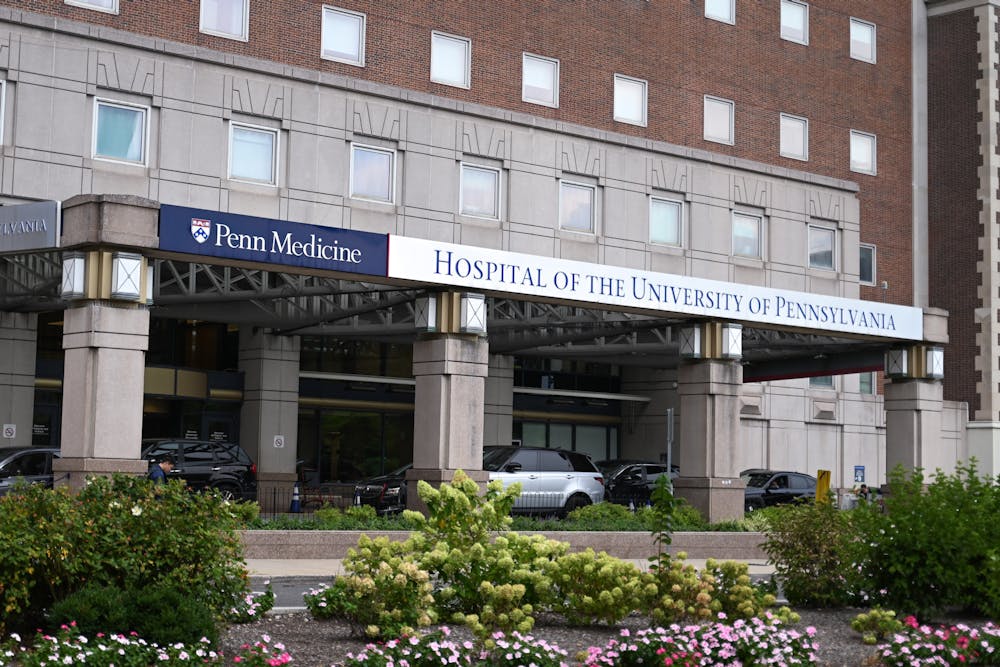
Penn placed No. 3 in a nationwide index measuring how effectively institutions use healthcare innovations to improve patient outcomes.
The Cure Innovation Index, launched last month, evaluated 303 universities and research centers for both clinical and commercial impact. Penn ranked first in research capabilities, second in entrepreneurial readiness, and eighth in market translation.
Harvard University claimed the top spot among the 243 United States universities listed, while Stanford University was second. Mass General Brigham placed first out of the 60 research institutes.
Cure, the organization that created the index, is based in New York and “supports healthcare entrepreneurs and innovators.”
In an interview with The Daily Pennsylvanian, Cure CEO Seema Kumar explained that the index scores universities based on three domains: research capabilities, market translation, and entrepreneurial readiness. Each contains specific indicators that “constitute what success looks like.”
Kumar added that the Cure Innovation Index is the “first of its kind” to measure how research institutions “turn breakthroughs into cures.”
“It creates a metric-driven approach to look at your own individual institution and compare yourself against your peers,” she said. “In addition to that, at the systems level, it gives you a map of where innovation is going.”
The Cure team determined eligibility for the index based upon an institution’s research spending, national classification, and data availability.
RELATED:
Penn Carey Law returns to No. 4 spot on 2026 U.S. News ranking
Penn Nursing reclaims top spot in global ranking
Kumar emphasized her desire for “everybody to be engaged in understanding” the Index.
“These are the best of the best of the best of United States academic research enterprises,” she said.
Anthony Giordano, senior vice president of marketing at Cure, told the DP that the the index displays a map of ranked institutions which investors and industry experts can use to find “pockets of innovation.”
“We’ve seen a lot of state government departments that are showing that multiple institutions within their state are at the top of biomedical innovation,” Giordano said.
Kumar added that the index takes an “evidence-based” approach to identify “barriers for innovation” in biotechnology.
“You need a system which can reliably and consistently churn out cures,” Kumar said. “Our mission is to convene everybody to effect positive change, to accelerate cures, and create a world where disease is a thing of the past.”
Kumar highlighted that academic institutions should focus on “basic science” and “real life application” amid reduced federal funding.
Penn faces several potential funding cuts for the 2027 fiscal year. In April, the White House proposed a reduction of National Science Foundation spending by over 50% and National Institutes of Health by 13%.
Using data from fiscal years 2021-23, the index creates as a “baseline” for measuring how changes in funding “reshape the translational landscape.”
The Cure team is currently working to collect data for next year’s rankings, which they hope will include international research organizations. With that intelligence, Kumar said, Cure would produce the ability to “improve, predict, and plan for the future to make the world a better and healthier place.”