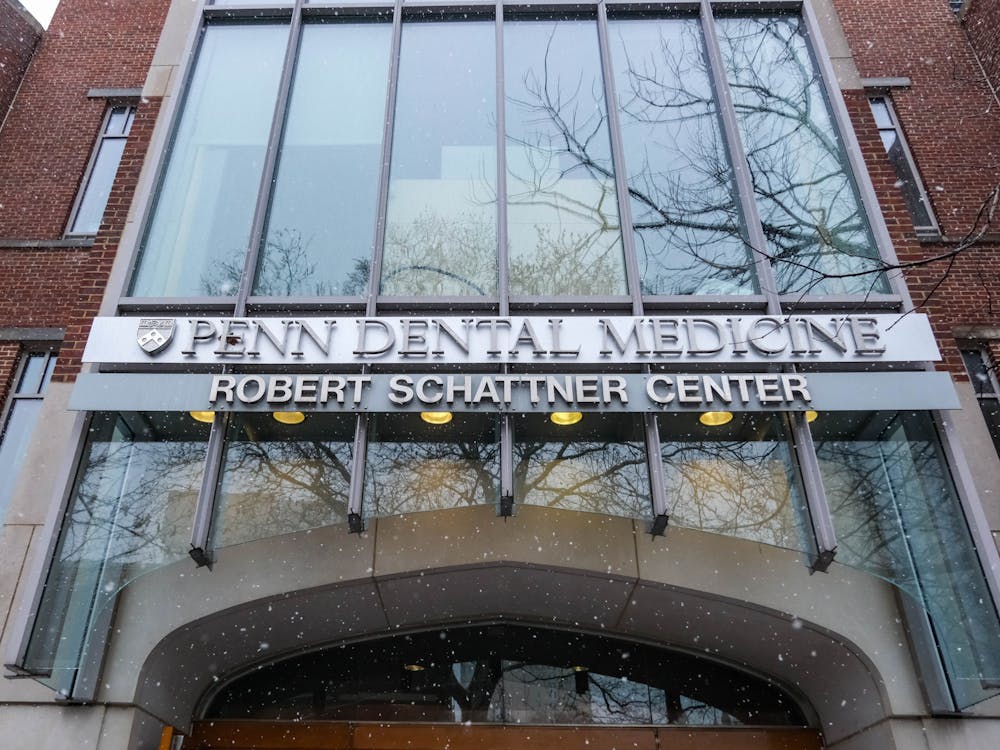
Penn researchers at the School of Dental Medicine have developed an artificial intelligence-powered process that identifies risk factors associated with tooth decay.
The team utilized machine learning to analyze public data from the National Health and Nutrition Examination Survey. Orthodontics professor Michel Koo and Biostatistics and Epidemiology professor Jason Moore led the December 2025 study, which was published in the Journal of Dental Research.
“This kind of machine-learning pipeline can turn complex national health data into clearer hypotheses and better predictive models—starting with oral health, and potentially extending to other areas of medicine,” Koo, the co-founding director of the Center for Innovation & Precision Dentistry, wrote in a Dental School press release.
Koo and Moore’s work was supported by researchers from the Dental School, Penn Institute for Biomedical Informatics, the School of Nursing, and Cedars-Sinai Medical Center.
The study, titled “Uncovering Dental Caries Heterogeneity in NHANES Using Machine Learning,” allowed the team to detect previously unrecognized patterns linking dental health with systemic, nutritional, and environmental factors.
NHANES surveys are conducted by the Centers for Disease Control and Prevention and contain data about Americans’ health determinants. These datasets can be “somewhat messy” because of various “non-uniform” aspects within a survey.
The researchers organized the data into multiple subsets, including by age. They found that most signs of cavities occurred in children under 5 — who also showed a pattern of iron and vitamin D deficiencies — and in adults older than 65.
“Our results point to the importance of age-targeted prevention and prediction—especially for young children and older adults—guided by real-world diet patterns, lab signals, environmental risk context, and potentially other signals,” Koo wrote.
Cavities are also associated with exposure to lead, among other metals and chemicals. Researchers noted that tooth decay “may not be merely a localized disease,” but could serve as a “sentinel marker of underlying systemic health issues.”
The study found “high-sugar-content foods” to be associated with tooth decay — such as apple juice, energy drinks, flavored milk, and ice cream.
The researchers also found that sleep may be related to tooth decay, but it “warrants further study.”
In February 2025, researchers from the Dental School, the School of Engineering and Applied Science, and the Perelman School of Medicine worked together to create a treatment option for apical periodontitis, a chronic dental infection that causes tooth loss and affects more than half of the world’s population.