

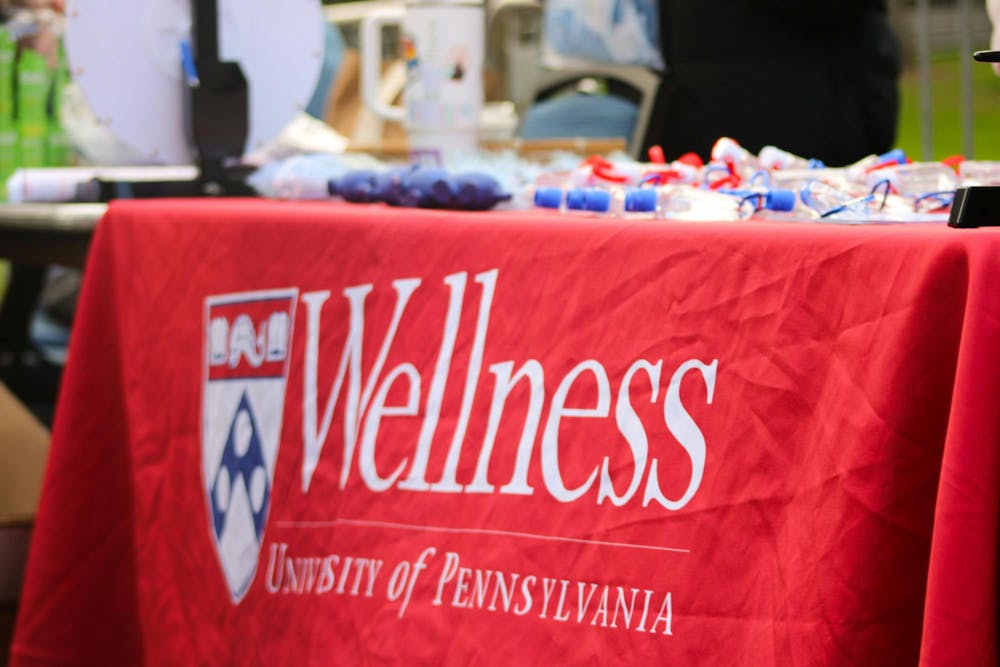
Penn offers several mental health and wellness resources to the University community.
From Wellness Week to peer counseling, the University's programming and student initiatives work together to provide comprehensive support to all students. As members of the Penn community settle into their new routines for the spring semester, The Daily Pennsylvanian compiled several of the University's mental health resources and how to access them.
Wellness at Penn has two pillars — Public Health and Wellbeing and Student Health and Counseling — which provide students with resources for physical and mental health.
Student Health and Counseling offers several free and confidential therapy options for students, including individual therapy, group therapy, and virtual teletherapy. The program delivers both “solution-oriented, short-term care” and referrals for specialized or long-term care.
Wellness at Penn also offers drop-in counseling services through its Let’s Talk program, which enables students to speak with trained professionals on campus without an appointment. It also provides peer wellness coaching, where students can speak directly with trained peer coaches one-on-one — often over multiple sessions — to discuss goals and challenges.
In an interview with the DP, Chief Wellness Officer Benoit Dubé explained that Wellness at Penn seeks to give students the “tips, skills, and tools” to navigate a stressful environment.
“There’s always someone 24/7, whether in person during regular hours or by phone after,” Dubé said. “We just want to make sure students know we are always there for them.”
The Public Health and Wellbeing team hosts interactive programming aimed at helping students build a “foundation for success.” It also has a training program, i care, for members of the University community to learn about intervention resources for times of stress.
“We invest a lot in providing students with skills and resources so that they can be more resilient, so that they cannot cower when stressed, but rather rise to the occasion,” Dubé told the DP. “That's why the public health and well-being team has workshops — we want to make sure that the entire campus is equipped to listen.”
Students struggling with mental health or suicidal thoughts can find crisis and hotline contacts on the Penn Wellness site. Penn Student Health and Counseling is available 24/7 at 215-746-9355, and students can contact the Reach-a-Peer helpline by text at 215-515-7332 from 9 p.m. to 1 a.m. daily.
Student organizations focused on wellness aim to reduce the stigma around mental health and provide support for their peers who need it.
The Penn Wellness Student Coalition collaborates with Wellness at Penn to implement well-being initiatives on campus, including its annual Wellness Week held each April.
College junior and PWSC events chair Mayokun Omitogun told the DP that Wellness Week covers the various “domains” of wellness through a diverse range of events that encourage students to try something new.
“A big part of wellness for me is finding that excitement in life again,” Omitogun said. "Seeing people be excited, and having great turnout — it was really amazing.”
In an interview with the DP, College senior and PWSC co-president Elizabeth Wang encouraged students who are struggling to trust themselves and find a community that makes Penn feel “more like a place you belong, like home.”
“When you meet more people, you realize that everyone is struggling and people aren’t maybe as intimidating as you thought they were,” Wang told the DP.
PWSC distributes funds to student groups that host wellness initiatives on campus, and currently supports eight constituents — including Active Minds, Body Empowerment Project, and Penn Benjamins.
Penn Benjamins’ peer counselors — who receive semester-long training on conversational techniques and mental health resources — provide short-term, confidential counseling services to undergraduate students with no reservation required. Students can visit one of their in-person counseling locations at Van Pelt-Dietrich Library, join a virtual session, or request a referral to professional services.
College junior and Penn Benjamins co-president Anjali Shankar told the DP that Penn Benjamins’ services help “break the barrier” for students looking for a safe space.
“Sometimes a peer perspective is valuable in understanding certain pressures and challenges that people face at Penn, whether that be academic or social,” Shankar said. “We are trained to offer solutions, but we are also trained to just hear people out, and maybe not give advice. I think that’s a very powerful part of what we do.”
Senior reporter Norah Findley leads coverage of science and health and can be reached at findley@thedp.com. At Penn, she studies environmental studies. Follow her on X @NorahFindley_.


