Penn’s Public Interest Technology initiative hosted a virtual FirePIT chat on potential applications of artificial intelligence on Thursday.
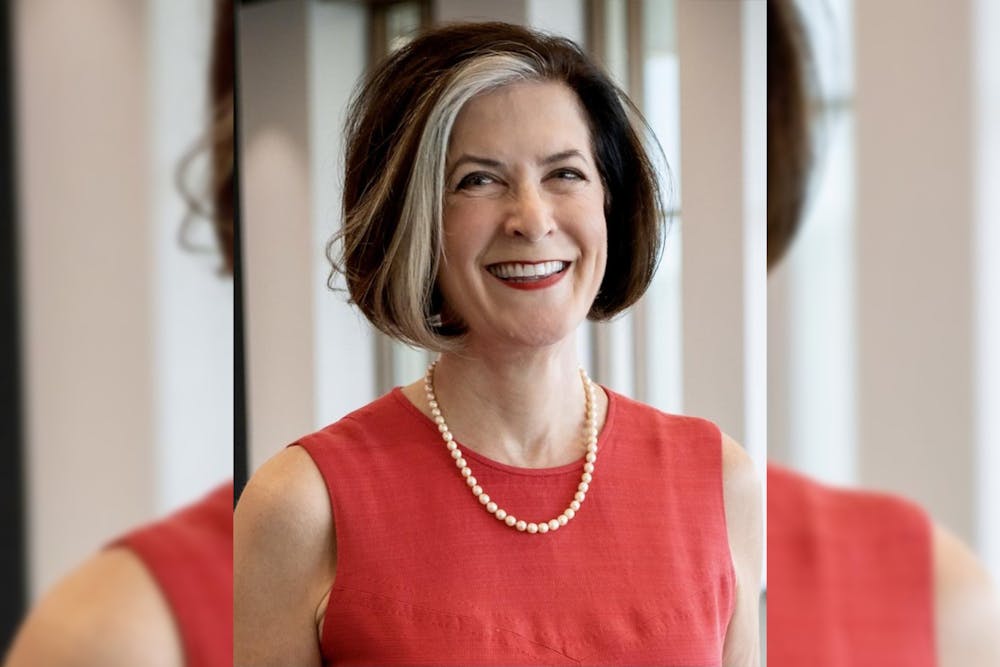
The discussion — led by professor of English and Special Advisor for Humanities at the University of Utah Hollis Robbins — highlighted the implementation of AI in a variety of fields, including its uses in literary analysis and biological sciences. Robbins also discussed the necessity of representing those outside the technology space within AI-related discourse.
The event was organized by Justin Hurwitz, Academic Director of the Center of Technology, Innovation, & Competition at Penn Carey Law School, in collaboration with Wharton Ph.D. candidate and SNF Paideia Graduate Fellow Ruben Ramirez Salas.
Hurwitz explained that the objective of the FirePIT chats is to emphasize the interdisciplinary nature of the issues they address.
“What I try and do with these talks is bring folks who have worked at the intersection of engineering and public policy and law to campus via Zoom to chat,” Hurwitz said.
Salas hoped that attendees would understand the less obvious dimensions of technological progress.
“These are conversations about technology, about policy, but with this ingredient of having the human in the loop,” Salas explained.
Penn is part of the broader Public Interest Technology University Network, a program for which Hurwitz is Penn’s liaison. Penn’s PIT initiative is organized by the SNF Paideia Program, which emphasizes the importance of dialogue within education.
RELATED:
SNF Paideia Program hosts University Chaplain to discuss book on ‘uncovering’ life paths
SNF Paideia Program hosts panel on populist conservatism featuring policy experts
Students in attendance asked about a variety of Robbins’ experiences, including her dinner with entrepreneur Sam Altman and her work with underrepresented poetry.
Robbins emphasized the importance of utilizing gaps in knowledge — in any chosen field — as a jumping-off point for further exploration.
“You can increase the contours [and] the boundaries of a question to be more inclusive,” Robbins said. “To do that starts with having a theory of knowledge.”
She also expressed the importance of collaboration between fields of expertise, a sentiment Hurwitz echoed. Robbins advised that students “partner with people who aren’t doing exactly what [they’re] doing but who are doing something similar.”
Hurwitz added that the “generative properties” of technology mean it can be used in a multitude of ways depending on both the knowledge and capabilities of the user.
“It’s really hard to predict how others are going to use these things, which makes it incredibly important when you’re developing [technologies] that you engage with others,” he said.
The event concluded with a reiteration of the necessity for non-technological voices within technological circles. Hurwitz referenced John Perry Barlow’s “A Declaration of the Independence of Cyberspace” as an example of the value of outside perspectives in technological progress.
The FirePIT chat series will continue next semester with two more events currently planned.
RELATED:
SNF Paideia Program hosts University Chaplain to discuss book on ‘uncovering’ life paths
SNF Paideia Program hosts panel on populist conservatism featuring policy experts
Senior reporter Lavanya Mani covers legal affairs and can be reached at mani@thedp.com. At Penn, she studies English. Follow her on X @lavanyamani_.