

Ahead of Election Day on Nov. 4, The Daily Pennsylvanian compiled Pennsylvania’s policies on several key national voting issues — many of which have drawn nationwide controversy.
The state’s stance on several issues — including mail-in ballots, voter identification laws, and statewide redistricting — will affect Pennsylvania voters this election cycle. Additionally, several positions on the ballot, including retention elections for three judges on the Pennsylvania Supreme Court, will have a hand in shaping the state’s election policies over the next few years.
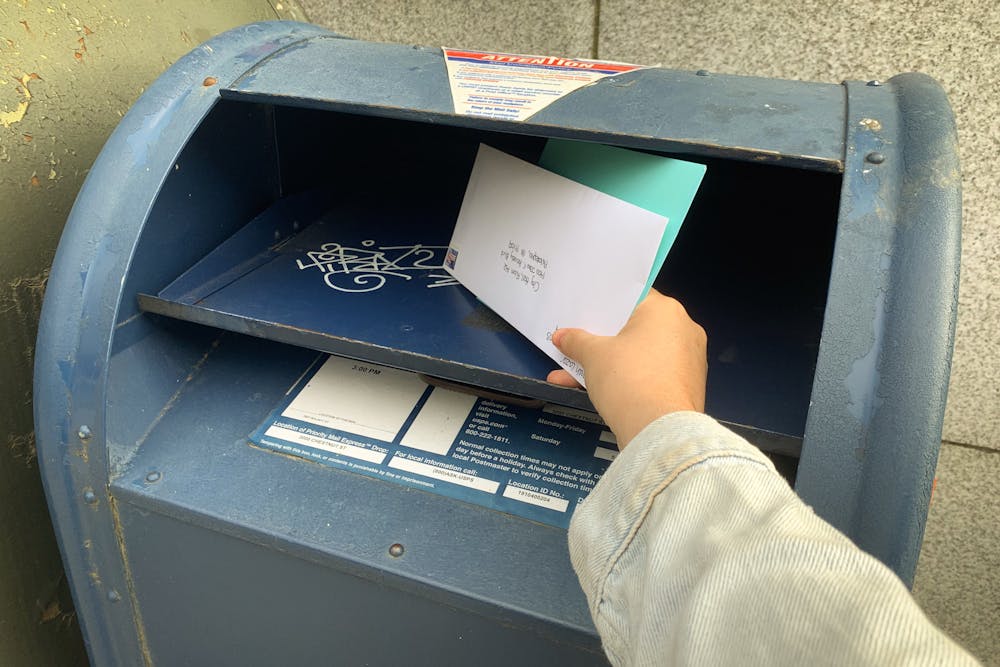
While the ability to vote by mail gained popularity during the COVID-19 pandemic, the practice has since become a contentious issue nationwide. In September, the Pennsylvania Supreme Court heard two cases on the issue.
On Sept. 26, the court — upholding a lower court ruling — asserted the counties’ Boards of Elections must accurately report when voters’ mail-in ballots are set aside. The decision cited disqualifying errors and procedural concerns with the distribution of provisional ballots.
The court also considered a separate case on Pennsylvania’s requirement to label the date on mail-in ballots. In August, a federal judge ruled that the requirement was unconstitutional, determining that the state will count ballots with missing or mislabeled dates. The court heard arguments on Sept. 10, but it has yet to release a final decision on the issue.
Over 1 million Pennsylvania residents requested a mail-in ballot for this election, marking a 17% increase from the 2021 municipal election — the most comparable recent election — and a 9% increase from 2023. While registered Democrats still make up the majority of mail-in ballot requests, there has been a 35% increase in requests from registered Republicans for mail-in ballots since 2021, compared to a 9% increase in requests from registered Democrats over that same time period.
While most voters are unlikely to see a difference in the process of requesting, obtaining, completing, and returning their mail-in ballots, Political Science professor Marc Meredith recently told a local news outlet that voters should have confidence in their mail-in ballots — even if they make mistakes.
“Those decisions have provided some clarity about how counties should handle ballots that come in with an incomplete affidavit or missing secrecy envelopes,” Meredith added.
RELATED:
Phila. City Commissioner emphasizes importance of voting ahead of upcoming election at Penn event
Penn experts, professors stress importance of voting in local races ahead of general election
The deadline to register for a mail-in ballot was Oct. 28., as was the deadline to request an absentee ballot. Voters in Pennsylvania can request absentee ballots without submitting an excuse, making it one of 28 states that do not require voters to provide an excuse to get an absentee ballot.
Ballots can be submitted through mail or dropped off at the county election office, and they must be received by the county election office by 8 p.m. on Election Day.
Pennsylvania is also one of the few states that does not require voters to present a valid ID when voting. Voters in 36 states across the country are required to present identification in order to vote on Election Day.
Along with changing voting policies, several states have made mid-decade moves to redraw congressional lines to gain political favor. The wave of redistricting came as 1968 Wharton graduate and President Donald Trump voiced support for the initiatives.
Earlier this year, Texas Gov. Greg Abbott signed a new redistricting bill that would redraw the state’s congressional map in favor of the Republican Party. On Election Day, California voters will consider Proposition 50 — titled “The Election Rigging Response Act” — which, if passed, will “[approve] temporary, emergency congressional district maps to counter Donald Trump’s scheme to rig next year’s congressional election.”
Following the moves in Texas and California, several states have announced their intentions to follow suit.
While Pennsylvania’s state laws and constitution do not prohibit congressional redistricting from occurring more than once a decade, Gov. Josh Shapiro explicitly disavowed the efforts in August.
“We’re not doing that here in Pennsylvania,” Shapiro told reporters at a news conference earlier this year. “It’s not on the table here.”
At a different press conference, Shapiro accused Abbott and Trump of “rigging the system to stay in power.”
“I think it’s shameful that both the governor of Texas and the president of the United States want to rig the election in a way that preserves a U.S. House majority for them,” Shapiro stated.
The last day to register to vote in Pennsylvania was Oct. 20. Election Day will take place on Nov. 4.
RELATED:
Phila. City Commissioner emphasizes importance of voting ahead of upcoming election at Penn event
Penn experts, professors stress importance of voting in local races ahead of general election
Staff reporter Gabrielle Ostad covers campus politics and can be reached at ostad@dailypennsylvanian.com. At Penn, she studies Middle Eastern studies and international relations.


