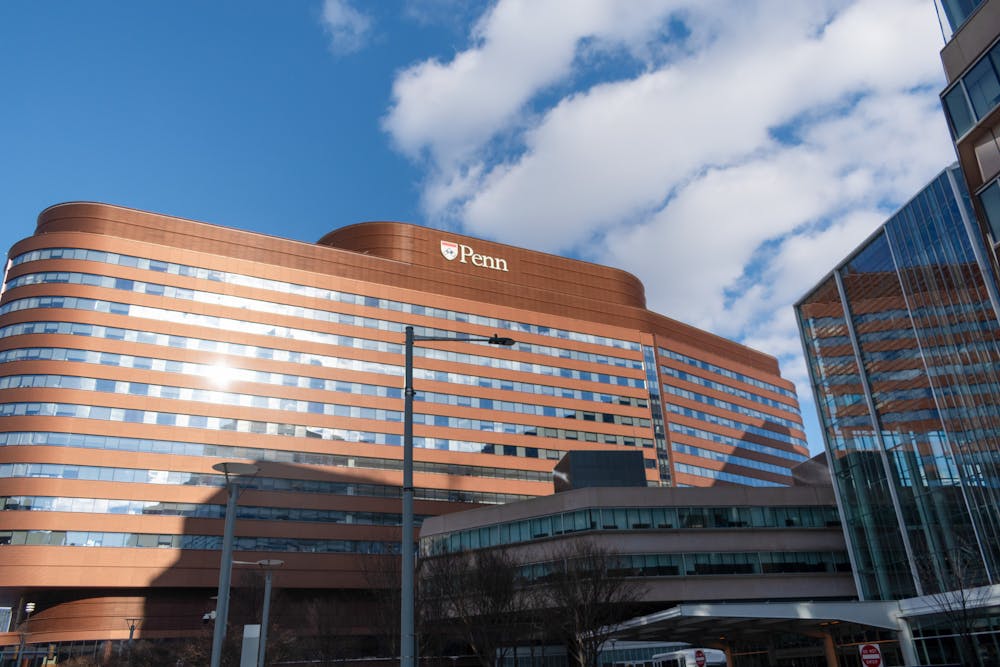
Penn Medicine has rolled out new technologies and strategies to combat the toll that cancer treatments can take on patients’ time.
In an Oct. 14 news release, Penn Med recognized the large time commitment that often interferes with cancer patients’ livelihoods. The release went on to outline three solutions that are being implemented to combat the issue: self-triaging using text messaging, 24-hour operations for its Oncology Evaluation Center at the Hospital of the University of Pennsylvania, and a home-care nursing program called “Cavalry.”
2012 Master of Science in Clinical Epidemiology graduate and Perelman School of Medicine associate professor Ronac Mamtani explained how repeated delays and inconveniences contribute to “time toxicity.”
“More than 50% of time toxicity comes from commuting to, waiting for, or receiving acute care traditionally delivered in an ED [emergency department] or hospital,” Mamtani said.
He stressed that combatting time toxicity centers around being open to alternative approaches and a readiness to try new methods and is less about the specific illness a patient has.
“You can’t innovate if you’re just trying to ‘fit in’ — that’s why you have to ‘fit-out,’” Mamtani said.
“Time toxicity” is a relatively recent term, and there has been increasing recognition of the time burden that cancer patients take on when they pursue treatment. Those who study the issue recommend strategies like developing regimens with fewer visits, at-home care, and clearer instructions for medications.
Mamtani is working on the self-triage program, which was developed with the Center for Health Care Transformation and Innovation at Penn Med. The platform allows patients to self-report their condition by responding to a text message. A pilot study of the program found that patients who used it saved more than an hour each visit.
RELATED:
Penn Medicine expands partnership with Philadelphia Flyers to assist Phila. community
Penn Med researchers find psilocybin can relieve depression, chronic pain with single shot
The platform works “by creating a ‘fast-track’ option for eligible patients to safely bypass their regular office visit and associated wait time and proceed directly to their cancer treatment infusion — giving them back their precious time,” Mamtani said.
The Oncology Evaluation Center also recently expanded its operations to 24/7 availability, seven days a week. According to Manager of Advanced Practice Providers for Inpatient Oncology Services Colleen Kucharczuk, the shift will allow patients to focus less on time toxicity and more on their treatment and recovery.
“[Time toxicity] can be all-consuming for cancer patients, really devastating in a way,” Kucharczuk said. “And I think [expanding the hours of the Oncology Evaluation Center] has been one small step forward to getting where I think we can get.”
Penn Med has already taken steps to reduce wait times. In 2021, the Hospital opened the Pavilion — renamed the Clifton Center for Medical Breakthroughs in February — a $1.6 billion complex with a redesign of the emergency room system. In 2025, wait times at the Hospital averaged four and a half hours, the fifth highest in the Philadelphia region, according to a Philadelphia Inquirer analysis.
RELATED:
Penn Medicine expands partnership with Philadelphia Flyers to assist Phila. community
Penn Med researchers find psilocybin can relieve depression, chronic pain with single shot
Jack Guerin leads data and enterprise reporting and can be reached at guerin@thedp.com. At Penn, he studies philosophy, politics, and economics. Follow him on X @JackGuerin_.