Climate Week NYC 2025 is the largest annual climate event and is held from Sept. 21-28, bringing together a frenzy of global leaders, innovators, and communities to facilitate and drive climate action. The theme for 2025 was “Power On,” emphasizing transitions to clean energy and empowering green jobs in the face of significant administrative headwinds. Despite the focus on renewable energies, artificial intelligence, and clean finance, there were undercurrents of grassroots, community-based solutions for urban heat islands, a problem that affects all major cities.
New York is at the forefront of urban forestry, tree mapping, and coastal resilience efforts across the five boroughs. A mixture of panel events, walking tours, and citizen science was key in highlighting private and public partnerships to address extreme urban heat, one of the most acute and lethal risks of climate change. Initiatives such as Cornell University’s TreeFolio and New York City Department of Parks and Recreation’s Tree Map are influential public-private partnerships composed of students, citizens, and public servants. These tools allow local residents not only to identify city trees on their streets, but also to contribute to arborist health data, such as watering, tree diameter, and potential signs of disease. Citizens and students can use these tools to submit requests for professional arborist interventions, while public officials and academics can rely on consistent data for future urban planning.
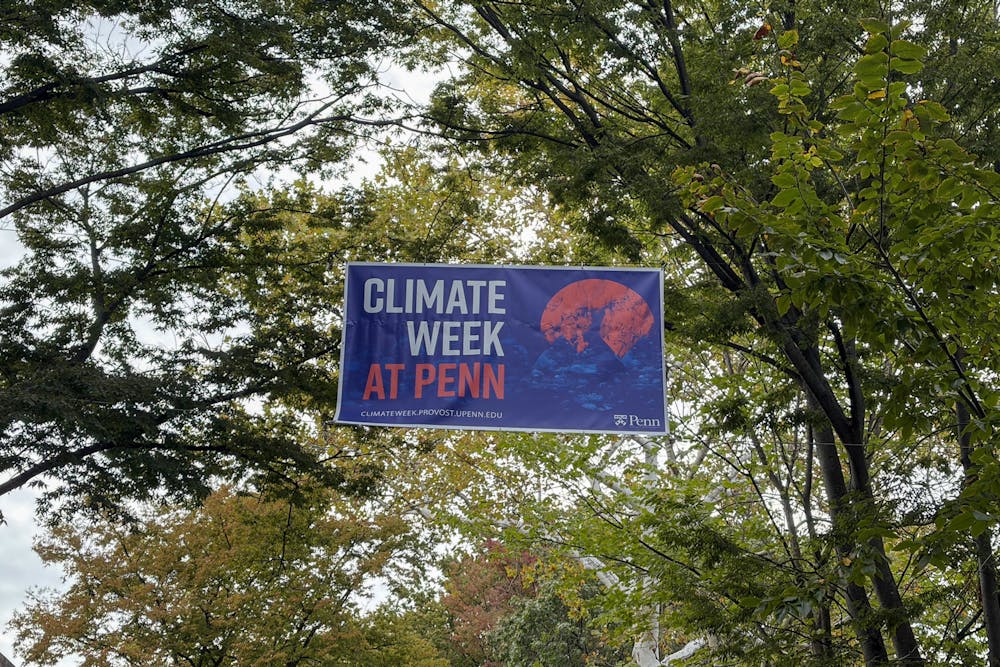
Climate Week at Penn (Oct. 13-17) is here, and it’s an opportunity to engage students, public leaders, and local citizens in the development of urban forestry across Philadelphia. The theme for 2025 is “Hot Spots,” meant both literally and figuratively, intersecting sustainability, resilience, climate, and justice with regard to urban forestry.
More than 900,000 people in Philadelphia live in places where urban heat islands increase temperatures by over 8 degrees Fahrenheit due to features of the built environment like dark pavement, roofs, and impervious surfaces, according to analysis from Climate Central. To combat the radiative effects of built urban environments, many urban planners attempt to incorporate “city trees” for their shading, water retention, and cooling effects. The success of green infrastructure, such as city trees, rain gardens, and bioswales, depends on regular city maintenance, community involvement, and academic research projects. This is where student participation in Climate Week at Penn can be instrumental in driving action for Philadelphia urban forestry.
Last year, The Nature Conservancy and the Philadelphia Horticultural Society detailed an interactive ArcGIS Storymap titled Citywide Heat Ride that elucidates the city’s neighborhoods most affected by the urban heat island effect and where the need for trees is paramount. This study highlights the usefulness of strategic tree planting to mitigate extreme heat waves that threaten the well-being of Philadelphia residents and the environment.
Penn’s campus is near some of the most heat-vulnerable areas of the city with the highest need for trees. The research underscores the need for increased tree canopy cover, citing that areas with lower cover experience temperatures that soar over 10.5 degrees Fahrenheit above those with high tree canopy cover.
Tree planting is an interdisciplinary community action that requires organization and monitoring from city officials to citizen scientists to students. Penn students can get involved by staying up to date with PHS’ November Tree planting dates and volunteering opportunities. In addition, there are several panels and activities to get involved with during Climate Week at Penn, including the 12th Annual Tree Canopy Conference hosted at Haverford College, which will feature multiple presentations exploring stories of resilience in our urban forests.
Climate Week at Penn is the perfect opportunity to take a stroll to your nearest city tree and become acquainted with all the benefits urban forestry has to offer to Philadelphia residents and the environment!
ELIZABETH PORTER is a graduate student from Seaside Park, N.J. studying nutrition science. Her email is porter1@nursing.upenn.edu.