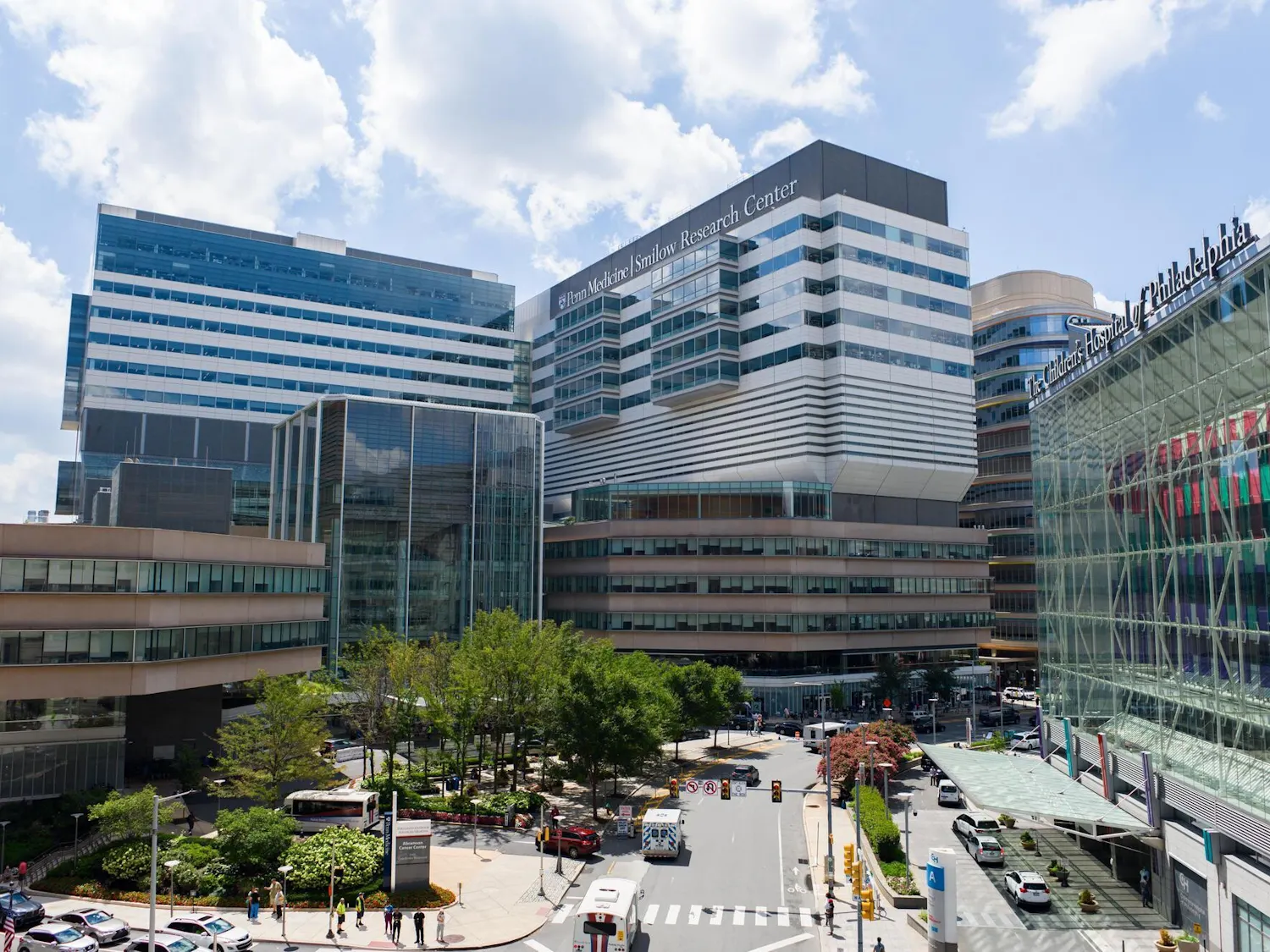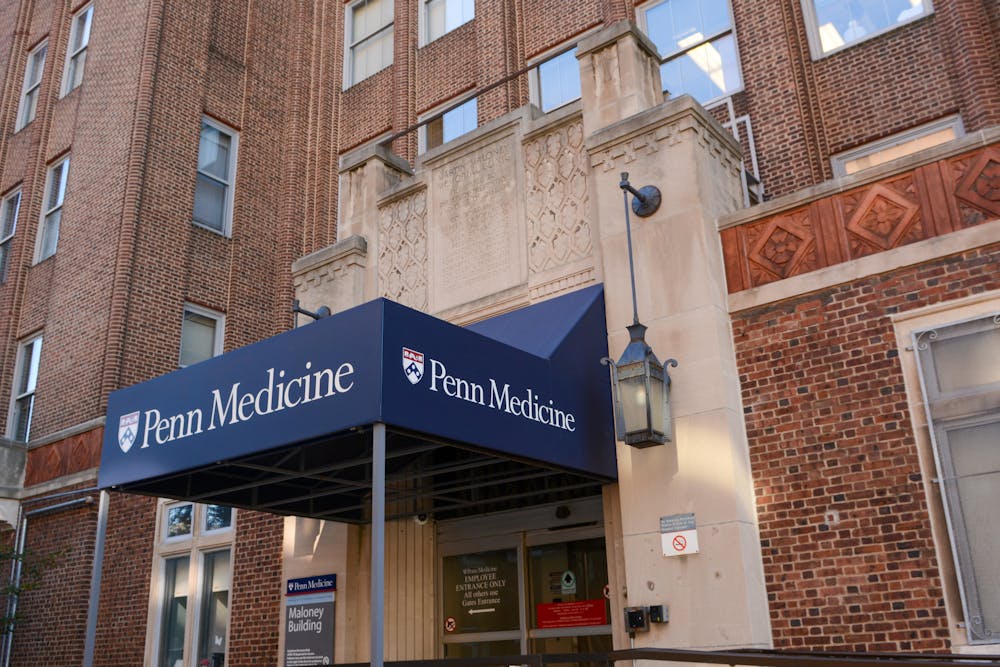
Penn Medicine recently unveiled an eight-floor immunology research center in a $376 million expansion to an existing office tower.
The expansion — which was built atop a Penn Medicine office space located at 3600 Civic Center Blvd. — will house tenants, including the Colton Center for Autoimmunity and hundreds of researchers of immune health and infectious disease. The facility will also welcome the High-Throughput Institute for Discovery, which is a lab focused on patient sample testing and targeted diagnoses and treatments.
While the expansion has been planned for years, the decision to execute now comes amid uncertainty over federal funding for medical research coming from the Trump administration.
Penn consistently places high on the list of National Institute of Health grant recipients. In 2024, Penn received $691 million in NIH grants from the federal government. Due to the proposed 40% cut of NIH funding from the Trump administration, Penn researchers who will soon occupy the new space are constantly aware of the altered research culture.
“We have to adapt,” Penn’s Institute for Immunology and Immune Health E. John Wherry told The Philadelphia Inquirer.
According to Wherry, bringing researchers of different disciplines together offers advantages, including advancing the research platform of the institution, as well as making connections with the private sector and philanthropists.
The construction costs of the project totaled $2 billion, which came from COVID-19 research royalties from Penn, including the development of RNA vaccine technology by Drew Weissman and Katalin Karikó.
The Colton Center for Autoimmunity, a new tenant of the immunology research center, is the result of a $60 million donation in 2021 and 2022 from Stewart and Judy Colton — a donation that Penn matched with $50 million of its own.
Treatments for autoimmune conditions like arthritis, lupus, diabetes, and multiple sclerosis will be researched at this center, all centering around the primary idea of autoimmune disorders. Conditions under this umbrella affect 8% of people in the United States.
Penn’s Colton Center is part of the Colton Consortium for Autoimmunity, including researchers located at other institutions, including New York University, Yale University, and Tel Aviv University.