

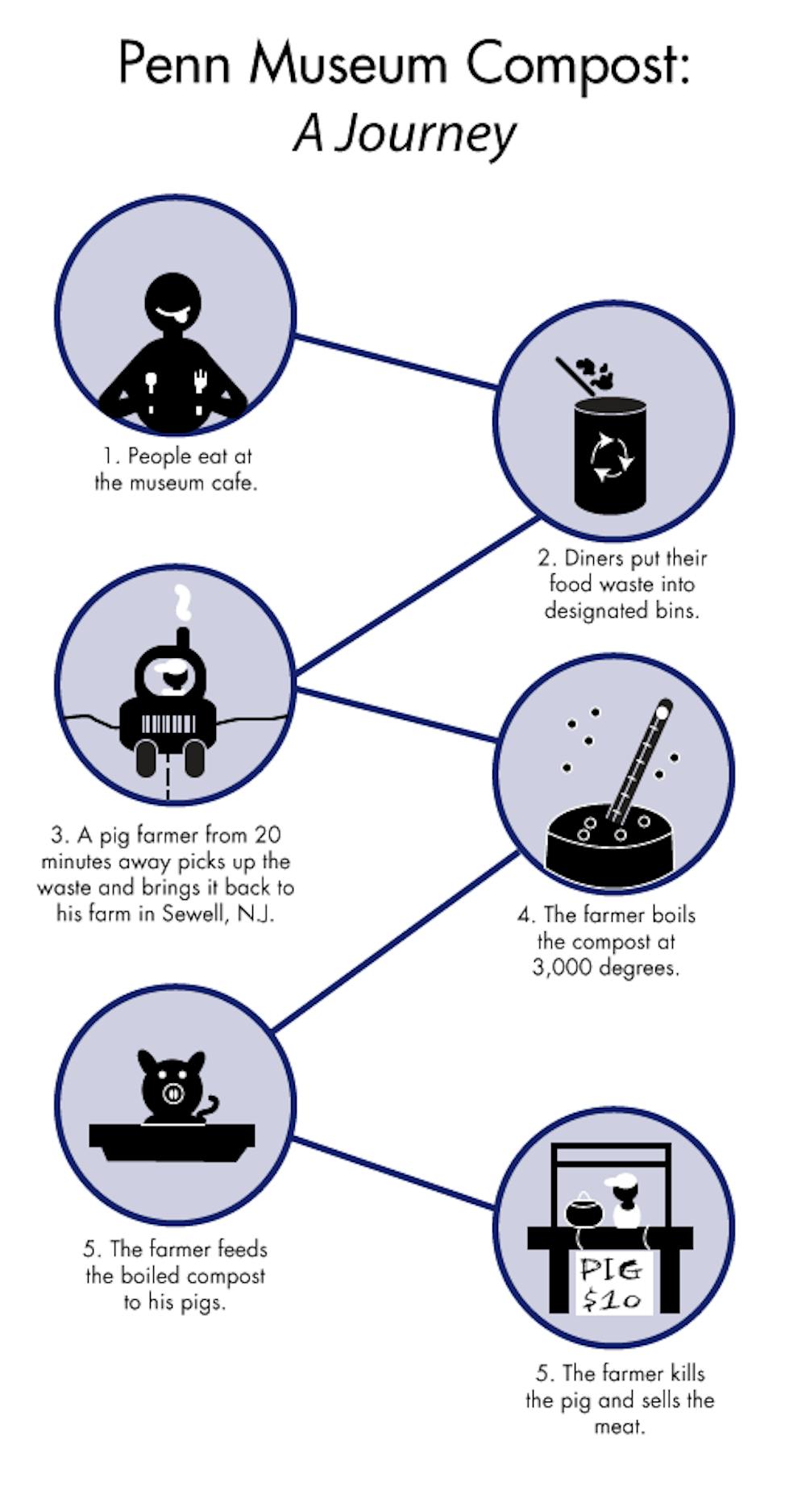
When someone throws out food at the University of Pennsylvania Museum of Archaeology and Anthropology, it doesn’t go to a landfill, but instead to a pig farm in New Jersey.
In the next few weeks, Penn Museum will launch a new composting project. Instead of combining food waste with normal trash and sending it to the dump, there will now be separate containers for food waste, which will be picked up and used as feed for pigs at a farm in Sewell, N.J.
“We’re hoping that within the month we will have the program up and running,” said Brian McDevitt, Penn Museum’s director of building operations and a leader of this project.
The program is funded by the Green Fund, which is part of the Penn Green Campus Partnership.
While the museum waits for R Shisler Farms, Inc. to send containers for the food waste, the project’s leaders have been working with the museum’s art department to plan the colors and decorations of the new containers.
“We’re going to make up something catchy, maybe with a pig on there, that will appeal to the kids and raise their awareness,” McDevitt said. “When they come here to visit the museum they will get involved in the process.”
Following pickup from the museum, the food waste will then be transported to the farm, where it will be cooked at high temperatures until it becomes “a soupy mixture,” McDevitt added. This mixture will then be fed to the pigs.
Most of the food waste will originate from the museum’s Peppermill Café, which is operated by Restaurant Associates, as well as catered events and packed lunches from children who visit on field trips.
“It’s not just produce,” Melissa Smith, the museum’s chief operating officer, said. “You’d be able to throw away chicken bones.”
McDevitt added, “It’s good for the environment. It’s even cost-efficient because you’re throwing less stuff in the dumpsters.”
The idea for this project stemmed from McDevitt’s former position as the facilities manager of Reading Terminal Market. With approximately 85 merchants, McDevitt found a way to minimize waste and maximize sustainability with Shisler Farms.
In addition to being able to make good use of the museum’s food waste, Shisler Farms is also local. The drive from Penn takes less than 20 minutes without traffic.
McDevitt describes the farm as “a real ‘mom and pop organization.’”
This is also a step towards sustainability for the museum.
“We are excited about the Penn Museum’s new initiative and are looking forward to future partnerships around sustainability at the museum,” Dan Garofalo, environmental sustainability coordinator at Facilities and Real Estate Services, said.
Penn Museum hopes that other organizations on campus will also be interested in this sort of project.
McDevitt explained, “I am hoping that when we kick it off here that maybe other institutions down here that have waste will jump on the bandwagon, and he’ll be able to pick up their stuff as well.”
Smith added, “We’ll be saving some money on this, as well as feeding the pigs.”

