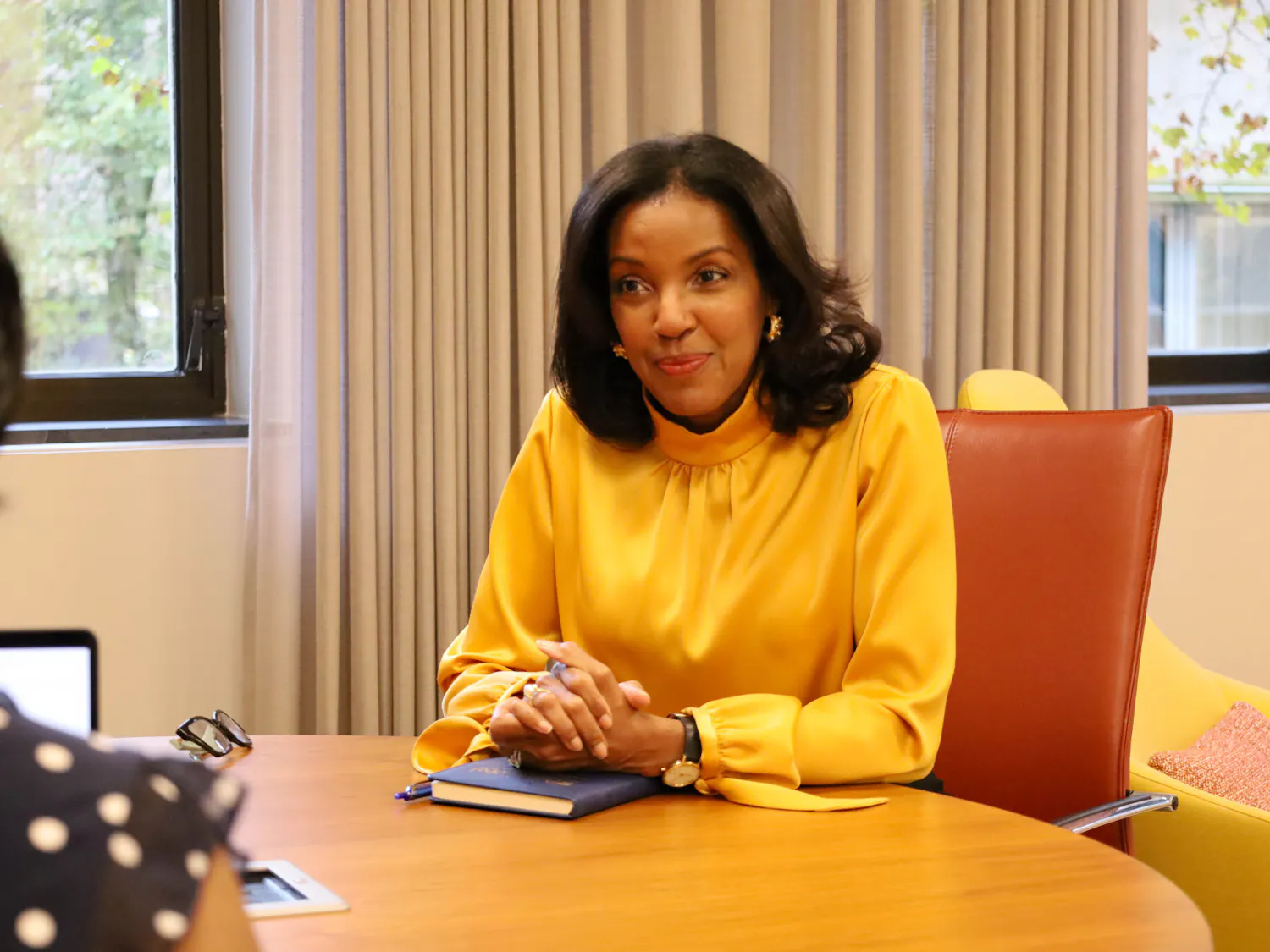
Her name will not be on today's ballot for Pennsylvania senator, but Solange Chadda still hopes a brief she submitted to the U.S. Supreme Court will have an impact on election law.
Yesterday morning, Chadda traveled to Washington D.C. to file "an emergency application for stay" - a brief requesting that the Pennsylvania Senate election be delayed by 60 days so that she could run against Republican incumbent Rick Santorum and Democratic challenger Bob Casey.
If the Supreme Court chooses to make a ruling - at least four justices would have to accept the brief for the court to rule - it will not be in time to change the ballot, but she still hopes her complaint will be considered.
Chadda alleges that members of the Casey campaign violated her right of due process by stealing petitions she needed to get on the ballot. Chadda added that she refused to pay thousands of dollars to get the petitions back.
Experts have been skeptical of Chadda's case. Jan Witold Baran, of Washington law firm Wiley, Rein and Fielding, said he knows of no precedent for what she is requesting.
"I have never heard of anyone succeeding in asking a court to postpone an election," Baran said.
Chadda said she studied the Supreme Court case Bush v. Gore after the 2000 elections, and she recently found an ally in Green Party member Carl Romanelli, who says the Casey campaign got him kicked off the ballot, too. Romanelli said Chadda is using his case as evidence that this issue ought to be resolved at the federal level.
"Because I, too, could benefit, and because my campaign and my rights will be irreparably harmed if the election goes forward without me on the ballot," Romanelli said, he is "asking to join [Chadda's] action as an interested party."
He said that, while he collected enough signatures to get on the ballot, the Casey campaign alleged that some of those signatures were invalid. Courts ruled in Casey's favor.
Chadda and Romanelli filed their brief with the Supreme Court without any legal representation.
"All of these lawyers are too afraid to take this on," Romanelli said.
When he initially heard about Chadda's case, Romanelli refuted her claims, since he had never heard of her during his own campaign.
"It didn't seem feasible to me that there was anybody else out there attempting to get on the ballot for U.S. Senate because I had so much contact with Philadelphia," Romanelli said.
But Romanelli says he now considers Chadda his "new best friend."
And Chadda hopes that "something is going to happen from there for the better."
She added that she thinks there is a lot of discrimination against lesser-known candidates, "especially in the state of Pennsylvania."
"Everybody has the right to run," Chadda said. "Our story can change the law."