Penn State women's basketball coach Rene Portland enforces a policy among her athletes that is both strict and simple: no alcohol, no drugs -- and no lesbians.
The notorious coach has been accused of homophobia throughout her 25-year coaching career at the Division I athletic program.
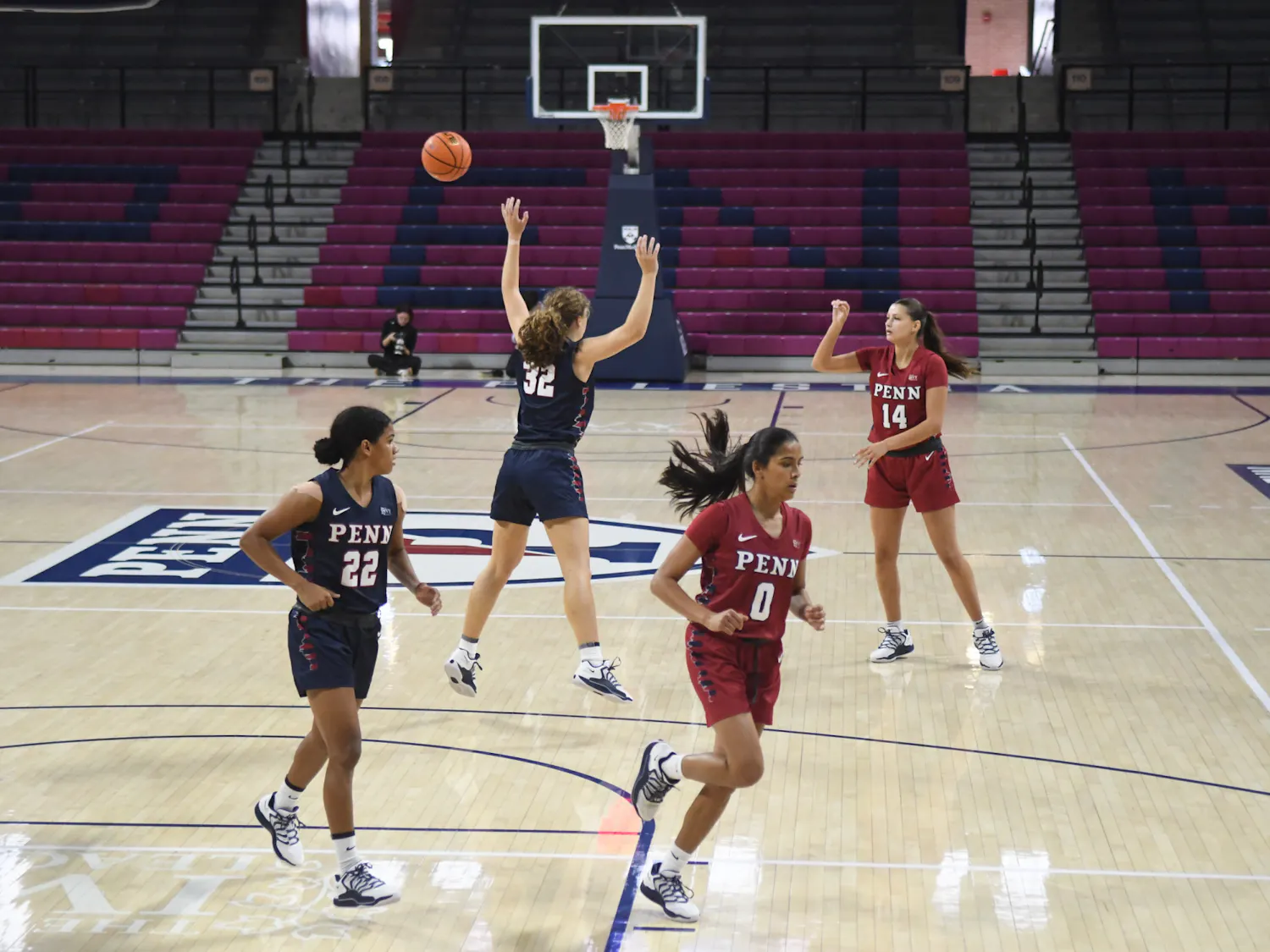
Portland's overt display of homophobia is in no way representative of the entire NCAA athletic landscape, and certainly not Penn's. After all, as the shirts point out, the University of Pennsylvania is not Penn State.
Nevertheless, it was this collision of queer and athletic communities that inspired then-sophomore Paul Farber to contact women's lacrosse goalie Karrie Moore, a freshman at the time. The two athletes combined heads to create a new type of resource for athletes -- one that had never before been discussed at Penn.
Together, Moore and Farber formed PATH: Penn Athletes and Allies Tackling Homophobia.
At Penn, Farber immersed himself in activities outside the classroom -- he was a Daily Pennsylvanian staffer and wrote for 34th Street Magazine. His freshman year, he ran varsity track, but soon found that the resources and support provided by the athletic department only addressed certain needs; he was disappointed to find "a lack of institutional support for gay athletes.
"There were many resources made available to athletes ... everything from academic support to health care to just various levels of guidance," Farber said. "But there was just no mention, no talk of gay athletes -- which would have you believe that there are none in the program. That is obviously not true."
Without the guidance he sought as a gay athlete, Farber dropped off the team after one meet.
"What I left with was if this was any other club or department at Penn ... I would be referred to the right resources," he said. "But because it was [the] athletic department, I felt like I was squelched and marginalized."
A year later in 2002, the junior would revisit the issue that had bothered him as a Penn varsity athlete: the absence of resources for athletes of various sexual orientations. This time, though, Farber, along with Moore, decided to translate his frustration into action.
"Paul came to me about it basically because there are athletes that have not had great experiences, and I have had a very good experience with my coach," Moore said.
For the past four years, PATH has been sponsoring events, discussions and panels to help foster the vision of a safe space for homosexual athletes and allies.
For QPenn week last month, the task force invited former Penn State women's softball coach Sue Renkin to speak on her experience of being fired from Penn State's athletic department because she was a lesbian. In February, the members gathered to watch the Steelers down the Seahawks on Superbowl Sunday, and on Tuesday night a dozen or so students gathered at the Lesbian Gay Bisexual and Transgender Center to watch the women's NCAA championship game.
Italia Almeida, a College junior, watched Maryland come back to hand Duke a 78-75 overtime loss from LGBT Center couches with other people attending the PATH event.
Though now she only plays club ice hockey, Almeida walked on to a Penn varsity team her freshman year. Even in her short time on the team, the junior witnessed the tenuous contact between homosexuality and athletics that PATH strives to address.
Almeida cited an incident with a recruit that prompted a coach on the team to demand that she keep her sexuality to herself.
Through panels, speakers and social events, PATH hopes to build bridges between athletes, coaches and the athletic department. Moore even points to discord between Penn athletes and the LGBT community, which may be the result of traditional misconceptions that all athletes are homophobic. PATH is trying to break down those barriers, too.
"What we've been trying to do in the last few years is create a kind of common space -- a space where gay and lesbian athletes feel safe," Moore said. "Its kind of two-part because you have homophobia in athletics, and also a strong sense in the LGBT community that all athletes are homophobic."
In its fourth year at Penn, PATH has only begun to establish a name for itself on campus. But the group's original goals continue to generate a vision of safe space and awareness for athletes of all sexual orientations at Penn.
"This wasn't about us pointing out what they've done wrong, but rather to have a frank discussion about issues at hand," Farber said. "Creating awareness is half the battle.
"If there is a player that will never come to a meeting, never set foot near the LGBT Center, but knows we exist and can take solace knowing they are not alone, then we've done our job."