Collegiate sports still appears to be a man's world, though the NCAA reports that the divide is shrinking each year.
According to the association's newly-released Gender Equity Report of 2001-02, women account for 44 percent of Division I athletes, a 3 percent jump from the 1999-2000 report.
Division I-AAA -- which includes Division I schools that do not offer football -- became the first NCAA subdivision to average an equal proportion of male and female student-athletes.
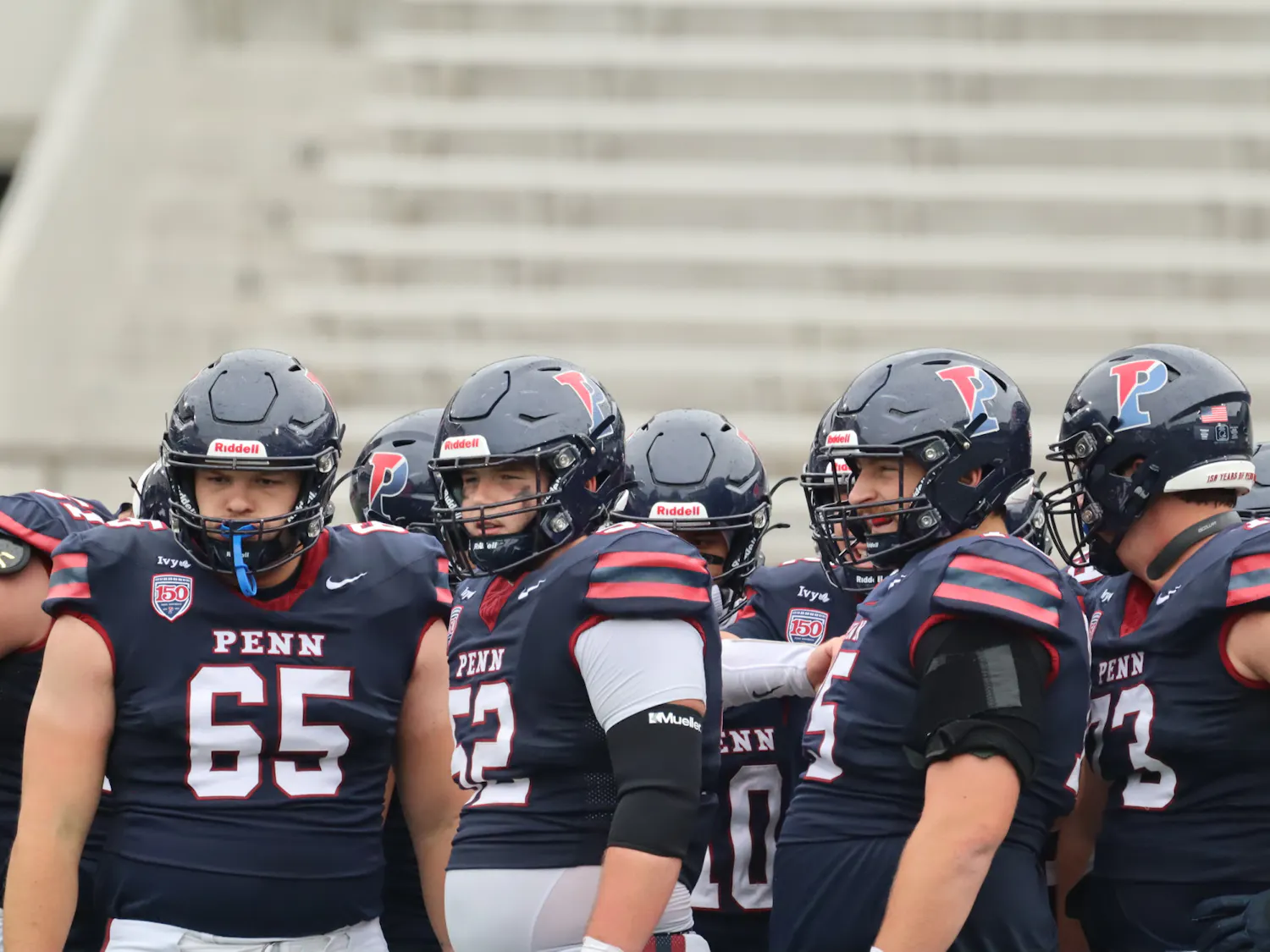
Penn's gender equity report from 2002-03 shows that the University is below average, with females accounting for 40.7 percent of student-athletes.
Penn Athletic Director Steve Bilsky would not comment at this time.
This pattern of a slow closing of the gender gap is nothing new -- the numbers have been getting better since Title IX began to be officially enforced on a continuous basis with the Civil Rights Restoration Act of 1987.
"It's been slower than hoped by a lot of women's sports advocates," said Scott Rosner, lecturer on the sports industry for the Legal Studies department at Wharton. "It's getting better, just not getting better as fast as everyone wants it to.
"You always want to see that number higher."
Rosner said the reason behind the Division I-AAA landmark figure is straightforward.
"They don't offer football," he said. "Football creates a numerical disparity that is very difficult to make up -- it's quite common to have 100 guys in a football team. ... That's four women's teams."
Rosner said that football poses a problem when trying to comply with Title IX, as very few schools at the I-A level will be able to be "substantially proportionate" because of the large team sizes.
The sizable discrepancy in Penn athletics comes on the coaching side.
While the gender split is equal on the women's benches, there are only two women coaching men's teams. There are 64 coaches on men's teams at Penn.
Both of these women are assistant coaches on the swimming teams.
Cathy Holland, who coaches both the men's and women's swimming teams, attributes this difference in large part to coaches' preferences.
"A lot of female coaches are more interested in coaching women," she said. "They feel they connect with women more easily."
Holland also said that another factor could be whether or not the institution "promotes participation of women," which she said Penn does.
"As a swimmer here, I felt I had every opportunity the male swimmers had," she said. "While I was actually in college, I was on a panel that gave input into the hiring of [current head coach] Mike Schnur, and Penn definitely interviewed both men and women for that position."
Rosner said that men actually used Title IX to their advantage in getting jobs on women's teams.
"Before Title IX was really being enforced, almost all coaches on the women's teams were women," he said. "Once it was enforced, men realized they can have a livelihood coaching women as well."
While professional leagues -- most notably the NFL -- have rules regarding interviewing minorities for coaching positions, Rosner said that any such rule for gender or ethnic minorities in college sports is "a long way down the road."
Penn's expenditures and revenues were also disproportionately allocated toward men's sports, though not by a large amount.
Male students account for 60 percent of the athletes, but bring in 65.5 percent of the revenues and spend 66.8 percent of the recruiting expenses.
Rosner said that such differences are "hard to pinpoint," but "the more athletes you need, the more recruits you have to bring in."
Figures aside, Holland said from her experience of coaching both sports that "our budget is split pretty much equally between both teams. ... They try to keep things equal in other sports as well."
While the numbers are improving, the sports industry is still looking for bigger changes.
"This 50-50 number is the aspiration for Division I-A and AA," Rosner said. "But it's a slow climb."