

The 6,000 recycling bins onThe 6,000 recycling bins oncampus collect approximatelyThe 6,000 recycling bins oncampus collect approximately100,000 lbs. of trash per week There are currently eight drop-off locations for glass, plastic and cans, including Hill College House, the Towne Building and High Rise East. In addition, Lech mentioned that there are approximately 6,000 bins throughout campus that are clearly labeled for recyclable materials. "I think Penn does a pretty good job but I think a lot of times, people are too lazy to advantage of it," said College freshman Sarah Brockett. Students have varied viewpoints on the importance of recycling, but most say they would recycle if the receptacles were nearby and convenient. "I personally don't recycle," said College sophomore Shamis Abdi. "There are not enough regular bins. "There should be more glass recycling bins, because they are in demand," she added. "The current glass recycling bins are not in convenient locations." Students noted that if they had a recyclable item and had to choose between the regular trash and a recycling bin, then they would definitely recycle. But Engineering freshman Shana Weiss said she would rather throw recyclable items in the regular trash than litter. Promotion of recycling aimed at dorms makes a difference in shaping recycling habits as well. "Everyone here recycles," said College freshman and King's Court resident Julie Bharucha. "We are all conscious of the environment and since we have the recycling bins right on our floor, it is not out of the way." Many students complained about the extended effort it takes to recycle. "I never do it," admitted Wharton and Engineering senior Himaya Puri. "I cannot always find accessible bins that are clearly labeled." College junior Afsaan Saleem, who heads the Penn Environmental Group's recycling committee, suggested that the problem with recycling centers around the lack of information. "Students [who] come to Penn as freshmen [are] usually pretty knowledgeable about recycling and are used to recycling at home," said Saleem. "However, when they come here, they are not provided with much information or resources to know where and what to recycle." Lech explained that there are restrictions on where certain recycling bins can be placed on campus. "Glass is dangerous to handle," Lech said. "It easily cuts the bags it is held in and creates a very real risk to the people whose job it is to collect it." Plastic is one of the more controversial items in recycling projects because it does not sell easily. "The market is so bad that the city of Philadelphia discontinued taking plastic," Lech said. The University, however, still handles plastic because of its relationship with Philadelphia's Waste Management Industries, who consented to recycle the University's plastic out of "good will," according to Lech. "Therefore, it is not reasonable to put a lot of effort into plastics," she added. Mixed paper is currently the largest contributor to the University's garbage production and is in high demand to be recycled. However, Lech said that if students do not recycle, up to 75 percent of that paper is wasted. "I try to put my paper in the paper bin," said Nursing freshman Kasia Lenio. "Honestly, I don't always think about it." Paper bins cannot be placed outside like other recycling receptacles, thus restricting the distribution of paper bins. "The paper must be perfectly dry or the buyers will refuse shipment," Lech said. "Buyers pay by the pound, so they are not willing to pay for wet paper." If water or food ruins paper, then it is rendered useless for recycling. "Venders putting their food trash in the mixed paper receptacles is a nightmare for the recycling department," Lech said. Since there is a high demand for aluminum, it too is profitable to recycle. Despite the numerous bins scattered across campus, however, Lech noted that she "constantly [sees] people throwing aluminum cans in the trash when a recycling container is within a few more feet, and oftentimes in the same room." The Environmental Group and University recycling coordinators have proposed several projects and ideas to combat the problems facing recycling efforts. After meeting with Palanti and James Allen, Residential Maintenance's housekeeping manager, both organizations found they should improve recycling information presented to incoming freshmen. In addition, they hope to attach an informative sticker to each dorm room door in time for the start of the fall semester. "This sticker is supposed to be behind all dorm doors," Saleem said. "They informed us that they will be addressing this problem this summer once the students are gone. "The failure to have the sticker is significant because people always look at their door before they leave," he added. "The sticker would serve as a constant reminder." In addition to a visual reminder, Saleem feels a verbal reminder is also necessary. The group proposed that recycling experts go to meetings between students and their residential advisors at the beginning of freshman year to give information on the University's recycling programs, Saleem said. "Students no longer can use the excuse of not knowing, if there are explicit signs telling them where the closest drop-off locations are," he added. The program's motto is based on the "three Rs" -- reduce, reuse and recycle. According to Saleem, the Environmental Group is focusing on reduction this semester. In addition to these new ideas, the Environmental Group is currently in charge of the CUPPS program, which stands for Can't Use Paper, Plastic, Styrofoam. The group hopes to reduce the amount of waste generated by buying drinks by distributing free mugs to each freshman class and selling them for $3 to anyone else who wants one. With the mug, customers get a discount on drinks at restaurants across campus. Businesses that support this project also profit, since they can reduce spending on the number of cups they need to purchase. "Virtually every establishment on campus uses CUPPS," Saleem said. In addition to this project, College senior Camillo Camargo, a member of the Environmental Group, presented an idea that would reuse paper for photocopies at Van Pelt Library. "We figured that most people just need to copy stuff for research and aren't really concerned with how it looks," Saleem said. These copies would only cost five cents, as opposed to the regular seven cents per copy. However, the committee is considering the possibility that the used paper would have a tendency to curve and jam the copy machines. "We are working this out, and hopefully the copiers won't jam," Saleem said. With warm weather approaching, students involved in the Environmental Group are also particularly concerned about keeping College Green clean. "The prospects look bleak," Saleem said ruefully. Even though many bins and a glass and plastic recycling receptacle are located near College Green, Saleem said he thought people would always litter. "This sort of responsibility must be taught at home at a very young age," he said. "It is difficult to change people's attitudes at a college level." The University should concentrate on its maximum potential to recycle, Lech said. And students mentioned a wide variety of the benefits of recycling. "Make wealth from waste," said Wharton sophomore Kanika Dewan, referring to the monetary profits of the effort. But Cheung prefers to focus on the environmental benefits, simply asking people to "recycle, recycle, everybody recycle."
The Daily Pennsylvanian is an independent, student-run newspaper. Please consider making a donation to support the coverage that shapes the University. Your generosity ensures a future of strong journalism at Penn.
DonateMore Like This


New book traces Penn’s landscape, trees through the years
By
Sameeksha Panda
·
7 hours ago

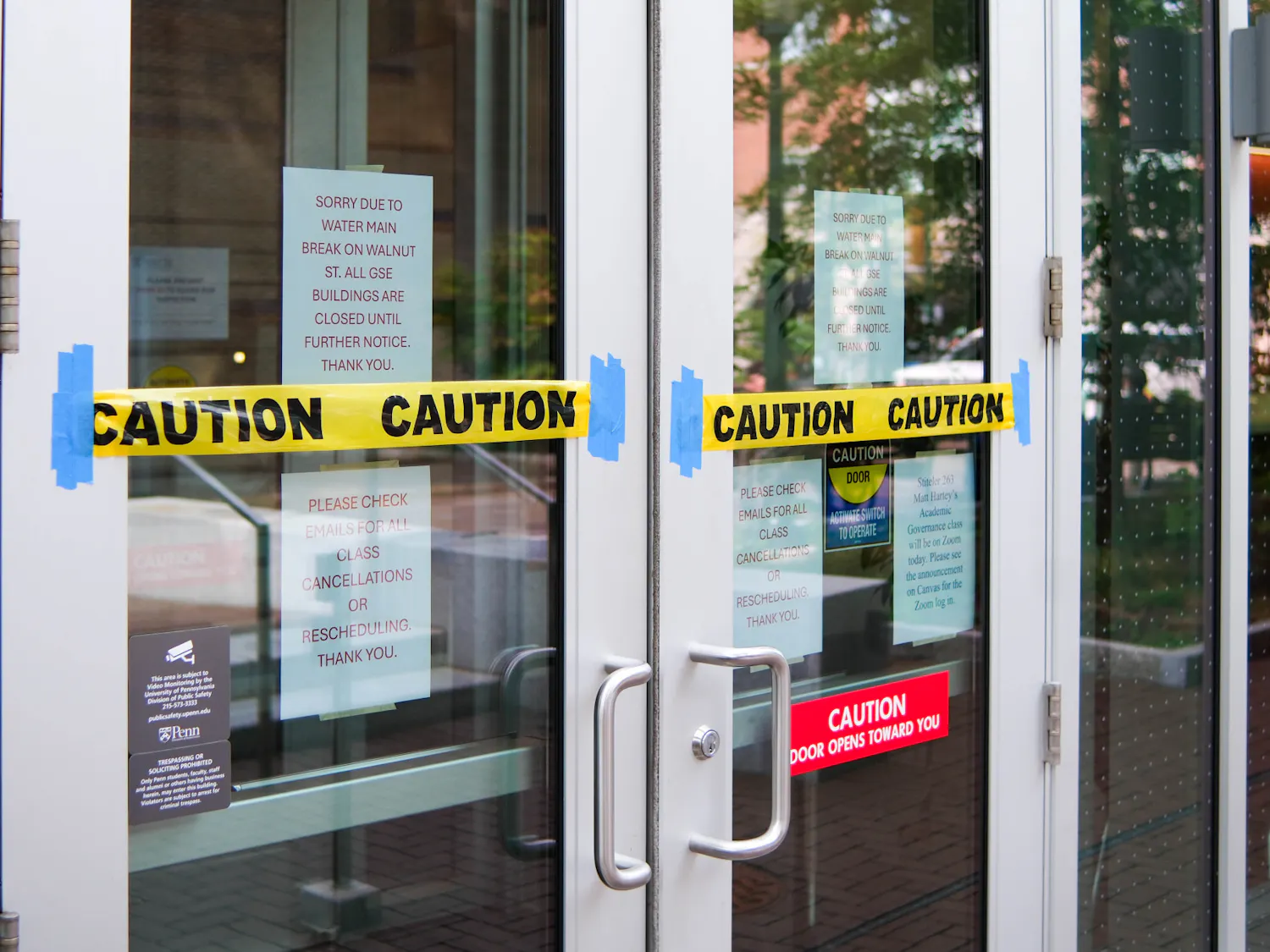
Water main break floods GSE building, moves classes
By
Lavanya Mani
·
13 hours ago


