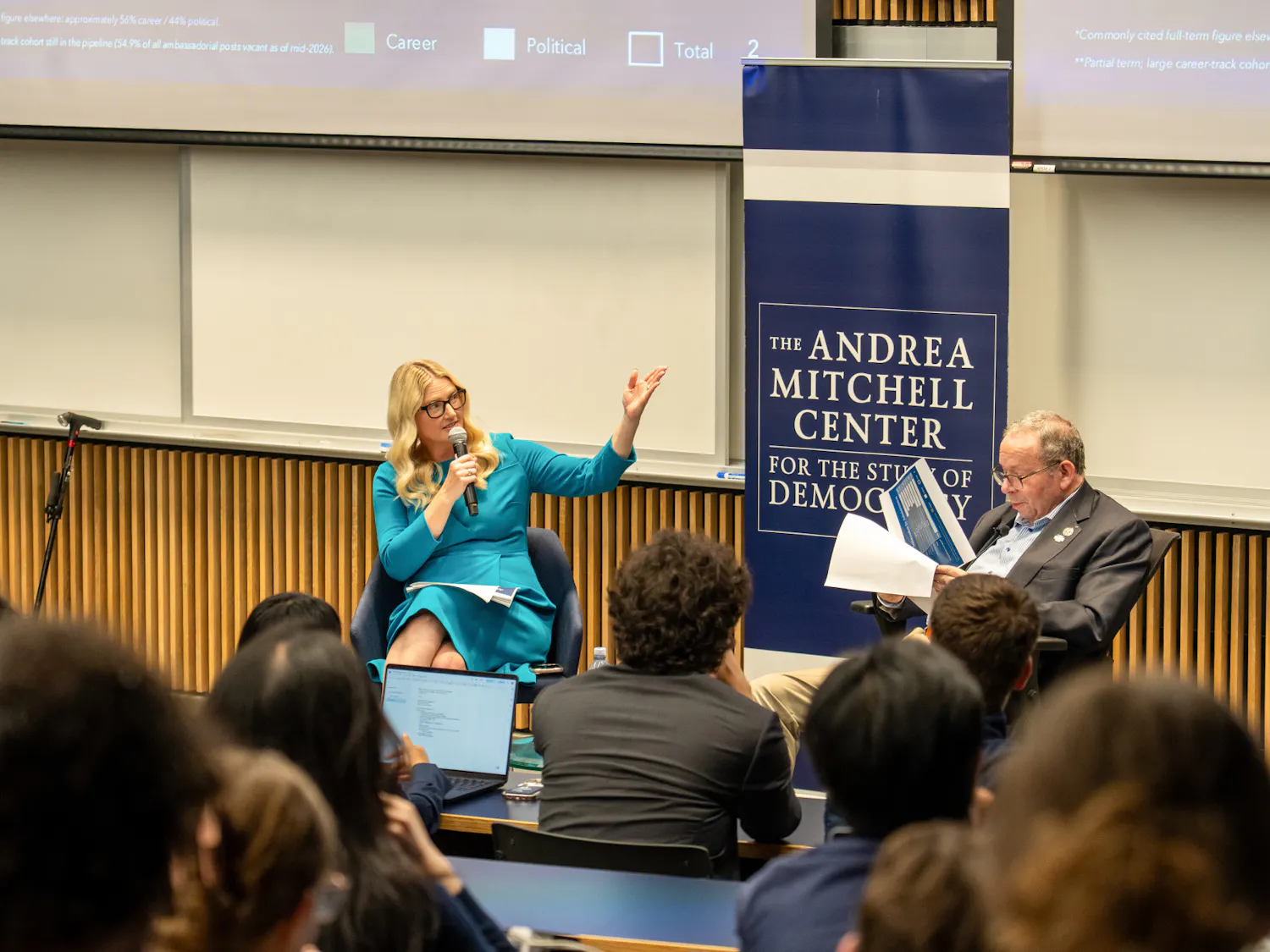
Over 200 of the most prestigious lawyers and judges in the country visited the Law School Thursday to attend a lecture on reducing the amount of litigation in the United States. We live in one of the most litigious societies," said Kenneth Feinberg, a law professor at Georgetown University. Feinberg is a national leader and a highly respected expert in mediation, arbitration and alternative dispute resolution and has been listed as one of the 100 most influential lawyers in America. "It is presumptuous to talk about stopping the litigation explosion," he said. "The American people want a litigation explosion and the only alternative is to look to [alternative dispute resolution] methods." Such resolution encompasses three sometimes controversial methods for solving disputes instead of litigating -- private party mediation, court-sponsored mediation and private settlement. "[ADR] is not the wave of the future, it will be a slow and gradual process that will happen in increments," Feinberg said. "It will not solve the mass privatization of cases." In private party mediation a neutral mediator is used to lead the parties toward an agreement. According to Feinberg, this has been very successful in "mass tort class-actions," cases which are filed by a large number of individual plaintiffs. Feinberg was the mediator or special master in such highly celebrated cases as the Agent Orange and asbestos wrongful death cases. Feinberg said ADR is not an elitist idea as some people assume, but a necessity to lighten the load of cases that are facing federal and state courts today. "There must be a privatization of private court battles taking place in American courtrooms today," Feinberg said. "Because the other two branches of government -- the executive and legislative -- are disinterested, it is up to the courts to implement these new ideas." Feinberg's lecture was part of the Edward B. Shils Lecture Series in Arbitration and Alternative Dispute Resolutions.
The Daily Pennsylvanian is an independent, student-run newspaper. Please consider making a donation to support the coverage that shapes the University. Your generosity ensures a future of strong journalism at Penn.
DonateMore Like This

A history of the Penn presidency
By
Aidan Shaughnessy
·
17 hours ago

No — AI will not wipe out humanity by 2030, Penn experts say
By
Addison Saji
·
17 hours ago

Penn student groups promote voter registration on Locust Walk
By
Mara Flores
·
17 hours ago