Koro Bessho, the Counselor to the Economic Section of the Embassy of Japan in Washington spoke on campus yesterday afternoon about trade issues in the U.S. and Japan. The speech, titled "The United States vs. Japan: A Trade Partnership in Jeopardy?" was sponsored by Sigma Iota Rho, the International Relations Honor Society, and Phi Beta Delta, The Honor Society of International Scholars. Bessho dealt with issues ranging from the revitalization of the Japanese economy through its boom in the 1980s, to the repercussions of trade policies which hamper imports. Bessho told the 40 audience members that in the 1950s and 1960s, Japan had to recover from World War II. In the 1970s, Japan's economy improved, but the Japanese had little confidence in it since oil comprised half of their imports. In the 1980s, with world conditions being moderate, Japan's economy grew and prospered. "Japan and the United States together have come to account for 40 percent of the world GNP," he said. "In the 1980s we had two very important decisions made: one was the change of the exchange rate, and we coupled that with trying to boost the Japanese economy itself," Bessho said. He stressed that re-evaluating Japanese currency to double its buying power in dollars, and attempts to help Japanese citizens increase expendable wealth were done to increase the amount of U.S. imports. When asked about the future, Bessho said, "we enter the 1990s with a rather difficult situation, but the U.S. and Japan are locked in a trade partnership." Bessho also spoke about the state of the United States's economy. "I was encouraged during the election to hear that the American people want to address their problems and have a stronger economy," he said. At the end of his speech, Bessho took time to address Japan's role in world conflicts. "In Japan, people's mentality has been changing," Bessho said. "We are a richer nation, and the people are starting to feel more responsibility to the world as a whole." Bessho stressed that Japan will never use its own force to resolve and international conflict, because it is forbidden in their constitution. He did point out, however, that Japan has become more active in United Nations peace-keeping efforts. Most audience members were satisfied with Bessho's frank and open responses to difficult issues facing Japan and the United States. "I teach a course at Lehigh University, and what he was saying is consistent with what I have been teaching the students," said Tim Monaco, a fourth year graduate student. "I think he answered a wide array of questions well." Even those less familiar with the current world economic situations found Bessho's speech informative. "I thought he was very interesting, and I was comforted to hear that he did not speak like an economist," said Diane Haydon, an International Programs foreign student advisor. "I think that he was very straightforward." Sponsors said the speech allowed students to get a different perspective on the issues. "In any economic situation, we have to get both sides of view; we only get the perspective of the Western media," said Ashish Rughwani, co-organizer of the event, and a Wharton and College junior. "We put on this program to increase awareness [in the University] of political and economic issues. We can't get a more first-hand opinion than this." The organizers were also happy with the programs' performance, and stressed the need for this type of dialogue to continue. "I think it is imperative that the U.S. and Japan maintain good relations," said Kenji Funahashi, president of Sigma Iota Rho, and a College senior. "There is too much at stake to jeopardize our economic partnership."
The Daily Pennsylvanian is an independent, student-run newspaper. Please consider making a donation to support the coverage that shapes the University. Your generosity ensures a future of strong journalism at Penn.
DonateMore Like This

A history of the Penn presidency
By
Aidan Shaughnessy
·
9 hours ago

No — AI will not wipe out humanity by 2030, Penn experts say
By
Addison Saji
·
9 hours ago

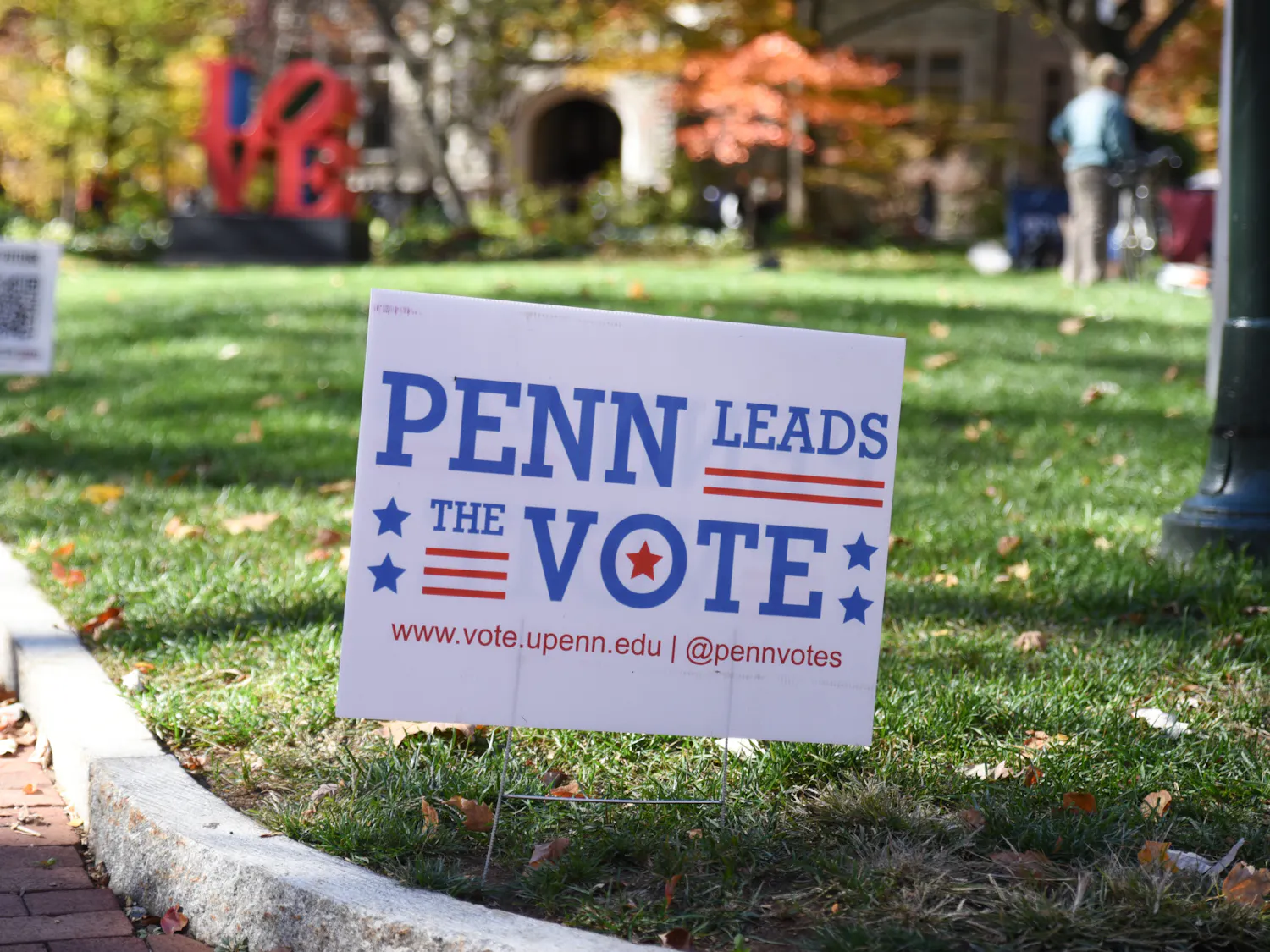
Penn student groups promote voter registration on Locust Walk
By
Mara Flores
·
9 hours ago