Vidette Cornelius used to have some doubts about getting a graduate degree in engineering. But that was two weeks ago. Cornelius, a Lincoln University senior, said her outlook changed after spending the past two weeks participating in a University program that encourages minority students to pursue advanced science degrees. "I had no idea what to expect in grad school," she said this week. "But now I think, 'Yeah, I can do it.' " Cornelius attributes her new attitude to the program, known as the Summer Minority Institute, which attracted twelve undergraduates from predominantly minority colleges stretching from Michigan to Puerto Rico. The program's participants have toiled away in the Moore Building's computer labs -- and considered it a rare privilege. Organizers said they hope the junior and senior engineering majors will now consider graduate school a more realistic option for themselves and other minority students. The Institute features workshops focusing on computer applications such as programming, graphics, artificial intelligence and the use of technology in everything from medical decision making to the study of the English language. Program coordinator Greg Provan, an assistant professor of computer and information sciences, said students seem impressed by the demonstrations. "Now that they know more about computers, they don't have to be intimidated by these things," Provan said. Besides taking classes in computer applications, participants have toured workstations and research labs, met with engineering faculty and graduate students, and travelled to the Franklin Institute and the Jersey Shore. Students said the program has provided a wealth of information about graduate education in the engineering field, and has also reassured them. D'ondria Kennard, a senior at Prairie View A&M; University, said she had been unsure about graduate school until the program exposed her to new technology unavailable in her school's labs. "We were academically prepared but technologically behind," she said, adding that the economy's sluggish recovery has made graduate school an even more attractive option. Morehouse College junior Sean Johnson said that talking with graduate students allowed him "to see what life was really like in graduate school." Willonda Fisher, a senior at Cheney University, said it is important that people appreciate the extra support minority students need to flourish in an area where there are not many role models. Still, some students remain apprehensive about spending four years in graduate school when they could be earning money in the workplace. "It's a big decision for a minority student," Johnson said. Nationwide, minority students make up fewer than 10 percent of the graduate student population and five percent of science and engineering faculty. There is currently only one black faculty member on the Engineering School's faculty and about three blacks receive engineering PhD's each year. Students were accepted to the program based on their academic standing, faculty recommendations and a short essay, Provan said. He added that organizers picked students "who'd have the potential to go to graduate school and would be interested in doing that." Funding for the program was provided by the Army Research Office, the Philadelphia Partnership in Education, and the University's Institute for Research on Cognitive Sciences.
The Daily Pennsylvanian is an independent, student-run newspaper. Please consider making a donation to support the coverage that shapes the University. Your generosity ensures a future of strong journalism at Penn.
DonateMore Like This

A history of the Penn presidency
By
Aidan Shaughnessy
·
2 hours ago

No — AI will not wipe out humanity by 2030, Penn experts say
By
Addison Saji
·
2 hours ago

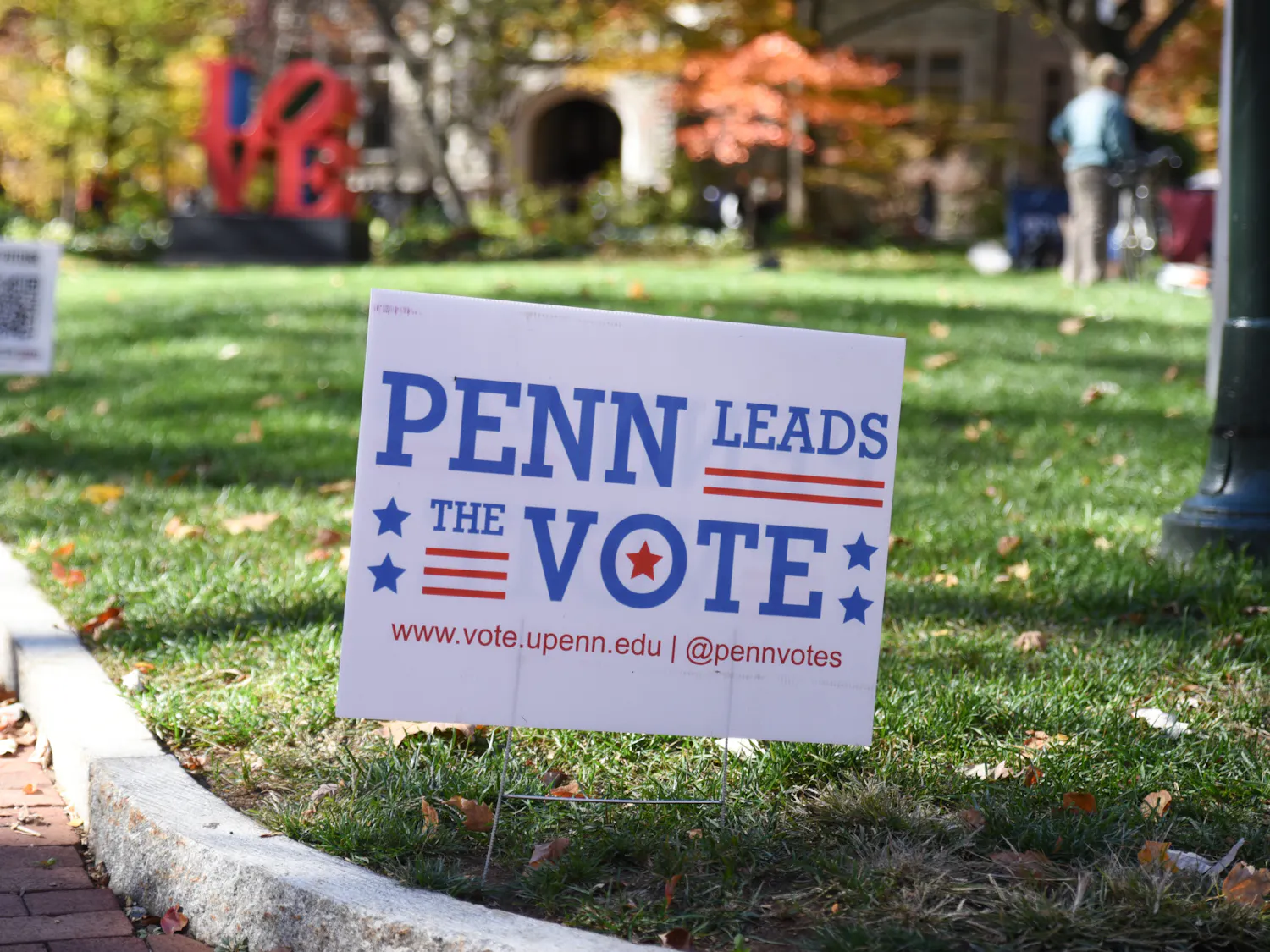
Penn student groups promote voter registration on Locust Walk
By
Mara Flores
·
2 hours ago