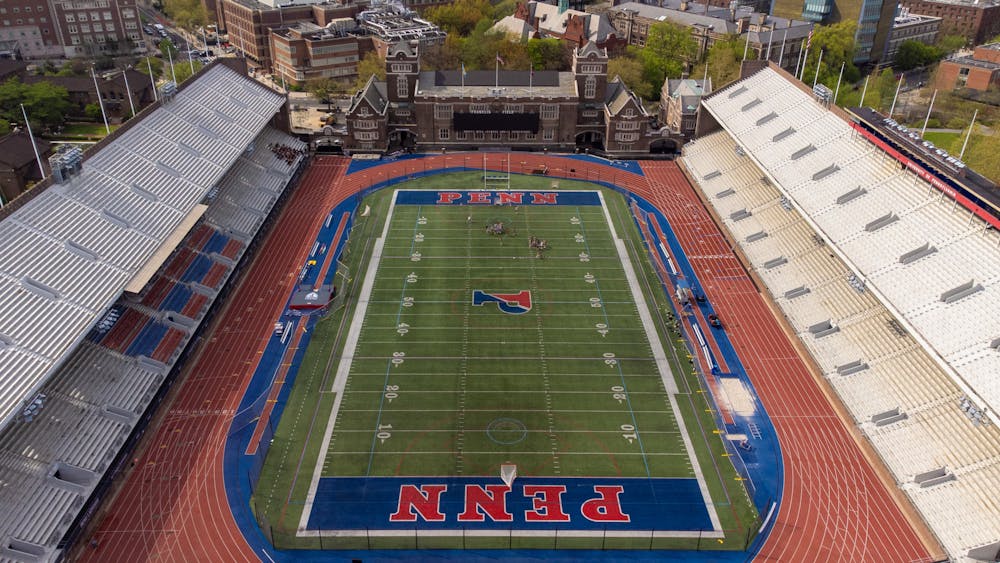
Penn budgeted $83.8 million for Recreation and Intercollegiate Athletics in fiscal year 2027, down nearly 10% from the FY26 forecast of $92.6 million.
DRIA oversees all varsity, club, and intramural sports teams at Penn, as well as campus recreation programs and athletic facilities. The decrease in overall revenue is “primarily due to the loss of a major track and field partnership, uncertainty regarding DRIA’s income-generating areas, and tapering off in pledge payments for large capital projects,” according to the University’s most recent operating budget.
The FY27 budget projects the department’s first operating deficit since FY24, with expenditures expected to exceed revenues and transfers. While the department’s funding comes from a variety of streams, its largest revenue source is the University’s nearly $26 million subvention, followed by about $16 million in gifts.
A request for comment was left with Penn Athletics and Penn Budget Planning & Analysis.
Included in the budget is also a 5% cut in staff, representing 10 full-time employees, which the document references as the “consolidation of financial and administrative activities across a variety of areas.” The budget clarifies that the cuts were also made with regard to “minimizing the impact on student-facing services.”
The DRIA has also used natural attrition as “an opportunity to reorganize responsibilities,” while cancelling “underutilized” software subscriptions and revisiting terms with vendors.
The document notes that containing expense growth in team travel “is a priority,” but remains “challenging.”
The budget includes “much-needed” improvements to the Hollenback Center locker rooms, which are used by baseball, field hockey, and the men’s and women’s soccer teams. It also funds preparations for the Pottruck-Reina Wrestling Center, which “should advance” toward beginning construction “in early 2027.”
“Allocated cost and space charges will increase by 4.8% in FY2027 and capital transaction costs will decrease by 26% with the completion of multiple facility projects,“ the document reads.
Even with the projected deficit, total expenditures are expected to decrease 6.4% from the FY26 forecast, though not enough to keep pace with the decline in revenue. Compensation is also set to decrease by 7% because of “tighter” temporary staff budgets, reduced staff, and the end of men’s basketball coach transition payments.
Current expenses, however, are projected to increase 2%, mainly because of travel for varsity teams, while expense credits are also expected to rise 2% because of the Campus Recreation/HR employee membership program.
The budget also funds Penn’s club sport teams. In February, the Undergraduate Assembly unanimously passed a resolution out of concern for the University’s lacking financial support for club sports.
According to UA President Musab Chummun, the resolution will “increase funding straight from DRIA/DRIA-fundraising efforts” toward the Sports Club Council.
“Sports funding is always a big priority for us,” Chummun wrote to The Daily Pennsylvanian. “We were quite happy working with DRIA as a result of the club sports resolution and I’m sure our continued collaboration will help ensure club sports get the funding they deserve.”
Staff reporter Luke Petersen covers national politics and can be reached at petersen@thedp.com. At Penn, he studies philosophy, politics, and economics. Follow him on X @LukePetersen06.