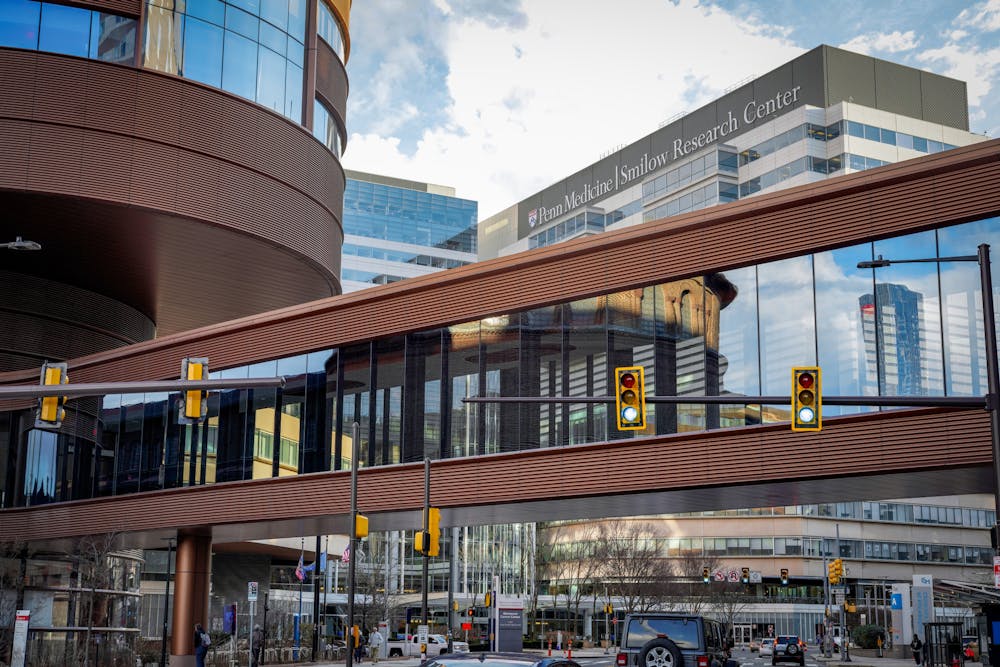
The University of Pennsylvania Health System had a $238 million operating profit in the first nine months of fiscal year 2026.
The third quarter results, posted May 20 and reviewed by The Daily Pennsylvanian, represent a 46% increase from the $163 million reported by the Health System last year. The data — which includes numbers from July 1 to March 31 — is the first to incorporate numbers from Penn Medicine Doylestown Health, which Penn Med acquired in April of last year.
The Health System includes seven hospitals and accounts for a significant share of the University’s revenue. The Health System’s revenue — including net patient service revenue and ambulatory pharmacy — made up 67% of Penn’s total consolidated operating revenue in FY25, according to the University’s annual financial report published in February.
On May 14, the Budget and Finance Committee of the University of Pennsylvania Board of Trustees met to discuss the University’s finances, including contributions from the Health System.
At the meeting, Vice President for Finance and Treasurer Colleen O’Neill highlighted the April 2025 addition of Doylestown Health to the Health System as one component to the overall increase in University revenue.
RELATED:
At Penn, the Health System fuels billions in revenue
Health System Senior Vice President and Chief Financial Officer Julia Puchtler also described “favorable results” driven by growth in the ambulatory pharmacy program at the meeting.
The system’s total operating revenue for the first nine months rose 15% from $8.78 billion to $10.1 billion, continuing a trend of total Health System operating revenues increasing every year since 2013.
At the same time, total operating expenses before interest, depreciation, and amortization rose 14.9% from $8.24 billion to $9.47 billion. Interest expenses totaled $68.5 million while depreciation and amortization reached more than $335 million.
Still, the increase in revenue outpaced increases in operating expenses, interest costs, and depreciation, resulting in a $75.5 million increase in operating profit.
Puchtler reported that the Pennsylvania Medicaid program’s decision to end coverage of GLP-1 drugs for weight loss amid soaring spending numbers was “eroding” the “favorability” of results in the first half of the year. She explained, however, that the program “is still on track and hitting the numbers.”
Craig Gronczewski was announced as the new chief executive officer of Penn Medicine Doylestown Health. Gronczewski has previously served as chief medical officer and vice president of medical affairs at Penn Medicine Princeton Health since December 2020.
The Doylestown Health acquisition contributed $109 million in UPHS revenue during the first quarter of FY26.
Managed care — which includes Medicaid and Medicare managed care programs — accounted for 59% of the Health System’s revenue. Medicare was the second largest source of revenue, at 27%, followed by Blue Cross at 6%, and commercial insurance at 4%. Medicaid as well as self pay and other sources contributed 2% each.
Salaries and wages paid to employees jumped 11.6% from $3.61 billion to $4.03 billion while employee benefits rose from $966 million to $1.07 billion.
Between 2014 and 2025, the Health System has seen significant longer-term growth, including a 68% increase in its number of employees.
RELATED:
At Penn, the Health System fuels billions in revenue
Jack Guerin leads data and enterprise reporting and can be reached at guerin@thedp.com. At Penn, he studies philosophy, politics, and economics. Follow him on X @JackGuerin_.