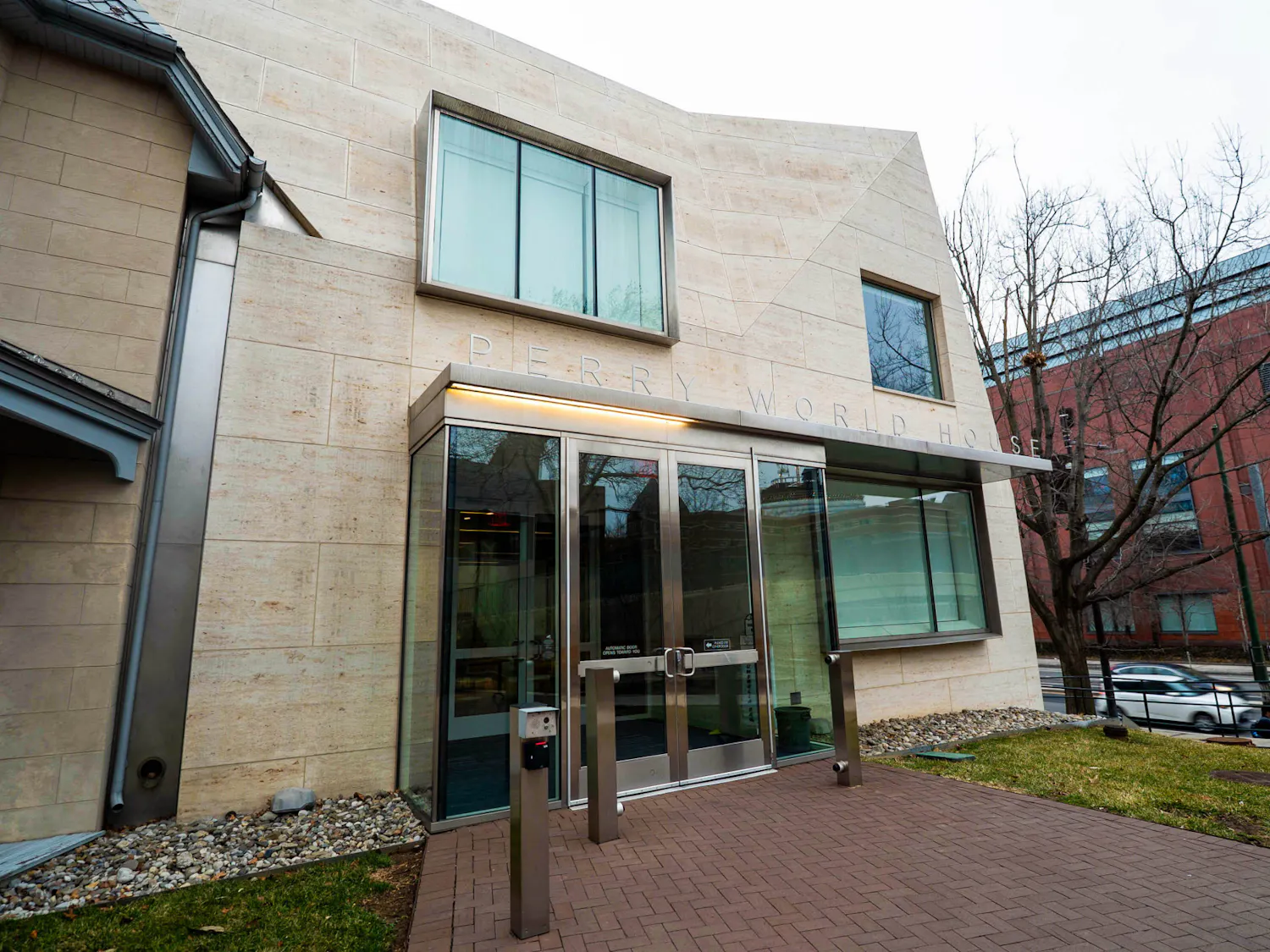
WOAR-Philadelphia Center Against Sexual Violence, the city’s only rape crisis center, continues to struggle after a state budget shortfall forced it to lay off three-fourths of its staff last October.
As the center continues to grapple with funding shortfalls, The Daily Pennsylvanian spoke with members of the WOAR’s board and Penn experts about how to keep the center operational. Advocates called on the University community to help through political advocacy, volunteer work, and small donations.
In a statement to the DP, WOAR Executive Director Gabriella Fontan explained that the organization provides “counseling, hotline services, and medical and court advocacy for survivors.” She added that the center also “provides education and prevention services in the community.”
In October 2025, WOAR received $90,000 in temporary funding from the Philadelphia District Attorney’s office, but the center does not yet have a permanent plan to restore operations to previous levels.
College sophomore and Penn Reproductive Justice Political Advocacy Lead Kimberly Liu wrote to the DP that the center’s reduced capacity “left a lot of survivors in the Philly area, including Penn students, without access to vital resources and support.”
School of Social Policy & Practice professor Millan AbiNader, a faculty fellow at the Penn Ortner Center on Violence & Abuse, explained that agencies like WOAR often work in tandem with colleges to address sexual assault on campus.
“If a survivor doesn’t want to have to get their services from Penn itself, which could happen for a lot of reasons, they can go to the community-based agency and still get support for their sexual assault without having to deal with the institution,” she said.
Along with contributions from individual donors, WOAR relies on federal, state, and local government funding.
RELATED:
Penn funding from National Endowment for the Humanities uncertain as DOGE terminates agency grants
Penn’s University Council hears concerns over federal immigration enforcement, Title IX training
Fontan explained that funding is “an ongoing issue” for most rape crisis centers.
Despite struggling crisis centers across the state, the proposed 2026-2027 Pennsylvania budget would maintain the same funding level as last year.
Liu wrote that having a “reliable, local resource is more valuable than ever” as national sexual violence hotlines face higher call volumes and “an increasing lack of funding.”
According to Perelman School of Medicine professor Peter Cronholm — who also serves as an Ortner Center faculty fellow — students can assist WOAR and similar organizations through political advocacy.
“I think all adults of voting age should be in touch with their representatives to try to make sure that people understand what they care about,” Cronholm, who formally served as a member of WOAR’s Board of Directors, said. “And I do hope that Penn students recognize what a resource WOAR represents for their community.”
"Moments like this really let you know how threadbare the public health infrastructure is. With a delay in a legal workflow, you can shut down an organization that’s been around for 50 years," he added.
AbiNader told the DP that volunteer work and financial support from students may also help the center stay afloat.
“While it’d be hard for any size donation to make up the loss of a budget, donations do make a difference,” she said.
She said that private donations can be used for “anything” the center needs, which can be crucial in times of financial hardship.
“It means that they can keep the lights on,” she said. “They can keep renting their office space, so that when funding comes back … they have a place to actually run their programming.”
She added that volunteer work helps ensure that “essential services” such as hotlines and hospital visits continue to function.
Liu said that Penn Reproductive Justice recently raised money for WOAR.
“We hope to work with them in the future to continue to spread the word about the resources and support they offer,” she said.
RELATED:
Penn funding from National Endowment for the Humanities uncertain as DOGE terminates agency grants
Penn’s University Council hears concerns over federal immigration enforcement, Title IX training
Senior reporter Lavanya Mani covers legal affairs and can be reached at mani@thedp.com. At Penn, she studies comparative literature. Follow her on X @LavanyaMani_.