

The Quakers had heard it all. Throw out the records. A trap game against a 1-5 team. A speed bump on the road to an Ivy League title.
No bump here. Just full speed ahead.
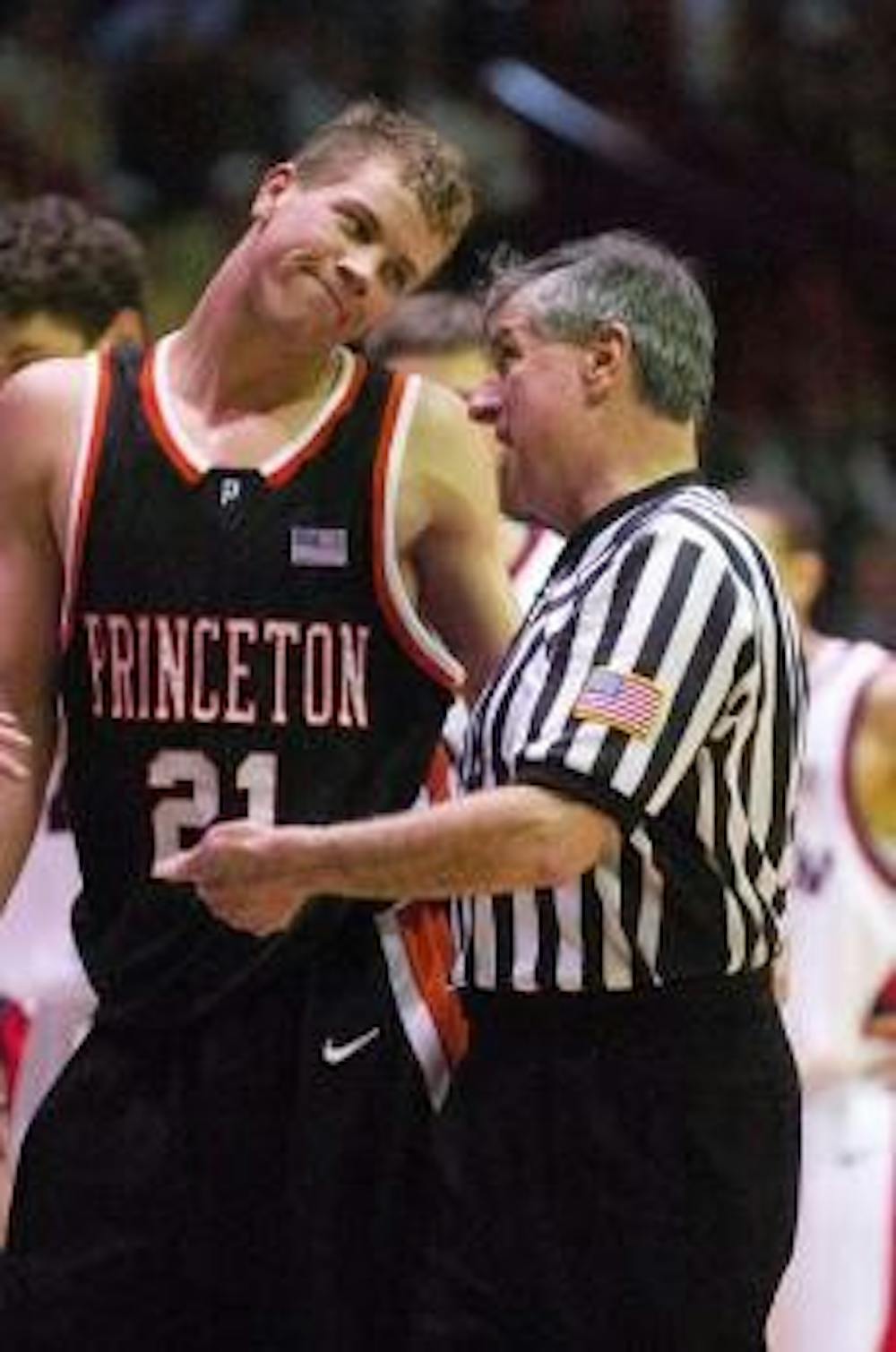
Penn got over a brief lapse in the second half with a 12-0 run to put Princeton away in a 48-35 win at the Palestra.
The 35 points marked the lowest total Penn has allowed since a 67-34 victory over The Citadel way back on Dec. 6, 1972.
With the win, the Quakers improve to 15-8 overall and 6-1 in the conference, a half-game in front of 6-2 Cornell and Yale. Princeton, meanwhile, continued its tailspin, dropping to 1-6 in the league. The Tigers would have to win five of their last seven to avoid breaking their record for most losses in an Ivy League season.
After a game characterized by defense, the Quakers' effort in their lowest scoring game overall since 1992 did not go unnoticed.
Glen Miller's usual post-game refrain of "happy with the win, happy with the effort, unhappy with the defense" has been tempered a bit since the Ivy season started.
"I'm very pleased with the defense," Miller said. "This is the fifth game in seven Ivy League games that we've held the opponent under 35 percent field goal percentage."
For Princeton, the number was 31 percent, as the team was so overmatched athletically that it just couldn't hit the shots it needed to to stay in the game.
The result was the Tigers sticking on 35 points for the third time this season.
But it's not like Princeton couldn't hang with the Quakers. Thanks to the slow tempo, the Tigers stayed around, keeping the Penn lead to single digits and using an 10-0 run to tie the game at 29 midway through the second half.
Eventually, the Quakers just tired of letting Princeton stick around.
Penn rattled off the next 12, going inside to Brian Grandieri for a pair of layups and capping the run with an electric slam dunk by Ibrahim Jaaber that closed the book on Penn's 118th win in 215 editions of the rivalry.
"Give them credit for having a couple of their upperclassmen stepping up and doing what they had to do to pull away," said Princeton coach Joe Scott, who saw his Ivy League career record drop to 17-18.
Mark Zoller was the only player from either team to reach double figures, scoring 17 on 6-for-10 shooting.
The difference in the game at the offensive end came from the free-throw line. Princeton had six fouls already by the time the 16:00 timeout rolled around in the second half, and Penn's 23 free throws spelled the difference, as the Tigers only went to the line six times.
Compounding Princeton's problem of not getting to the line was its uncharacteristic 17 turnovers. For the second game in a row, Jaaber recorded six steals, wreaking havoc in the Princeton backcourt.
"He's so disruptive on the ball," Miller said of the nation's active leader in career steals. "He's just so long and active and has tremendous anticipation."
When the Tigers got their chances against Jaaber and company, there was nobody to step up and hit the big shot.
Princeton, which all year has lived and died by the three-point shot, went just 4-for-19 from outside. Its critical misses came on open shots when the game was tied at 29 and when the Quakers held a 31-29 lead.
"We struggled to put it in the hoop," Scott said. "We get good looks . we just can't put it in the hoop."
No player had more than eight for the Tigers, whose shooting looked like the bad guys' in an action movie.
Justin Conway went 1-for-5, leading scorer Lincoln Gunn went 3-for-10 and Michael Strittmatter 1-for-6.
With this victory out of the way, history says that the difficulty will be in beating Princeton a second time.
Even though the Quakers have had better records of late, the series has, for the last three years, produced one thriller a year, and this certainly wasn't it.
It was low-scoring.
It was difficult to watch.
It was slow.
It was Ugly with a capital 'U'.
But all the Quakers see is the capital 'W'.

