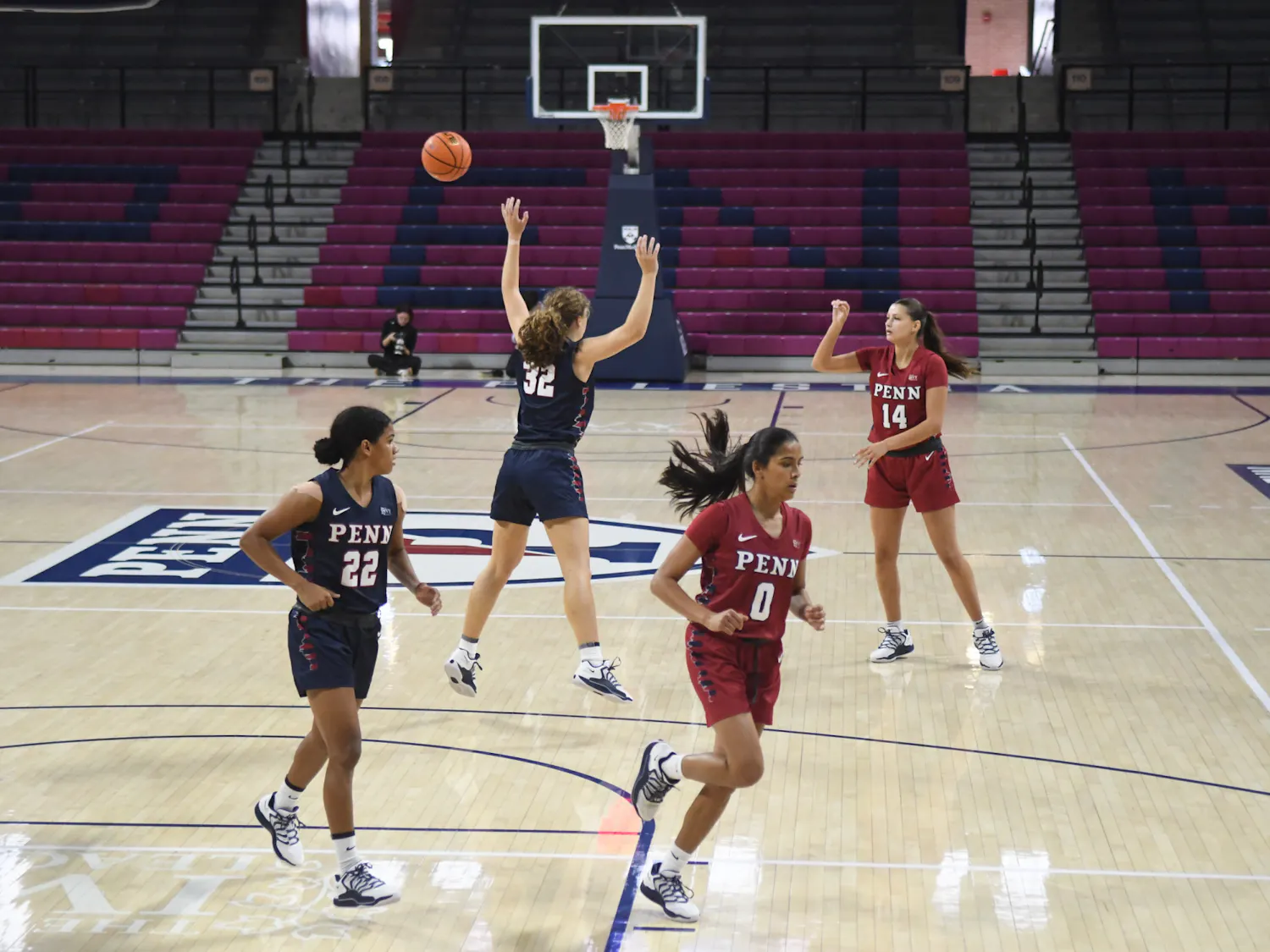
Franklin Field has a capacity of 52,958. But there is only one time a year when the attendance even comes within 10,000 of this number.
And while football is the top fall sport at Penn, the near-sellouts only come during the Penn Relays in April.
Quakers football has an average attendance of 12,496 in its two home games so far this year. While 16,572 showed up to see Villanova, the best team the Quakers will play this year, only 8,419 fans watched the Red and Blue shut out Dartmouth two weeks ago.
Over at Lincoln Financial Field, the hapless Temple Owls are averaging 17,273 fans per game in a 68,532 seat stadium, about a quarter of its capacity. When the Owls played at Franklin Field before the 2002 season, they drew 33,169 for top-ranked and eventual national-champion Miami, but even that figure falls short of two-thirds capacity for a free game against the best team in the land.
Villanova, which is currently ranked No. 24 in the ESPN/USA Today rankings, plays in a much smaller stadium. With a capacity of only 12,000, the Wildcats averaged 9,546 fans last year, in a season which they finished 7-5.
In the city of Philadelphia, there are three different types of college football teams: the Ivy League powerhouse that cannot participate in the I-AA playoffs (Penn), the I-AA team that is competitive and can take part in the postseason (Villanova) and the struggling I-A team (Temple). However, all fail to garner huge numbers at the gate.
Forty-four miles down Interstate 95 in Newark, Del., reigning I-AA champion Delaware is drawing big, overflowing its stadium. The Blue Hens are averaging 22,394 per game in a 22,000 seat stadium, up from 18,895 last year.
So if it's not the region as a whole or the lack of a good team in the region, then why isn't college football popular in the City of Brotherly Love?
Search no farther than the main tenant at the Linc, the NFL's Eagles. The 4-0 Birds are the top team in town and always will be. Even if the Eagles are losing, as they did in the early '80s and '90s, the attendance for college football got a slight boost, but nothing major.
The NFL has aggressively pursued making its brand of football more television-friendly, and has poured in billions of dollars to make it the number one sport on TV in the United States.
In fact, college football plays at least second fiddle in every city with an NFL team. Take Miami, for example, where the perennial powerhouse Hurricanes are ranked 30th in Division I-A in attendance, second (behind 28th- ranked Pittsburgh) for teams sharing a city with a professional franchise. Even in years like this one, in which the NFL's Miami Dolphins are off to one of their worst starts in their illustrious history and the Hurricanes are still undefeated and ranked third in the nation, the Dolphins are outdrawing the Hurricanes by over 5,600 per game.
However, local football coaches are not mourning their situation. Penn coach Al Bagnoli feels that both brands of football can and do thrive in Philadelphia.
"I think there's enough of a market here that people really appreciate the historical perspective of Ivy League football and college football in this area," he said. "It's had a long, illustrious history here."
"I think there's room for both."
Villanova coach Andy Talley said that there are some ways to improve his sport's popularity in Philadelphia. If there were to be a Big 5-type organization, getting Penn, Villanova, Temple and Delaware to play each other every year, Talley thinks that more people would follow college football.
He added that the recent decisions by networks like Comcast's CN8 and the YES Network to broadcast college football will help its popularity in the area, because he feels that it is a better game than that of the NFL.
"The quality of [college football] is excellent ... the games are much more exciting," Talley said.
"Pro football is boring. It's absolutely boring."
Temple head coach Bobby Wallace believes that college football suffers in Philadelphia because it is just one of a huge number of entertainment options in the city.
"There's so many different things to entertain the dollar, professional sports and other things," he said.
However, Wallace is in a unique position in Philadelphia. As the coach of a Division I-A team, a successful Owls squad would promote a strong interest in the area.
Personally, would the coaches like to play in a town where college football gets top billing?
"I'm happy where I am," Bagnoli said. "The size of the crowd or whether you're on national TV, that doesn't play a role in it."
Wallace listed both the pros and cons of coaching in an area where college football is more popular, and said he does not necessarily prefer more publicity.
As for Talley, he admits that there are times he wishes he coached in a place like Nebraska or Tennessee.
"I would definitely love to be in an environment where it was the only show in town."
College football in Philadelphia rarely gets to the front page of newspapers, but this is true of almost all college teams in the area.
"I would categorize [Philadelphia] as very much a pro town," The Philadelphia Inquirer sports editor Jim Jenks said.
"Going into college football season, all the [local] programs have to fight their way onto the front page," he added.
However, one college football team is on the Inquirer's front page on Sunday mornings -- Penn State -- a team that plays 192 miles away and has been scuffling recently. This is because the Nittany Lions are a nationally followed team with a large alumni base in Philadelphia, according to Jenks.
If a team like Villanova or Penn had its successes in Division I-A, or if Temple was more successful, then Jenks said that the schools would attract a greater following.
Jenks does not think that his newspaper can impact the following of college football in the area in any major way. College football is popular enough that it would survive without coverage, but it would not eclipse professional football if it was the front page story every day. Instead, the paper's job is to reflect the desires of its readership.
And this readership is not banging down the doors of the Inquirer looking for more college football coverage. The only type of complaint about the sport's exposure comes from Delaware fans looking for more articles about the Blue Hens. However, Jenks said that the letters are more about Delaware sports in general rather than specifically about the football team.
It seems that for the city of Philadelphia, only a drastic change will push college football into the limelight. But in this city, that type of change is not at all likely any time soon.