

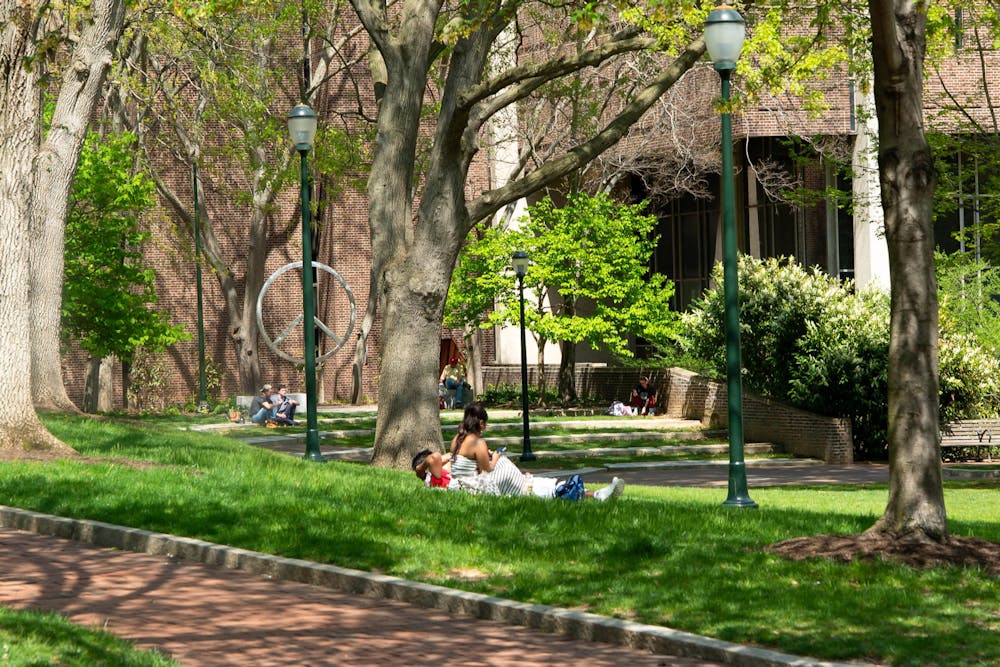
Penn hosted several events across campus focused on student well-being this week as part of its annual Wellness Week.
The April 13-17 programming — organized by the Penn Wellness Student Coalition and Wellness at Penn — centered around the theme “rooted in wellness.” This year’s events included a rage room, tarot card readings, painting, yoga, and personal finance lessons.
College junior and PWSC Events Chair Mayokun Omitogun explained the events were designed to promote the eight domains of wellness, which evaluate well-being through physical, emotional, social, intellectual, spiritual, financial, environmental, and occupational lenses.
“We focus on intersecting all of these ideas so students can find a way to maximize their own well-being,” Omitogun told The Daily Pennsylvanian. “It’s like a palette where you can mix whatever you want together."
She added that Wellness Week seeks to “highlight” and “uplift” already existing community initiatives.
“We have resources to make student life better and more accessible,” Omitogun said. “You shouldn’t have to suffer for four years to get a degree and be able to find happiness and find peace and make connections.”
College senior Elizabeth Wang — who serves as PWSC’s co-chair — said that when organizing the events, the group aimed to “collaborate with other campus wellness groups.”
Wellness Week this year featured collaborations with Penn clubs such as CogWell, Active Minds, Integrative Medicine Club, Student Harm Reduction Coalition, Penn Common Cents, UMOJA, The Disabled Coalition, and the Beekeeping Club.
RELATED:
Here’s what to know about student mental health resources at Penn
Nationwide collegiate wellness organization set to launch Penn chapter this fall
Wang said she wanted students to come away from Wellness Week knowing that they can balance both their academic success and well-being.
“You can go to Penn and also be well,” she said.
Omitogun emphasized that, while hosting a week to promote wellbeing and holding conversations is important, wellness “doesn’t just have to be a week.”
“I want students to speak up more about it, I want professors to speak up more about it,” she added. “I just want people to know that we care and wellness is something to care about, and you should care about it.”
Omitogun also called on Penn’s administration to be more involved in Wellness Week. She listed several initiatives the University could help organize — such as hosting more conversations with faculty, featuring banners on Locust Walk, and publishing newsletters about the programming.
“We’re the student group who is hosting it, but it should be University-highlighted,” Omitogun said.
Looking to the future, she added that she hopes future Wellness Weeks will feature more events that are “centralized at the heart of campus,” such as “pop-ups” on Locust Walk.
RELATED:
Here’s what to know about student mental health resources at Penn
Nationwide collegiate wellness organization set to launch Penn chapter this fall
Staff reporter Ashley Wang covers science and health and can be reached at wang@thedp.com. At Penn, she studies economics.


