

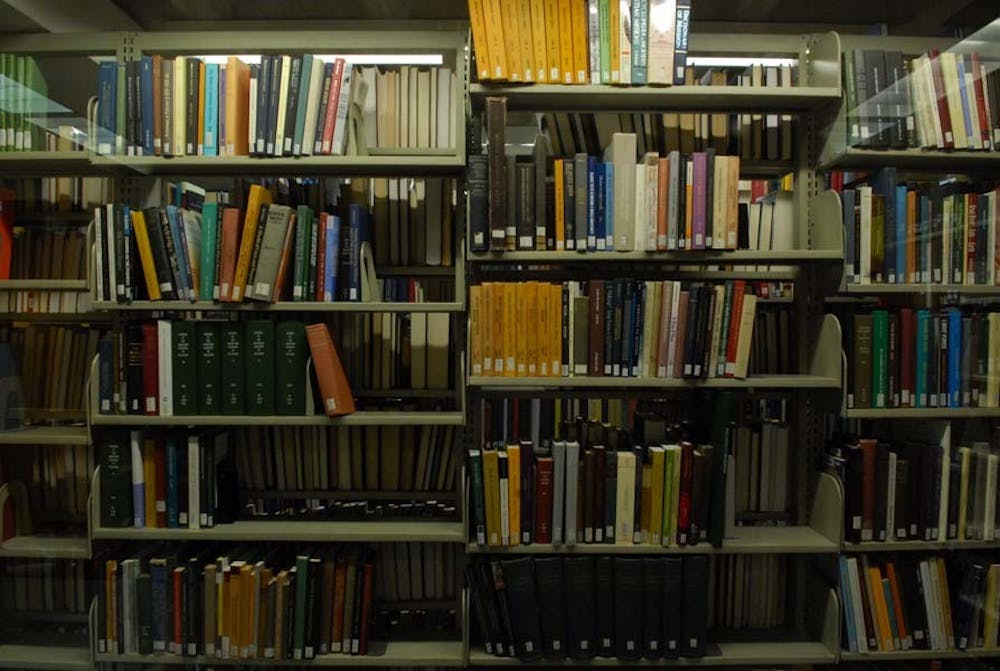
Too lazy to make the trek to the library?
There may be a solution on the horizon.
Earlier this November, Yale University signed a contract with Microsoft to upload their entire library collection onto a search engine, which will allow students to access Yale's media and book collection- anywhere, anytime.
Yale is just the latest school to digitize its library: Google, Microsoft and a conglomerate of several libraries called The Open Content Alliance have recently been asking libraries for the rights to upload their collections onto Internet servers. This would allow anyone with Internet access to view many of the resources online.
Harvard and Brown universities and the Massachusetts Institute of Technology are among institutions who have done the same.
For the moment, however, a digital library is not in Penn's future.
Penn Library's director of collection development and management Martha Brogan said the 'library-digitization' initiative is still "under evaluation."
"There have been a number of formal and informal conversations between Penn and various large-scale digitization projects," she said. "There are several different models and very different terms to the contracts that each of these vendors [are] offering."
She added that Penn is waiting to see what is best for Penn's library users, rather than settling for Google, Microsoft or OCA contracts.
She said digitization creates a "huge influx" of data that the library must manage, which requires increased infrastructure within a library like Van Pelt. The Library administration would have to consider whether or not to upload the entire collection or just parts of it.
"We are now benefiting from our colleagues that jumped into digitization at first," she said. "We are learning some of the problems that they are facing."
Brogan could not say when the Library would make a decision, but if officials do make the move to digitize their entire collection, it might not be without controversy.
Unlike the OCA, both Microsoft and Google only allow users to access content through their own search engines. Critics allege that agreements with the two Internet giants violate the general principle on which digitization rests: Allowing complete open access to content.
Meanwhile, students at Yale have mixed opinions about their to-be digital library.
Yale sophomore Jon Terenzetti said he would use the Internet versions of books but still prefers the hard copies.
"It's very convenient that you can get that information from your own dorm room," he said. "But this wouldn't replace my use of books, it would just supplement it and make information access quicker."
Yale junior Alison Adams - who estimates that she currently checks out about 30 books a semester for research papers - agreed.
"I'm not really into reading academic things online and wouldn't use it unless I was in a tight bind," she said. "A lot of people will use it, but the library's not that far and it's just easier to have the books in front of you."

