

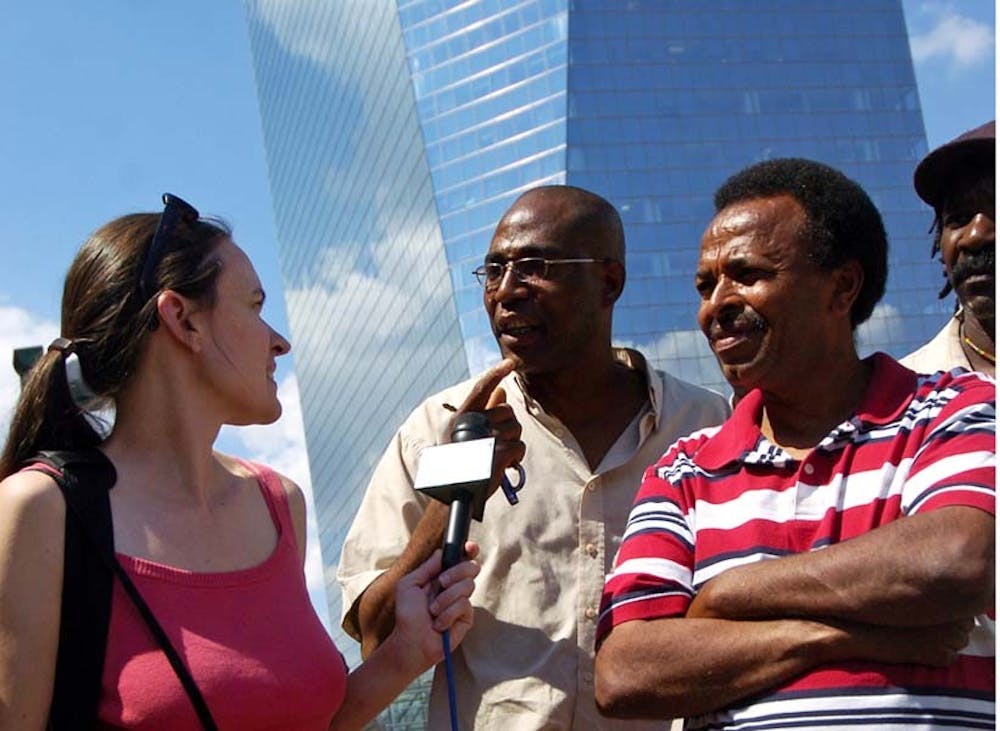
Members of the 1,200-strong Taxi Workers Alliance of Pennsylvania went on a brief strike yesterday, protesting problems with mandated GPS and credit card systems in their cabs.
Originally planned for 48 hours, the strike was scheduled to end today at 6 a.m., TWA president Ronald Blount said.
Blount said he felt "that our message has gotten across," though reported delays at 30th Street Station during the morning rush hour disappeared by mid-afternoon.
"We're going to give them some time for the message to sink in," he said after protesting with a small group on the 3100 block of Market Street. "Then, if there's no response from the Philadelphia Parking Authority, there will be more action on our side."
Linda Miller, spokeswoman for the Philadelphia Parking Authority, which regulates city cabs, said the city issued an executive order allowing other companies to provide taxi services for riders.
"We allowed suburban cab companies like Germantown Cabs to work in Center City, and we also allowed limousine services to pick up people," she said. "I don't think there were that many delays."
The strike centered around the $4 million installation of GPS and credit card systems in cabs, systems that cab drivers say are faulty.
"We are not against new technology," said Tekae Gebremedhi, TWA's head organizer. "But they didn't survey the equipment before installing."
Blount added that the "GPS system is faulty, so it wastes time and gas."
"PPA should have tested the system before putting it in cabs," he said. "They let the company use Philadelphia as a guinea pig for their technology, and it hurts people in this city."
Miller called the strike unjustified and said that PPA has "been working with the cab drivers and the vendor to resolve the technology issues."
"We have admitted that there have been some problems with the integrated dispatching system," she said, adding that the PPA has withheld $1 million in payment to the vendor of the technology.
That vendor is Verifone Transportation Systems, and Jeff Karasyk, who serves as Vice President of Sales and Marketing for VTS, points to training as a key problem.
"When the drivers were first trained, they did not know how to fully use the system," he said. "The system is working according to specifications.
He added that all technology was "beta-tested 100 percent."
Miller also said drivers are using technology problems as an excuse to not use credit card systems, which cab drivers say unnecessarily delay payments.
Karasyk said credit card machines result in higher tips for cab drivers, adding that the newer technology serves drivers and customers better.
"It's just a cultural change that affects the drivers and the dispatchers," he said.

