

Income would seem to have a lot to do with poverty, but according to Penn professor Andrew Lamas, the key is actually wealth - and it makes a difference.
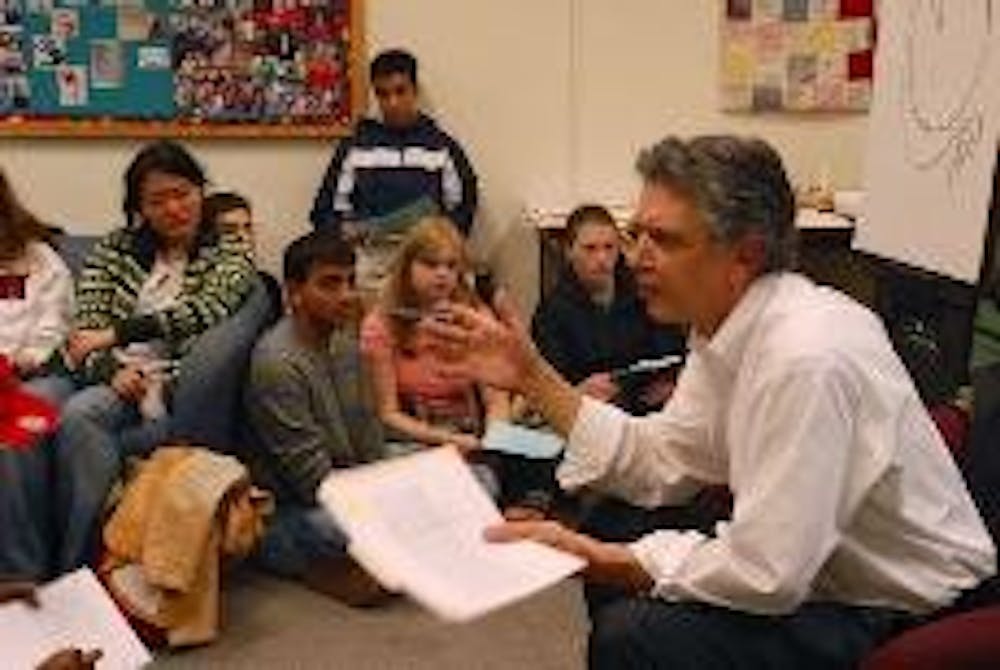
In a workshop hosted by Civic House yesterday, Lamas discussed the causes of national wealth inequality and proposed solutions before a crowd of about 30 students.
"Most [politicians] are fighting the income battle and not the wealth battle," Lamas said.
Lamas said wealth is a more accurate indicator of economic position.
As evidence of how assets should be considered, Lamas pointed to a disparity of 11:1 in household assets between whites and blacks, compared to an income disparity of less than 2:1.
He attributed the wealth gap to inheritance and social opportunities at birth, citing former Harvard president Lawrence Summers' contention that 70 to 80 percent of national wealth is inherited.
Pursuing "dream careers" as leaders in the business world, as many Penn students do, can exacerbate the wealth disparity, he said.
Lamas used diagrams to show the relationship between business leaders and their working-class employees, saying that business leaders receive a disproportionate share of company profits while employees do not receive due compensation for their share of company labor.
Of particular concern, Lamas added, is the tendency of business leaders to harness control of natural resources and sell them for a profit. Lamas said business leaders cannot legitimately claim resources they did not create.
As a more equitable alternative, he suggested redistributing profits from natural resources to everyone in the state or nation where the resource was harvested, attributing Alaska's reversal of income inequality to its policy of redistributing half its oil profits to every family in the state.
"There's no reason [this policy] can't be applied to every major commonwealth asset," Lamas said.
Students said they emerged from the discussion with new perspectives on national poverty.
College junior Rachel Han said she hadn't previously "thought of poverty in terms of assets or wealth."
"How do you measure progress with urban development when there's such a huge gap" in wealth? Han asked.

