

Thirty-five years ago, 43 people were killed in a prison uprising in upstate New York, the bloodiest in United States history.
Ironically, the upshot of the incident was an "assault on the idea that prisoners had civil liberties," Heather Thompson told a crowd of about 40 at Penn's Silverman Hall Monday.
Thompson said this is a plight prisoners face to this day.
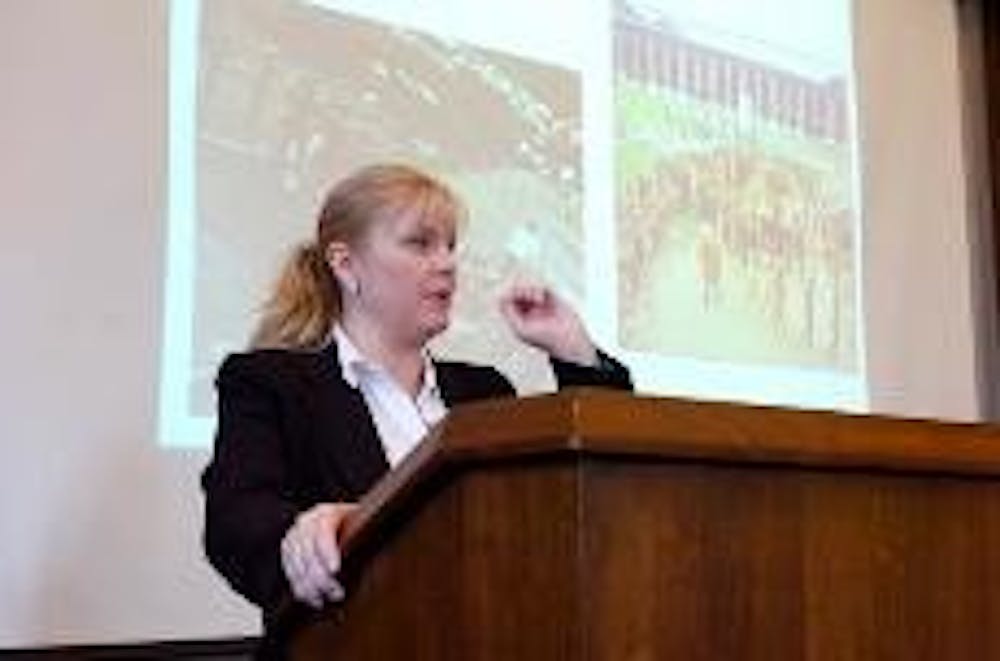
The University of North Carolina-Charlotte professor spoke as part of a presentation to commemorate the 35th anniversary of the Attica Prison uprising. She discussed the incident both historically and as it relates to the current state of the U.S. prison system.
Thompson recounted the plight of prisoners at New York's Attica Correctional Facility, indicating that prisoners "went through the proper channels" to complain of mistreatment and torture before rebelling openly on Sept. 9, 1971.
Rebelling prisoners had appealed to New York Gov. Nelson Rockefeller, even using reporters and elected officials as liaisons - but got no response.
When the revolt was halted at the hands of New York State Troopers four days later, 43 inmates, guards and civilians were dead and over 90 were injured.
The prison was "bathed in blood," Thompson said, noting that unarmed inmates were assaulted with "10 solid minutes of gunfire."
Sixty-two inmates were later indicted, many ultimately receiving acquittal and compensation with the assistance of a largely pro-bono legal force.
Inmates at the nation's highest-security correctional facilities, so-called supermax prisons, Thompson said, may not experience human contact for years at a time - a situation that Thompson considers nothing less than cruel and unusual.
Center for Constitutional Rights legal director Bill Goodman spoke after Thompson and addressed the subject of legal representation for the prisoners after the revolt.
Goodman discussed his role as a legal advocate for the indicted inmates, explaining that lawyers "put the state on trial" to seek justice for the inmates.
Explaining his commitment to advocating the indicted Attica inmates, Goodman said he wanted to "let the truth out."
Attending law students said that the presentation gave them a new perspective on the prison revolt.
Third-year Penn Law student Sujata Sidhu said the presentation helped her to understand "the broader social context of the rebellion."

